AI Agents Explained
Introduction to AI Agents
What Is an AI Agent?
At its core, an AI agent is a system that can observe its surroundings, make decisions, and take actions to achieve a specific goal. Think of it like a smart assistant, but one that can operate in a wide range of environments, from a digital spreadsheet to the physical world.
An AI agent is fundamentally a system designed to perceive its environment, reason about its goals, and take actions to achieve those goals autonomously or semi-autonomously.
This process works in a continuous loop. The agent perceives the world through sensors, which could be anything from a camera on a robot to the data feed of a stock market application. It then processes this information, decides on the best action to take based on its programming and objectives, and finally acts on the environment using its effectors, like a robotic arm or a software command.
The Core Traits of an Agent
Not every computer program is an agent. To qualify, a system needs to exhibit a few key characteristics that give it the ability to operate independently and intelligently.
| Characteristic | Description |
|---|---|
| Autonomy | The agent can operate on its own without direct human intervention. It has control over its own actions and internal state. |
| Reactivity | The agent perceives its environment and responds to changes in it in a timely fashion. |
| Proactivity | The agent doesn't just react to the environment; it takes initiative and exhibits goal-directed behavior. |
| Social Ability | The agent can interact or communicate with other agents (and possibly humans) to complete its tasks or achieve its goals. |
For example, a smart thermostat is reactive when it turns on the heat because the temperature dropped. It's autonomous because it does this without you telling it to every time. If it learns your schedule and starts warming the house before you get home, it's being proactive.
A Family of Agents
AI agents aren't all the same. They can be categorized based on their intelligence and capabilities. Think of them as a family, from the simplest members to the most sophisticated.
Simple Reflex Agents
These are the most basic agents. They make decisions based only on the current situation, ignoring past history. They follow a simple if-then rule. For example, if a self-driving car's camera sees brake lights ahead, it hits the brakes. It's a direct reaction to what it perceives right now.
Model-Based Reflex Agents
This type is a step up. It maintains an internal "model" or understanding of how the world works. This allows it to handle situations where it can't see everything at once. It uses its model to track the state of the world. A self-driving car that knows a car in front of it is still there, even when briefly blocked by another car, is using a model.
Goal-Based Agents
These agents think about the future. They don't just react; they consider the consequences of their actions to achieve a specific goal. If you tell a GPS to find the fastest route to the airport, it examines different paths and their likely traffic conditions to decide which sequence of turns will best achieve its goal.
Utility-Based Agents
Sometimes, just reaching a goal isn't enough. A utility-based agent aims for the best outcome. It has a utility function that assigns a score to different states of the world, quantifying how "happy" the agent is. A ride-sharing app doesn't just find you a ride (the goal); it finds one that balances speed, cost, and driver rating to give you the highest utility.
Learning Agents
These are the most advanced agents. They can improve their performance over time through experience. A learning agent starts with some basic knowledge and an ability to learn. As it acts, it receives feedback on how well it's doing and uses that information to become better at its task. A spam filter that gets better at identifying junk mail as you mark emails as spam is a classic example of a learning agent.
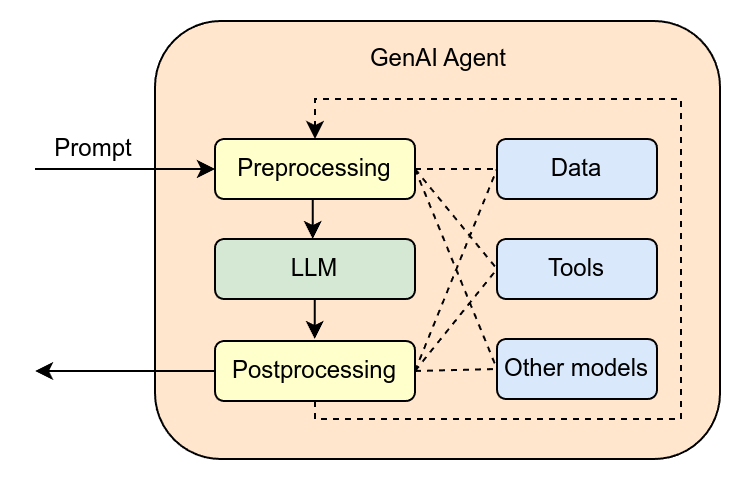
Understanding these different types of agents helps us see how AI can tackle problems of varying complexity, from simple reactions to long-term, adaptive planning.
What is the continuous loop of actions that defines how an AI agent operates?
A smart home system notices you leave for work every weekday at 8 AM and starts lowering the temperature automatically at 7:45 AM to save energy. Which characteristic is it primarily demonstrating?
As we've seen, AI agents provide a powerful framework for building intelligent systems. By understanding their core traits and the different ways they can be designed, we can begin to appreciate the sophistication behind modern AI.