AI Agents Explained
Introduction to AI Agents
Meet the AI Agent
The term “agent” gets thrown around a lot in discussions about artificial intelligence. But what exactly is an AI agent? It’s not just any computer program. It's a system specifically designed to operate on its own, making decisions and taking action to get things done.
An AI agent is an autonomous system designed to perceive its environment, analyze data, make decisions, and execute actions to accomplish specific objectives without continuous human oversight.
At its core, an agent follows a simple but powerful loop: it perceives, it thinks, and it acts. Imagine you’re cleaning your room. You see a sock on the floor (perception), decide it needs to go in the hamper (reasoning), and then you pick it up and put it there (action). An AI agent does something similar, just in a digital or physical environment.
The Core Characteristics
What truly sets an AI agent apart from a simple script? It comes down to four key characteristics that give it the ability to handle complexity and uncertainty.
Autonomy
noun
The ability to operate without direct human control. An autonomous agent can make its own decisions and manage its own actions to achieve its goals.
Think of autonomy as self-governance. Instead of a programmer writing instructions for every possible scenario, they give the agent a goal, and the agent figures out the steps to get there. It’s the difference between following a recipe line-by-line and being a chef who can create a new dish from the ingredients available.
Reactivity: An agent must be able to perceive its environment and respond to changes in a timely fashion. If the world changes, the agent has to notice and react appropriately. A spam filter that sees a new type of junk email and immediately blocks it is being reactive.
Proactivity: Agents don’t just react; they take initiative. They are goal-oriented and will actively work towards their objectives rather than waiting for something to happen. A smart thermostat that learns your schedule and starts warming the house before you get home is being proactive.
Social Ability: Many agents aren't alone. They need to communicate and cooperate with other agents and humans. This could be through a formal agent-communication language or by interacting through a user interface. Think of two navigation apps sharing traffic data to find the best route for everyone.
A Brief History
The idea of autonomous agents isn't new. It has roots in the field of cybernetics in the 1940s and 50s, which studied control and communication in animals and machines. Early thinkers were fascinated with creating systems that could behave purposefully, just like living organisms.
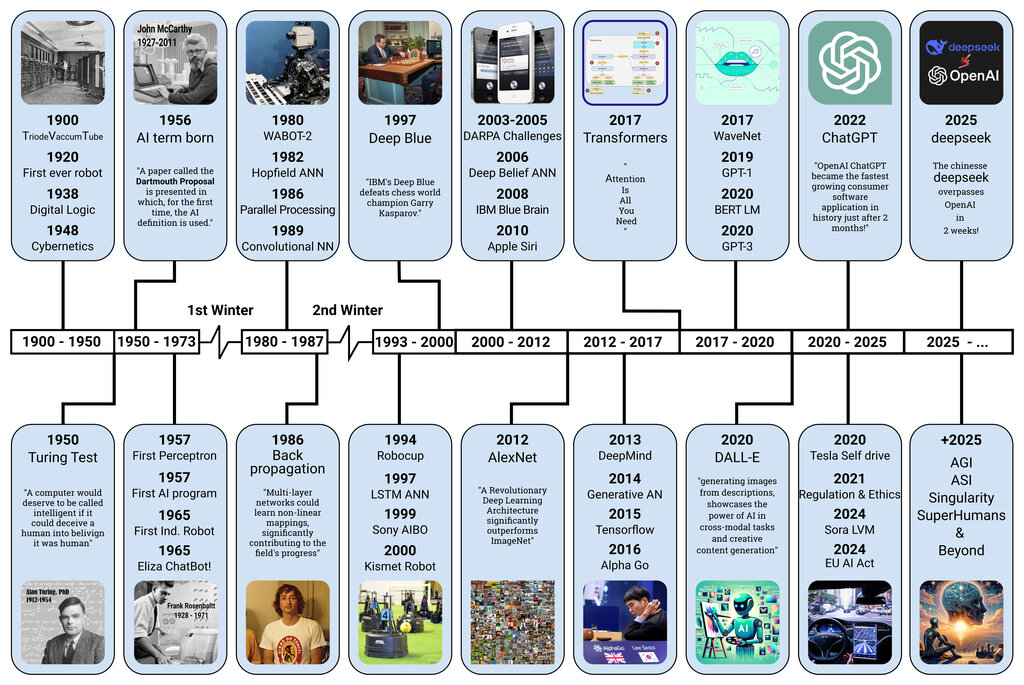
However, the concept of the AI agent was formalized within computer science in the 1980s and 90s. Researchers began to see that building complex AI systems required a different approach than just writing bigger and more complicated programs. They needed to design systems as collections of smaller, independent, and intelligent agents that could work together.
This “agent-oriented” view has become incredibly important. It provides a powerful framework for building everything from simple bots to complex systems that manage power grids or negotiate financial trades. By focusing on creating autonomous entities that can perceive, reason, and act, we can build software that is more flexible, robust, and intelligent.
Ready to check your understanding?
What is the core loop that an AI agent follows?
What is the primary characteristic that distinguishes an AI agent from a simple computer program or script?
Understanding agents is the first step to understanding how modern AI works. They are the fundamental building blocks for creating systems that can intelligently navigate our complex world.