AI Agents Explained
Introduction to AI Agents
What is an Agent?
In artificial intelligence, the term "agent" doesn't refer to a secret agent or a business representative. Instead, it's a fundamental concept for anything that acts on its own. Think of a simple room thermostat. It has a goal: keep the room at a set temperature. It senses the current temperature and then acts by turning the heat or air conditioning on or off. That's an agent in its most basic form.
An AI agent can be broadly defined as a system that perceives its environment, processes data, and takes actions to achieve specific goals.
An AI agent is any system that can observe its surroundings and take autonomous actions to achieve a specific goal. This could be a robot navigating a warehouse, a software program trading stocks, or even a non-player character in a video game. They all follow a continuous loop: perceive, think, and act.
This cycle is what makes an agent intelligent. It's not just following a pre-written script; it's reacting to what's happening around it in real-time to make progress toward its objective.
The Building Blocks
Every agent, whether it's a physical robot or a piece of software, is built from the same core components that allow it to interact with its world.
Sensor
noun
A device or component that detects input from the physical environment and converts it into a signal that can be understood by the agent.
Sensors are the agent's senses. They're how it gathers information, or percepts, about its environment. For a self-driving car, the sensors include cameras, LiDAR, GPS, and microphones. For a spam filter, the primary sensor is the part of the program that reads the content of an incoming email.
Actuator
noun
A component of a machine that is responsible for moving or controlling a mechanism or system.
If sensors are for perceiving, actuators are for acting. They are the parts of the agent that affect the environment. A robot arm's motors are its actuators, allowing it to pick up objects. For our spam filter, the actuator is the function that moves an email to the junk folder or deletes it.
| Agent | Sensors | Actuators |
|---|---|---|
| Human | Eyes, ears, skin, nose, tongue | Hands, legs, voice, body |
| Robot Vacuum | Infrared sensors, bump sensors | Wheels, vacuum motor, brushes |
| Chess Program | Encoded board state from input | Code that selects and outputs a move |
| Thermostat | Thermometer | Switch for furnace/AC |
The brain connecting these two parts is the agent program. This is the software or internal logic that takes the raw data from the sensors and decides which action the actuators should perform. It's the decision-making core of the agent, mapping any given percept to a specific action.
The Role of Agents
So why is this agent concept so important in AI? Because it provides a unified way to think about building intelligent systems. Instead of just writing a program that crunches numbers, the agent framework forces us to consider the bigger picture: What is the system trying to achieve? What information does it have? And how can it influence its world to succeed?
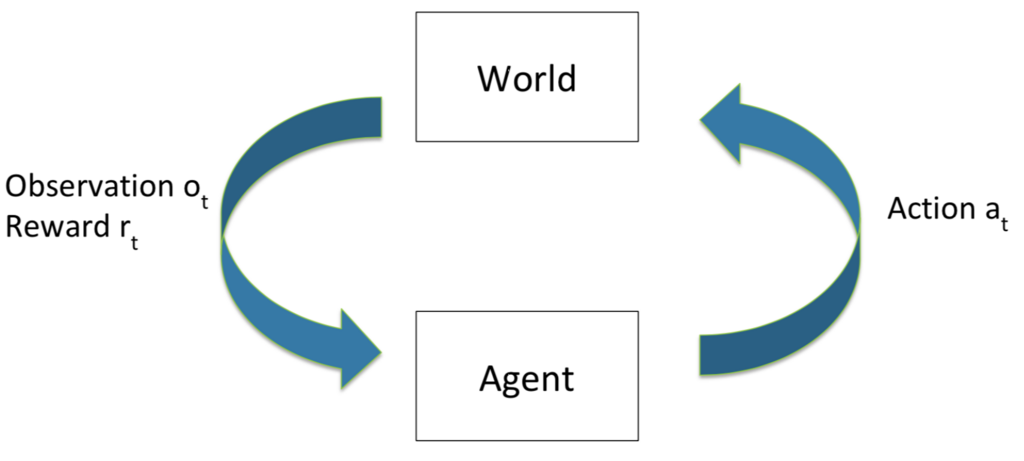
Viewing AI through the lens of agents helps us design systems that are more autonomous, adaptable, and capable of handling complex, dynamic situations. A program that can play chess perfectly is impressive, but an agent that can drive a car through an unfamiliar city is a much greater challenge. It must constantly perceive, reason, and act in a world that is unpredictable.
This framework of sensors, agent programs, and actuators is the starting point for building nearly every kind of AI system, from the simplest automated tasks to the most advanced robotics.
Let's see if you've got the basics down.
In the context of artificial intelligence, what is the fundamental role of an agent?
A self-driving car uses cameras and LiDAR to detect obstacles on the road. These components are the car's ________.
Understanding these core components is the first step toward exploring the more complex ways AI agents can think and learn.