AI Agents Explained
Introduction to AI Agents
What Is an AI Agent?
Think of an AI agent as an autonomous entity that can do things. It's not just a piece of code sitting on a server; it's a system designed to interact with an environment to achieve a specific goal. A self-driving car navigating traffic is an agent. A smart thermostat adjusting the temperature in your home is also an agent. Both perceive their surroundings and take actions to complete their tasks.
An AI agent perceives its environment, processes that information, and takes actions to achieve its goals.
This basic formula—perceive, think, act—is the foundation of countless applications in artificial intelligence. An agent is what connects the abstract intelligence of an AI model to the real world, allowing it to perform useful tasks.
The Core Components
Every AI agent is built from a few fundamental parts that work together. Understanding these components helps demystify how an agent operates.
First, an agent needs to gather information. It does this using sensors. For a robot vacuum, sensors might include cameras to see obstacles, bumper sensors to detect collisions, and infrared sensors to spot ledges. For a chatbot, the sensor is the text input field where it receives a user's message.
Next, an agent must be able to affect its environment. It uses actuators to do this. The robot vacuum's actuators are its wheels and suction motor. The chatbot's actuator is its ability to generate and display a text response.
Finally, connecting these two is the decision-making unit. This is the agent's “brain.” It takes the data from the sensors, processes it, and decides which action the actuators should perform to move closer to its goal. This is where the core AI logic resides, determining the agent's behavior.
The Perception-Action Cycle
An agent doesn't just perceive once and act once. It operates in a continuous feedback loop called the perception-action cycle. It's constantly sensing its environment, making decisions, and taking actions, then sensing the results of those actions to inform its next move.
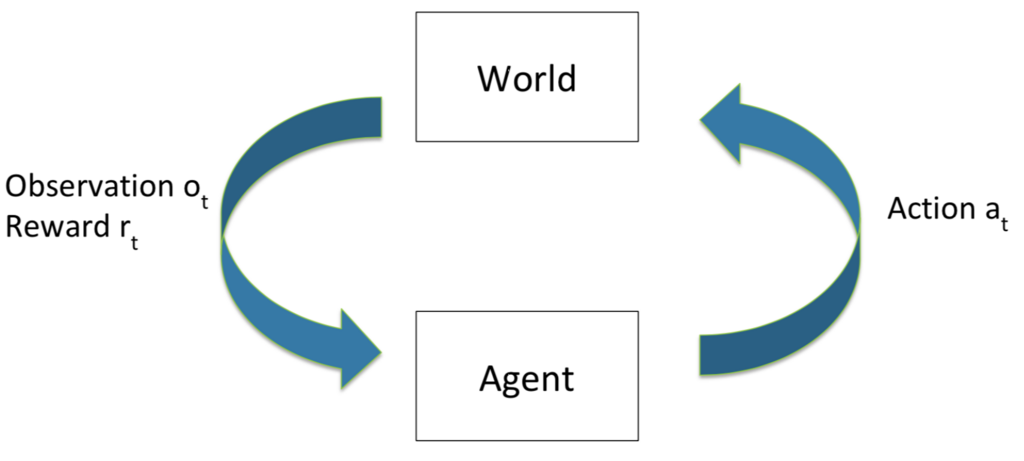
Consider a video game character controlled by AI. Its sensors perceive the game world: the player's location, the position of obstacles, and the health of other characters. Its decision-making unit processes this information to decide whether to attack, hide, or heal. Its actuators then execute that decision by moving the character or using an item. This cycle repeats many times per second, creating the illusion of intelligent behavior.
This cycle allows an agent to react to changes and operate dynamically in complex, unpredictable environments.
The concept of an agent is fundamental to AI because it provides a framework for building systems that can do more than just process data. Agents turn intelligence into action, making them a cornerstone of robotics, automation, and interactive AI systems.
What is the fundamental purpose of an AI agent?
In a smart thermostat, the component that physically changes the temperature setting is called the: