AI Agents Explained
Introduction to AI Agents
What Is an AI Agent?
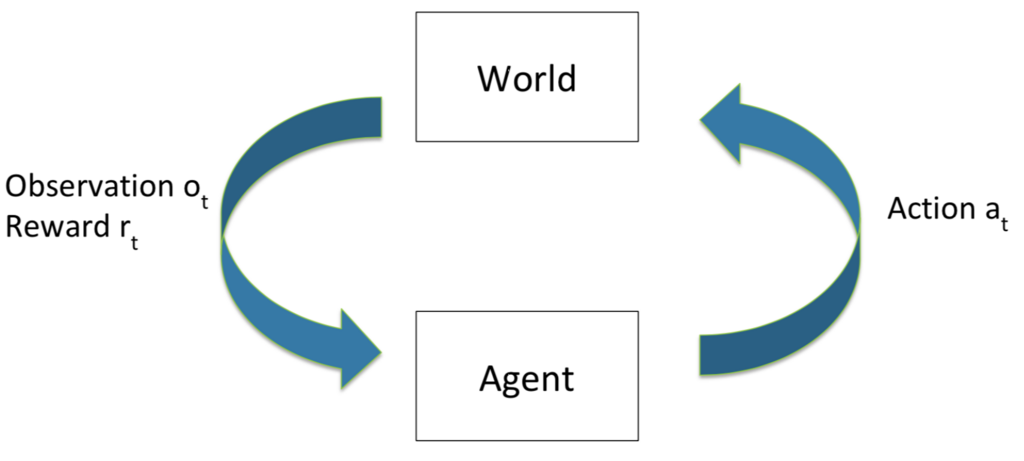
An AI agent is a program that can perceive its surroundings, make decisions, and take actions to achieve a specific goal. Think of it as an autonomous worker operating in a digital or physical world. It follows a simple but powerful cycle: perceive, think, and act.
An AI agent is essentially a system designed to perceive its environment, reason about its goals, and take actions to achieve those goals autonomously.
For example, a smart thermostat is a simple agent. It perceives the room's temperature (the environment). It thinks by comparing the current temperature to your desired setting. Then, it acts by turning the heat or air conditioning on or off. More complex agents, like a self-driving car, perform this loop constantly, processing vast amounts of information from sensors to navigate safely.
Core Characteristics
Not every program is an agent. AI agents are defined by a few key characteristics that give them their power and flexibility.
Autonomy
noun
The ability to operate without direct human intervention or control.
Agents can make their own decisions to pursue their goals. You can set it and forget it, and the agent will work independently to get the job done.
Reactivity
noun
The ability to perceive the environment and respond to changes in a timely fashion.
An agent isn't just following a static script. It's aware of what's happening around it and can adjust its actions on the fly.
Proactivity
noun
The ability to take initiative and act in anticipation of future goals, rather than simply reacting to the environment.
Instead of waiting for something to happen, proactive agents take steps to achieve their objectives. A smart assistant that reminds you to leave for an appointment early due to traffic is being proactive.
Social Ability
noun
The ability to interact or communicate with other agents (including humans) to achieve its goals.
Agents often don't work in isolation. They might need to negotiate with other agents, ask humans for clarification, or collaborate to complete a complex task.
Types of AI Agents
AI agents come in several flavors, from very simple to incredibly complex. Their design depends on the kind of task they need to perform.
Simple Reflex Agents: These are the most basic agents. They work on a simple "if-then" rule. If a certain condition is met, they execute a specific action. They don't have memory of past events. The smart thermostat is a good example; if the temperature is below 68°F, turn on the heat.
Model-Based Reflex Agents: These agents are a step up. They maintain an internal "model" or understanding of how the world works. This allows them to handle situations where they can't see everything at once. A self-driving car needs a model to know that a car that just passed behind a truck still exists, even if its sensors can't see it for a moment.
Goal-Based Agents: These agents think about the future. Instead of just reacting, they have a specific goal to achieve and can choose actions that will lead them toward that goal. A GPS navigation system is a goal-based agent. Its goal is your destination, and it calculates the best sequence of turns to get you there.
Utility-Based Agents: Sometimes, there's more than one way to reach a goal, and some paths are better than others. Utility-based agents aim for the best possible outcome. They evaluate different options based on a "utility" function, which measures how happy or successful a particular state is. An airline's automated booking system might try to find a route that's not just possible, but is also the cheapest or fastest, maximizing its utility.
Learning Agents: These are the most advanced agents. They can improve their performance over time through experience. A learning agent starts with some basic knowledge and can adapt and get better at its job. An AI that plays chess learns from every game, discovering new strategies and improving its ability to beat opponents.
Each type of agent builds on the capabilities of the one before it, adding more sophistication and allowing for more complex and intelligent behavior.
What is the fundamental cycle that an AI agent follows to operate in its environment?
A Roomba vacuum cleaner navigates around furniture and returns to its dock when its battery is low. The ability to sense and respond to its surroundings on the fly is an example of which agent characteristic?
Understanding these fundamental agent types is the first step in seeing how AI systems can tackle a huge range of tasks, from simple automation to complex, strategic planning.