AI Agents Explained
Introduction to AI Agents
What Is an AI Agent?
Think about a smart thermostat. It senses the room's temperature, decides whether it's too hot or cold based on your settings, and then acts by turning the heat or air conditioning on or off. It works on its own to keep you comfortable. This is a simple example of an AI agent.
More formally, an AI agent is a system that can operate independently to achieve a specific goal. It's not just a passive program waiting for commands. It actively observes its surroundings, makes decisions, and takes actions to get its job done.
At their heart, AI agents are autonomous systems powered by artificial intelligence that perceive their environment, process data, and take actions to achieve specific goals, without constant human oversight.
This process forms a continuous feedback loop. The agent perceives the world, acts upon it, and then perceives the new state of the world that resulted from its action. This cycle repeats as the agent works towards its objective.
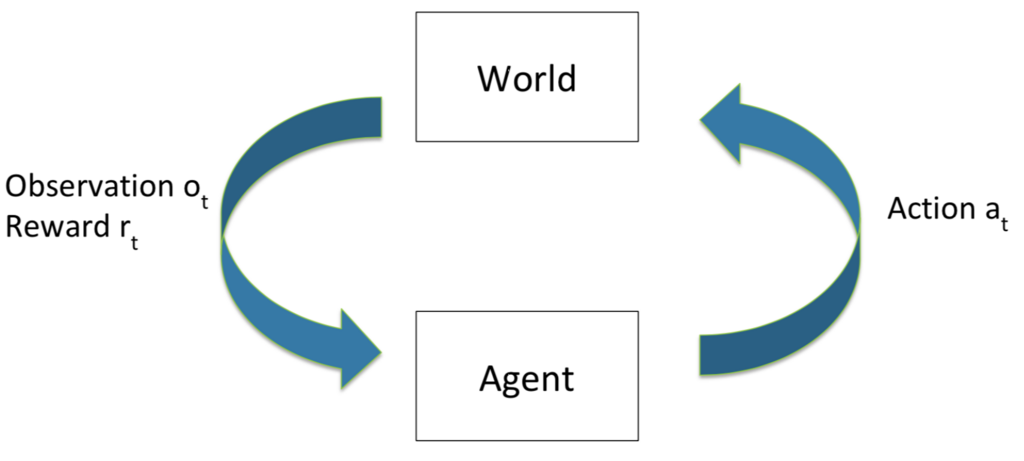
The Core Ingredients
Every AI agent, from a video game character to a sophisticated stock-trading bot, shares a few fundamental attributes. These are the key ingredients that make an agent intelligent and useful.
Autonomy
noun
The ability to perform tasks in complex environments without constant guidance or intervention by a human.
Autonomy is what separates an agent from a simple tool. A hammer is not autonomous; it needs a person to swing it. An autonomous agent, like a Mars rover, can make its own decisions to navigate terrain and collect samples based on high-level commands from mission control, not step-by-step instructions.
Next, an agent must be goal-oriented. It isn't just acting randomly. Every decision and action is driven by a desire to achieve a specific objective. For a chess-playing AI, the goal is to checkmate the opponent. For a delivery drone, the goal is to transport a package to the correct address safely and efficiently.
Finally, an agent needs perception. To act on the world, it must first be able to sense it.
Perception
noun
The process of acquiring, interpreting, selecting, and organizing sensory information.
An agent's environment is the world it operates in, and its sensors are the tools it uses to perceive that world. A chatbot's environment is a text interface, and its sensor is the input field where a user types. A robotic vacuum's environment is a room, and its sensors might include cameras, lasers, and bump detectors.
A Brief History
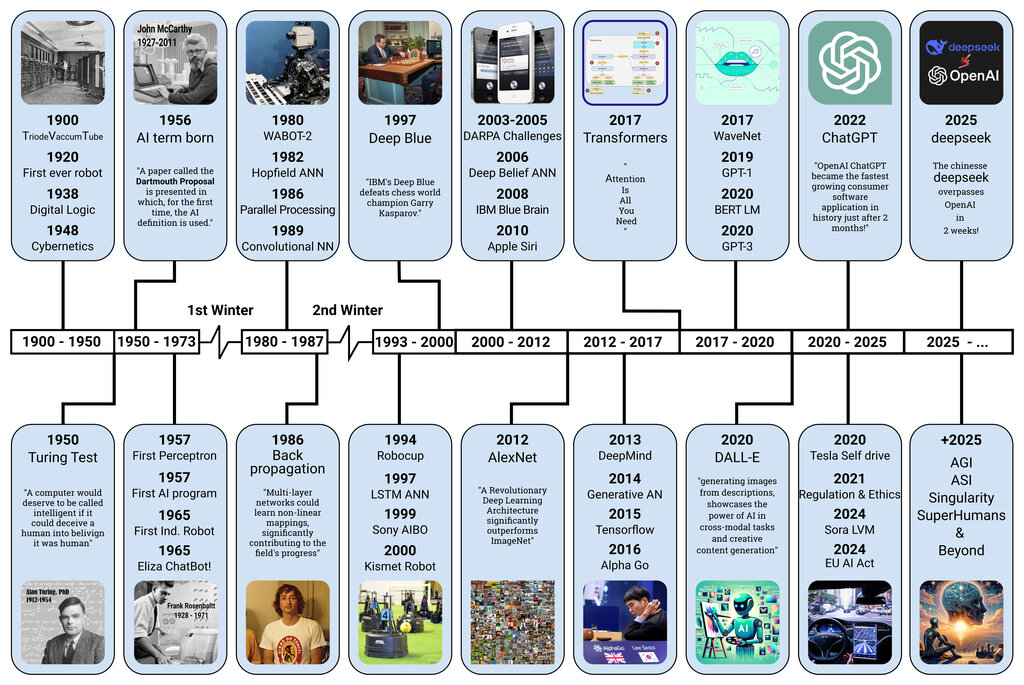
The idea of AI agents isn't new. It has evolved significantly since the early days of artificial intelligence.
The first agents were simple rule-based systems. They operated on a strict set of "if-then" conditions hand-coded by programmers. If the room is hotter than 72 degrees, then turn on the AC. These systems were predictable and reliable but also rigid. They couldn't handle situations that weren't explicitly covered by their rules.
Over time, agents became more adaptive. Researchers developed systems that could learn from experience. Instead of just following rules, these agents could analyze data, recognize patterns, and adjust their behavior to improve their performance. This allowed them to tackle more complex and unpredictable tasks.
Today, modern AI agents powered by large language models are pushing the boundaries even further. They can understand natural language, reason about complex problems, and use a wide array of digital tools to accomplish sophisticated, multi-step goals.
Let's check your understanding of these core concepts.
What is the primary characteristic that defines a system as an AI agent?
A smart thermostat senses the room is too cold and turns on the heat. This continuous cycle of sensing, deciding, and acting is known as a:
Now that you understand what an AI agent is and where the idea came from, you're ready to explore the different types of agents and how they're built.