AI Agents Explained
Introduction to AI Agents
What Is an AI Agent?
Think about how you navigate your day. You sense the world around you (perceive), think about what you want to do (decide), and then you do it (act). You see the traffic is bad, you decide to take a different route, and you turn the steering wheel. AI agents work in a remarkably similar way, but in the digital world.
An AI agent is an autonomous software entity capable of understanding goals, reasoning through multiple steps, interacting with tools or environments, and adjusting its actions based on outcomes.
At its core, an agent is a cycle. It perceives its environment, makes a decision based on that information and its goals, and then takes an action. This action changes the environment, and the cycle begins again. It’s a continuous loop of sensing, thinking, and doing.
This basic structure allows an agent to be more than just a simple program. Instead of just executing a list of pre-written commands, it can react to new situations dynamically.
The Defining Traits
Not all software is an agent. A few key characteristics set them apart. These traits allow agents to handle complex and unpredictable tasks without a human constantly guiding them.
| Characteristic | Description |
|---|---|
| Autonomy | Agents can operate independently. They don't need step-by-step instructions from a person for every action they take. |
| Adaptability | The environment can change, and a good agent changes with it. It adapts its behavior based on new information. |
| Goal-Oriented | An agent's actions are purposeful. It is always working towards achieving a specific, predefined objective. |
Consider a spam filter for your email. It's autonomous because it works in the background without you telling it to. It's adaptive because it learns what you consider junk mail over time. And it's goal-oriented, with the clear objective of keeping your inbox clean.
A Brief History
The idea of autonomous agents isn't new. It has roots in early cybernetics research from the 1940s and 50s, which studied how systems control and regulate themselves. Early AI researchers dreamed of creating entities that could reason and act in the world like humans.
For decades, most agents were simple and based on a set of hand-coded rules. If they saw condition X, they would always perform action Y. This worked for predictable environments, like a factory assembly line, but failed in the messy, unpredictable real world.
The big shift came with advances in machine learning. Suddenly, agents could learn from data instead of relying solely on programmed rules. This allowed them to develop more complex and nuanced behaviors, making them far more capable and useful.
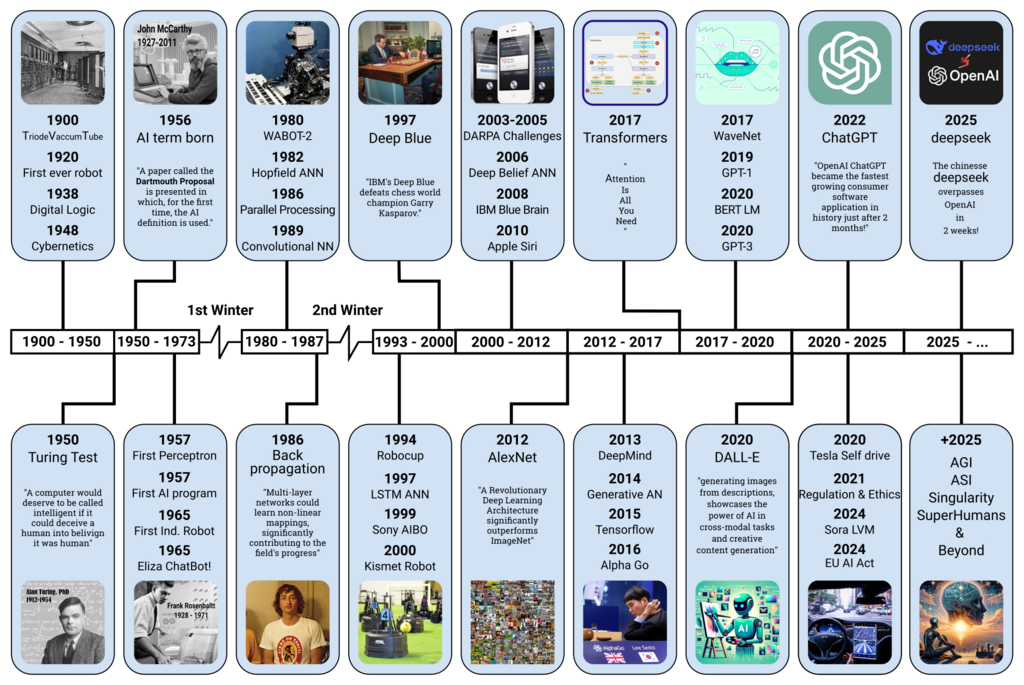
Today, agents are a central part of modern AI. They represent a move away from AI as just a pattern-recognizer or data-processor, and toward AI as an active participant in the world. By combining perception, decision-making, and action, agents can tackle tasks that were once thought to be exclusively human.
What are the three fundamental steps in an AI agent's operational cycle?
A key characteristic that distinguishes an AI agent, like a modern spam filter, from a simple program is its ability to be ______, meaning it can work on its own and learn over time.
This ability to act purposefully in an environment is why agents are so important to the future of artificial intelligence.