AI Agents and Power Automate CRM Integration
Introduction to AI Agents
What Is an AI Agent?
Think of an AI agent as an autonomous program that can act on your behalf. It senses its environment, makes decisions, and takes actions to achieve a specific goal. It's like a digital assistant that doesn't just answer questions, but actively does things for you.
An AI agent is a program that perceives, thinks, and acts.
Unlike a simple chatbot that just responds to your prompts, an agent has a degree of autonomy. You give it a goal, and it figures out the steps to get there. This could be anything from booking a complex trip to managing your calendar or even monitoring a factory's supply chain.
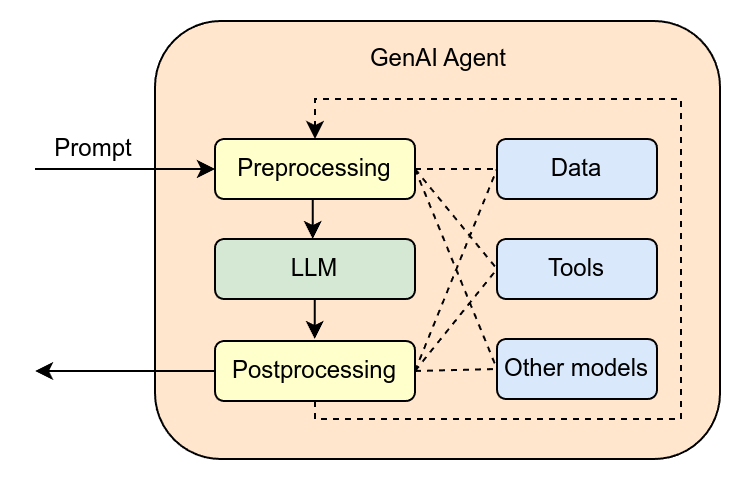
Agents are designed to be proactive and reactive. They can respond to changes in their environment, like a flight cancellation, and take initiative, like rebooking you on the next available flight without you having to ask.
Different Kinds of Agents
Not all agents are created equal. They range from simple programs following basic rules to complex systems that can learn and adapt. Understanding the types helps clarify what they can do.
The simplest agents, Simple Reflex Agents, operate on a basic "if-then" logic. A thermostat is a perfect example: if the temperature drops below a set point, it turns the heat on. It doesn't remember past temperatures; it only knows what's happening right now.
Model-Based Agents are a step up. They maintain an internal "model" or understanding of how the world works. A self-driving car uses a model to understand that a car in front of it will likely continue moving forward, even if its sensors momentarily lose sight of it.
Goal-Based Agents have a clear objective. When you ask a GPS to find the quickest route home, it's acting as a goal-based agent. It considers various paths and chooses the one that best satisfies its goal.
Then there are Utility-Based Agents, which are useful when there are conflicting goals. They weigh different outcomes to choose the one that provides the most "utility," or the best result. An airline's automated pricing system is a utility-based agent, balancing the goal of filling seats with the goal of maximizing revenue.
Finally, Learning Agents can improve their performance over time. A spam filter learns from the emails you mark as junk, getting better at catching unwanted messages. This ability to learn from experience is what makes many modern AI systems so powerful.
Agents in the Real World
AI agents are already at work in many fields, often behind the scenes. They are not just theoretical concepts; they are practical tools that automate tasks and improve efficiency.
| Industry | Application of AI Agents |
|---|---|
| E-commerce | Personalized product recommendations and dynamic pricing. |
| Healthcare | Scheduling patient appointments and managing medical records. |
| Manufacturing | Monitoring supply chains and predicting maintenance needs. |
| Finance | Detecting fraudulent transactions and automating stock trading. |
| Customer Service | Handling routine queries and routing complex issues to humans. |
In each case, the agent handles complex, repetitive, or time-sensitive tasks, freeing up human workers to focus on more strategic or creative work. By automating these processes, businesses can operate more smoothly, reduce errors, and respond faster to changing conditions. For example, a supply chain agent can automatically reorder parts when inventory runs low, preventing production delays before a human even notices there's a problem.
As companies introduce and expand AI agents, employees’ jobs will shift from performing specific tasks to overseeing the agents now doing them.
The key benefit is a shift from manual execution to automated oversight. Instead of painstakingly booking every flight and hotel for a business trip, an employee can simply tell an agent the destination and dates, and then review the itinerary it creates. This represents a fundamental change in how work gets done, emphasizing strategy over tedious execution.
What is the primary characteristic that distinguishes an AI agent from a simple program like a chatbot?
An AI agent's role is purely reactive, meaning it only acts in direct response to a user's command.
AI agents are becoming essential tools, capable of handling complex tasks with a level of autonomy that previous technologies lacked. Understanding their basic forms and functions is the first step toward harnessing their potential.