AI Agentic Systems and MCP Implementation
Introduction to Multi-Agent Systems
Beyond a Single Agent
So far, we've thought about AI agents as solo performers. A single agent perceives its environment, makes a decision, and acts. But what happens when you put multiple agents in the same room? You get a multi-agent system (MAS).
Think of the difference between a solo violinist and a full orchestra. The violinist follows their own sheet music. The orchestra members must not only play their own part but also listen to everyone around them, follow the conductor, and blend their sounds to create a cohesive piece. A multi-agent system is like that orchestra. It’s a collection of autonomous agents that interact within a shared environment.
The core idea is simple: individual agents, each with their own goals and abilities, create complex group behavior through interaction.
This interaction is the key. Agents in a MAS can communicate with each other, cooperate on tasks, compete for resources, or simply coexist while being aware of one another's presence. The environment could be anything from a physical space, like a warehouse floor, to a digital one, like the stock market.
How Agents Interact
The behavior of a multi-agent system depends entirely on the goals of its agents and how those goals relate to one another. We can group these interactions into three main categories.
Cooperative
adjective
Agents work together to achieve a common goal. Their success is measured by the group's performance.
Imagine a team of search-and-rescue drones spreading out to find a lost hiker. Each drone has the same mission. They coordinate their search patterns to cover the area efficiently and share information if one of them spots something. The success of one is a success for all.
Competitive
adjective
Agents have conflicting goals, where one agent's gain is another's loss. This is often called a zero-sum game.
The classic example is a chess game between two AI players. Every move that improves one player's position necessarily worsens the other's. They are in direct opposition, competing for the same limited resource: a win.
There is also a middle ground, known as mixed-sum or general-sum interaction. Here, agents might compete for a resource but must also cooperate to avoid a disastrous outcome. Think of drivers on a highway. Everyone competes for space to get to their destination faster, but they must all cooperate by following traffic laws to avoid a crash.
| Interaction Type | Agent Goals | Example |
|---|---|---|
| Cooperative | Aligned | Drones coordinating a search pattern |
| Competitive | Opposed | Two AIs playing a game of Go |
| Mixed-Sum | Partially aligned | Bidding agents in an online auction |
Challenges in the Crowd
Managing a group of autonomous agents is much harder than directing a single one. Several key challenges emerge when you move from a single agent to a multi-agent system.
My personal tip for navigating this complexity is to always begin with a simple, clear definition of each agent’s individual objectives before attempting to orchestrate their collective behavior.
Coordination: How do agents align their actions to achieve a goal efficiently without getting in each other's way? In our rescue drone example, how do they decide which area each drone will search? Without a good coordination strategy, all the drones might flock to the same spot, wasting time and energy.
Communication: Agents need a way to share information. What information is important? How often should they communicate? Sending too much data can overload the system, but sending too little can lead to mistakes. A protocol must be established so agents can send and understand messages effectively.
Decision-Making: Who makes the final call? In some systems, there's a central
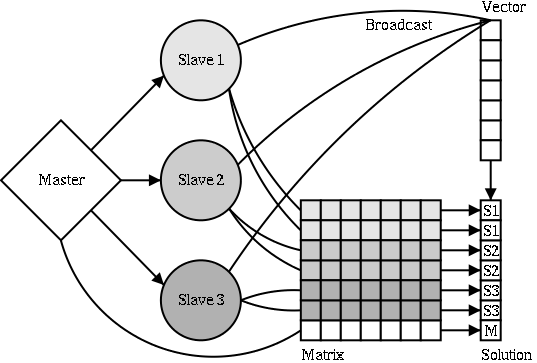
In other, decentralized systems, agents must reach a consensus on their own. Each approach has trade-offs in speed, robustness, and complexity.
These challenges are at the heart of designing effective multi-agent systems. The solutions determine whether the system behaves like a well-rehearsed orchestra or a chaotic mess.
What is the defining characteristic of a multi-agent system (MAS)?
Two AI-powered e-commerce bots are programmed to buy the same rare item at an online auction. The bot that places the highest bid wins the item. What type of interaction does this scenario represent?
Multi-agent systems provide a powerful framework for solving complex problems by breaking them down and assigning pieces to specialized, autonomous agents that can work together.