AI Agent Fundamentals
Introduction to AI Agents
The Digital Workforce
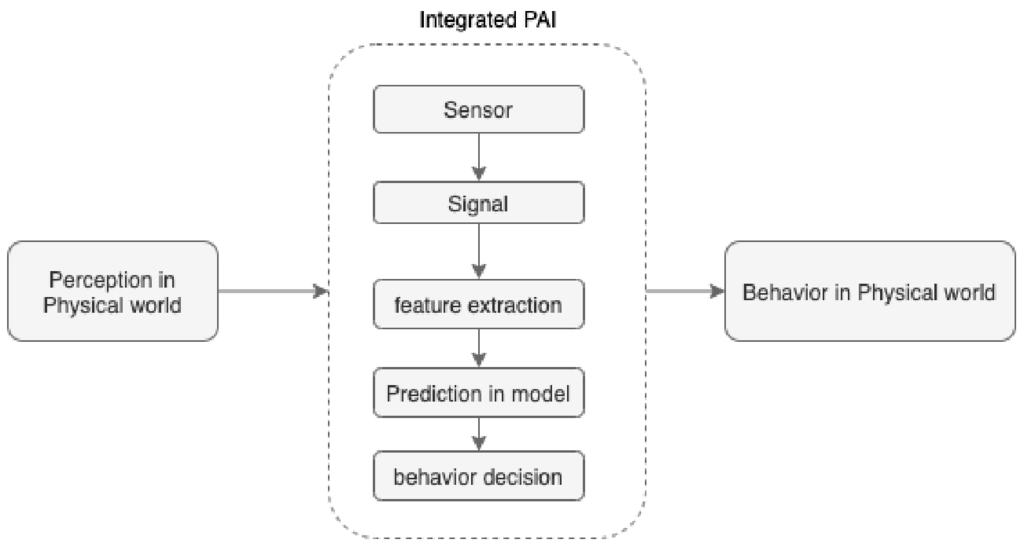
Think of an AI agent as an autonomous entity that can do a job. It perceives its environment, makes a decision, and then takes an action to achieve a specific goal. Just like a person, it has sensors to take in information (like eyes and ears) and actuators to perform tasks (like hands and feet). The difference is, an agent's environment is often digital, and its tools are code.
An AI agent is a software program designed to understand its environment, process information, and take actions to achieve specific goals.
This simple loop—perceive, think, act—is the foundation for everything from a spam filter in your email to the complex systems that guide rovers on Mars. But not all agents “think” in the same way. Their design depends entirely on the job they need to do.
Three Ways of Thinking
AI agents generally fall into a few categories based on their internal logic. The simplest are reactive agents.
Reactive Agent
noun
An agent that makes decisions based only on the current state of its environment, without considering past events or future consequences.
Reactive agents operate on simple if-then rules. If they perceive a specific condition, they execute a corresponding action. They have no memory or long-term goals. A classic example is a robot vacuum cleaner that changes direction when its sensor bumps into a wall. It isn't thinking about cleaning the whole room; it's just reacting to the immediate obstacle.
One step up in complexity are deliberative agents. These are the planners. A deliberative agent maintains an internal model of its world and thinks ahead. Before acting, it considers how its actions will affect the future and chooses the one that best leads to its goal. Think of a GPS navigation app. It doesn't just react to the next turn; it analyzes the entire map, considers traffic, and calculates the optimal route to your destination.
Finally, we have hybrid agents. As the name suggests, they combine the speed of reactive agents with the foresight of deliberative ones. A hybrid agent might have a reactive layer for handling immediate needs and a deliberative layer for long-term planning. A self-driving car is a perfect example. It deliberates to plan a route from home to work, but it will react instantly—without planning—to slam on the brakes if a pedestrian steps into the road.
Agents in the Wild
AI agents are not just theoretical concepts; they are already integrated into many aspects of technology and business. They automate tasks, personalize experiences, and manage complex systems.
From the non-player characters (NPCs) in video games that react to your presence to the sophisticated bots that execute stock trades, agents are everywhere. Here are just a few examples.
| Domain | Example Application | Common Agent Type |
|---|---|---|
| E-commerce | Product recommendation systems | Deliberative |
| Smart Home | Voice assistants like Alexa or Siri | Hybrid |
| Gaming | Non-player characters (NPCs) | Hybrid |
| Cybersecurity | Intrusion detection systems | Reactive |
| Finance | High-frequency trading bots | Deliberative |
Understanding these different types of agents is key to seeing how AI is able to tackle such a wide range of problems, from simple automation to complex, goal-oriented strategies.
Now, let's test your understanding of these core concepts.
What is the fundamental operational loop of an AI agent?
A spam filter that automatically moves an email to the junk folder based on a specific keyword is an example of what type of agent?
By categorizing agents based on how they think and act, we can better understand their capabilities and how they form the building blocks of more complex AI systems.