AI Agent Development
Introduction to AI Agents
What is an AI Agent?
At its core, an AI agent is a program that can sense its environment and act on its own to achieve a specific goal. Think of it like a very focused employee. You give it a job, the tools to do that job, and the authority to make decisions. Then, it gets to work without you needing to supervise every single step.
An AI agent is an autonomous system designed to perceive its environment, analyze data, make decisions, and execute actions to accomplish specific objectives without continuous human oversight.
A simple example is a smart thermostat. It senses the room's temperature (perception) and decides whether to turn the heat or AC on or off (action) to maintain your desired temperature (goal). It does this automatically, without you constantly adjusting it.
More advanced agents operate in much more complex environments, like a self-driving car navigating a busy street. But the principle is the same: perceive, decide, and act.
All AI agents share a few key traits that make them different from simple programs.
| Characteristic | Description |
|---|---|
| Autonomy | Agents can operate independently without direct human control. They make their own choices. |
| Reactivity | They can perceive their environment and respond to changes in it in a timely way. |
| Proactivity | They don't just react; they can take initiative to achieve their goals. |
| Social Ability | They can interact or communicate with other agents (and humans) to achieve their objectives. |
A Spectrum of Agents
Not all agents are created equal. They range from simple reactive machines to complex systems that can learn and adapt. We can think of them as existing on a spectrum of intelligence and complexity.
Simple Reflex Agents are the most basic type. They follow a simple "if-then" rule. If the car in front brakes, then I brake. They react to what they perceive right now, with no memory of the past.
Model-Based Reflex Agents are a step up. They maintain an internal model of the world. A self-driving car needs to know more than just the location of the car in front; it needs to know that lanes exist, that red lights mean stop, and that it can't see what's around a blind corner. This internal model helps it handle situations where it can't see everything at once.
Goal-Based Agents think further ahead. Instead of just reacting, they have a specific goal. Your GPS is a goal-based agent. Its goal is to get you to your destination. It will consider different routes and choose one that achieves that goal. If it hits a dead end, it will re-plan to find another way.
Utility-Based Agents handle situations where there's more than one way to reach a goal. They try to find the best way. A utility-based GPS wouldn't just find a route; it would find the fastest or most fuel-efficient route. It weighs the pros and cons of different outcomes to maximize a value, or "utility."
Learning Agents are the most advanced. They can improve their own performance over time. A spam filter is a learning agent. When you mark an email as spam, it learns what spam looks like and gets better at catching it in the future. These agents can adapt to new situations and refine their strategies through experience.
Agents in the Wild
AI agents aren't just theoretical concepts; they're already at work all around us. When you shop online, recommendation agents are suggesting products you might like. In finance, agents monitor transactions in real-time to detect fraudulent activity. Even your favorite video game has AI agents controlling the non-player characters (NPCs), making them react to your moves.
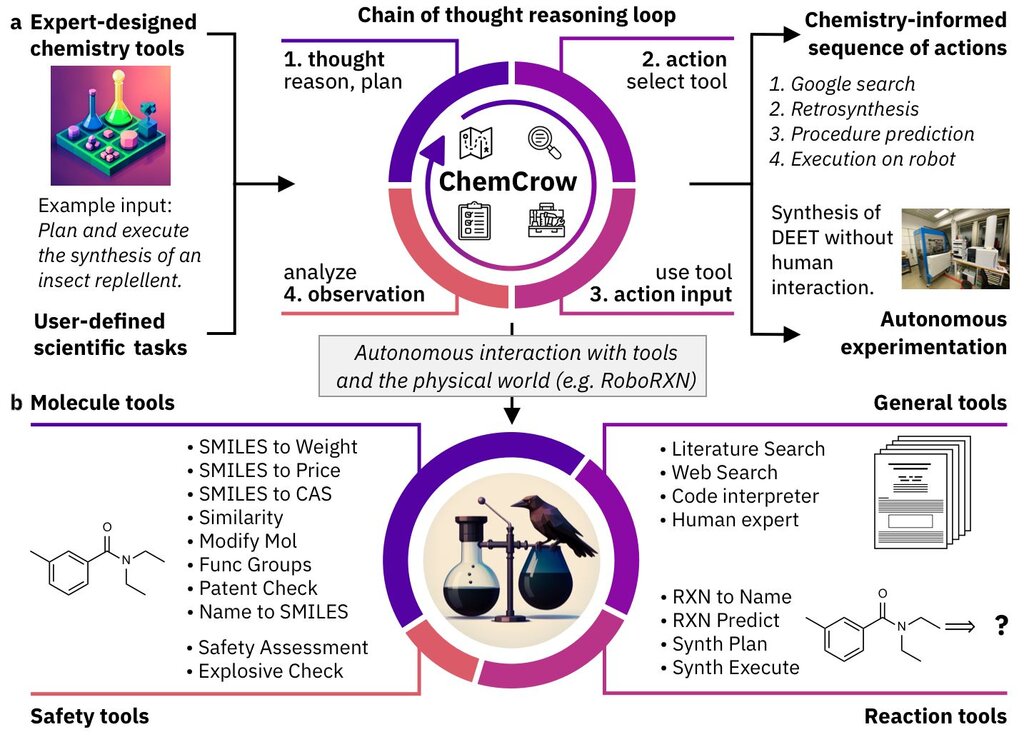
In more specialized fields, the impact is even greater. Agents help doctors diagnose diseases by analyzing medical images, and they assist scientists in complex research by sifting through massive datasets to find patterns. As technology advances, these autonomous agents will become even more integrated into our daily lives, taking on increasingly complex tasks.