AI Agent Architecture Essentials
Introduction to AI Agents
What Are AI Agents?
You’ve probably interacted with an AI agent today without even realizing it. Think of an AI agent as a program that can operate on its own to achieve a goal. It's more than just a simple chatbot; it’s a system designed to perceive its environment, make decisions, and take actions.
An artificial intelligence (AI) agent is a software system that builds upon AI models (e.g., large language models (LLMs)) and autonomously perceives and acts upon its environment to achieve specific goals.
Let's break that down. The core cycle for any agent is straightforward:
- Perceive: It gathers information about its surroundings. This could be text from a user, data from sensors, or information from the internet.
- Think: It processes this information and decides what to do next based on its goals.
- Act: It performs an action. This might be responding to a question, ordering a product, or adjusting a thermostat.
This continuous loop allows an agent to work independently toward its objective.
Types of Agents
Not all agents are created equal. They vary in complexity and how they make decisions. We can generally group them into three main categories.
Reactive Agent
noun
The simplest type of agent. It acts only based on the current situation, without any memory of the past. It follows simple "if-then" rules.
Think of a reactive agent like an automatic vacuum. It bumps into a wall (perception) and immediately turns in a different direction (action). It doesn't remember hitting the wall or try to map out the room; it just reacts.
Deliberative Agent
noun
A more complex agent that can think ahead. It maintains a model of its environment and can plan a sequence of actions to achieve its goals.
These agents don't just react. They consider different options and predict their outcomes. A chess-playing AI is a great example. It thinks several moves ahead, analyzing potential board states to find the best path to victory.
Hybrid Agent
noun
An agent that combines both reactive and deliberative components. It can make quick, reactive decisions while also creating and executing long-term plans.
Most sophisticated agents today are hybrids. This structure allows them to handle immediate needs (like swerving to avoid an obstacle) without losing sight of the bigger picture (like navigating from New York to Los Angeles).
| Agent Type | Key Characteristic | Example |
|---|---|---|
| Reactive | Acts on current info (if-then) | Automatic vacuum, Spam filter |
| Deliberative | Plans ahead, has memory | GPS navigation, Chess AI |
| Hybrid | Combines reaction and planning | Self-driving car, Mars rover |
Agents in the Real World
AI agents are already integrated into many aspects of our lives and work, often in ways we don't see. Their ability to automate tasks and make intelligent decisions is transforming industries.
In customer service, agents power chatbots that can answer questions, process returns, and schedule appointments 24/7. In e-commerce, they manage inventory, adjust prices based on demand, and provide personalized product recommendations.
They also play a huge role in logistics and supply chain management. An agent can monitor global shipping routes, predict delays due to weather, and automatically reroute shipments to ensure they arrive on time. This saves companies millions of dollars and makes the whole system more efficient.
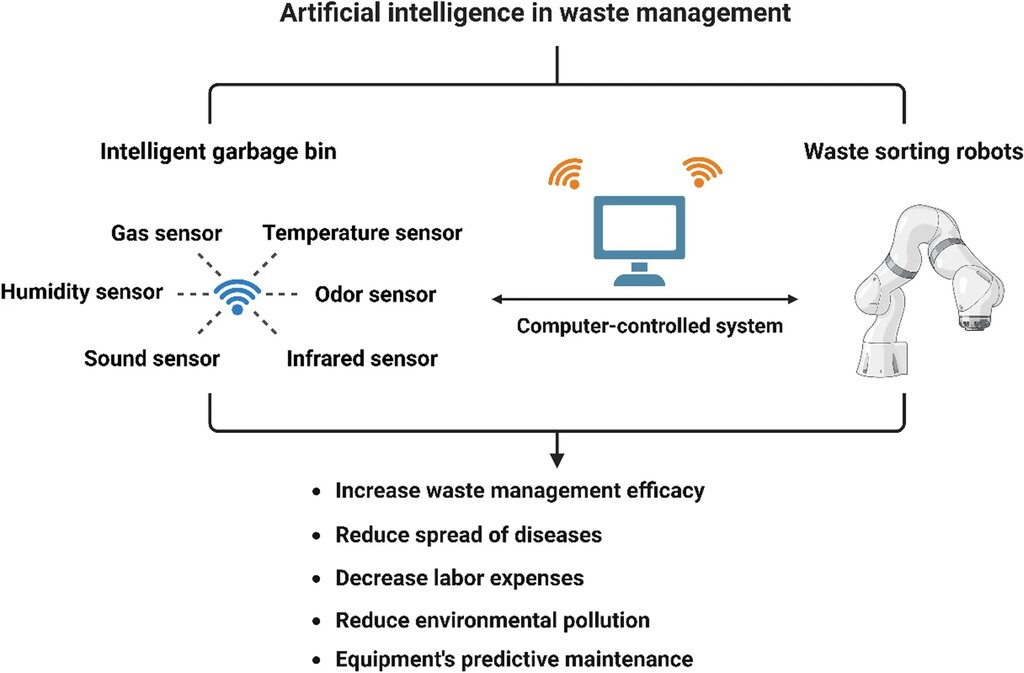
From the smart assistant on your phone that sets reminders and plays music to the complex robotic systems assembling cars in a factory, AI agents are performing tasks that range from simple conveniences to critical industrial operations. They are the active, goal-oriented side of artificial intelligence.
Time to test your knowledge.
What are the three core steps in an AI agent's operational cycle?
A customer service chatbot that instantly answers common questions based on keywords without remembering past conversations is an example of what type of agent?