AI Agent Architecture and Implementation
Reasoning Loops
The Agent's Inner Monologue
Unlike a simple chatbot that gives a one-off answer, an AI agent operates in a continuous loop. It has a goal, but it doesn't know the exact steps to get there. To figure it out, the agent essentially talks to itself. This internal monologue allows it to reason, strategize, and decide what to do next. This structured thinking process is often built on a framework called ReAct—short for Reasoning and Acting.
The ReAct (Reasoning + Acting) model represents the cutting edge in AI agent design, combining analytical thinking with immediate action in a continuous feedback cycle.
The ReAct framework guides the agent through a simple yet powerful cycle: Thought, Action, and Observation.
- Thought: The agent assesses the goal and its current situation. It thinks about what information it's missing or what the next logical step should be. This is where chain-of-thought reasoning comes into play, as the agent verbalizes its plan.
- Action: Based on its thought, the agent chooses a specific tool to use. This could be a web search, a calculator, or a call to an external database API.
- Observation: The agent receives the result from its action. This new piece of information—the search results, the calculation's answer, the data from the API—becomes the input for its next thought.
This loop repeats, with each observation feeding a new thought, until the agent determines it has enough information to fulfill the original goal. The entire sequence of thoughts, actions, and observations creates a log called a "thought trace," which is invaluable for understanding and debugging the agent's decision-making process.
Of course, a crucial part of any loop is knowing when to stop. An agent can't cycle through thoughts and actions forever. A stopping condition is a rule that tells the agent when it has successfully completed its task or when it's clear it cannot. This might be triggered when a thought concludes with "Final Answer:", or after a set number of attempts to prevent infinite loops.
Advanced Reasoning Patterns
While the ReAct loop is a solid foundation, agents can get stuck or make mistakes. More advanced patterns allow agents to critique their own work and explore multiple solutions at once. This moves them from being simple instruction-followers to more robust problem-solvers.
One powerful technique is called Reflexion. It equips an agent with the ability to look back on its own actions and learn from its mistakes within a single task.
The process adds a self-evaluation step. After an initial attempt to solve a problem, the agent pauses. It generates a critique of its own performance by analyzing its thought trace, asking questions like, "Did that action get me closer to my goal?" or "Is there a more efficient way to do this?" This self-generated feedback is then added to its memory, guiding the next attempt. It's like a built-in quality assurance check.
Another advanced strategy is Tree-of-Thought (ToT) reasoning. Instead of following a single chain of thought, the agent explores multiple reasoning paths simultaneously. At each step, it considers several different 'next thoughts' and evaluates them, pruning away the less promising branches.
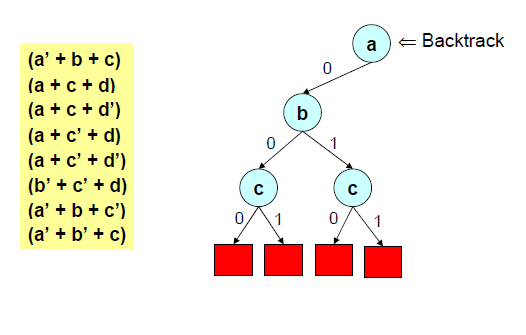
Imagine a detective solving a crime. They might consider three different suspects at once, gathering clues for each in parallel. If one lead goes cold, they can easily backtrack and focus on a more promising one. ToT allows an agent to do the same, making it much more effective for problems that have many possible solutions or require strategic foresight. These reasoning loops—from the simple ReAct cycle to the more complex Reflexion and ToT—are what give AI agents the power to think, plan, and act autonomously.
What are the three core components of the ReAct framework's loop?
In the context of an AI agent, what is a “thought trace”?