AI Advancements Explained
Introduction to Artificial Intelligence
What is Artificial Intelligence?
At its core, artificial intelligence is about creating machines that can think and learn like humans. It's a broad field of computer science aimed at building systems that can perform tasks that typically require human intelligence, like recognizing speech, making decisions, and translating languages.
Artificial intelligence (AI) is a broad field of computer science and engineering that focuses on developing computers capable of performing activities that normally require human intelligence, such as learning, problem-solving, decision-making, and natural language processing.
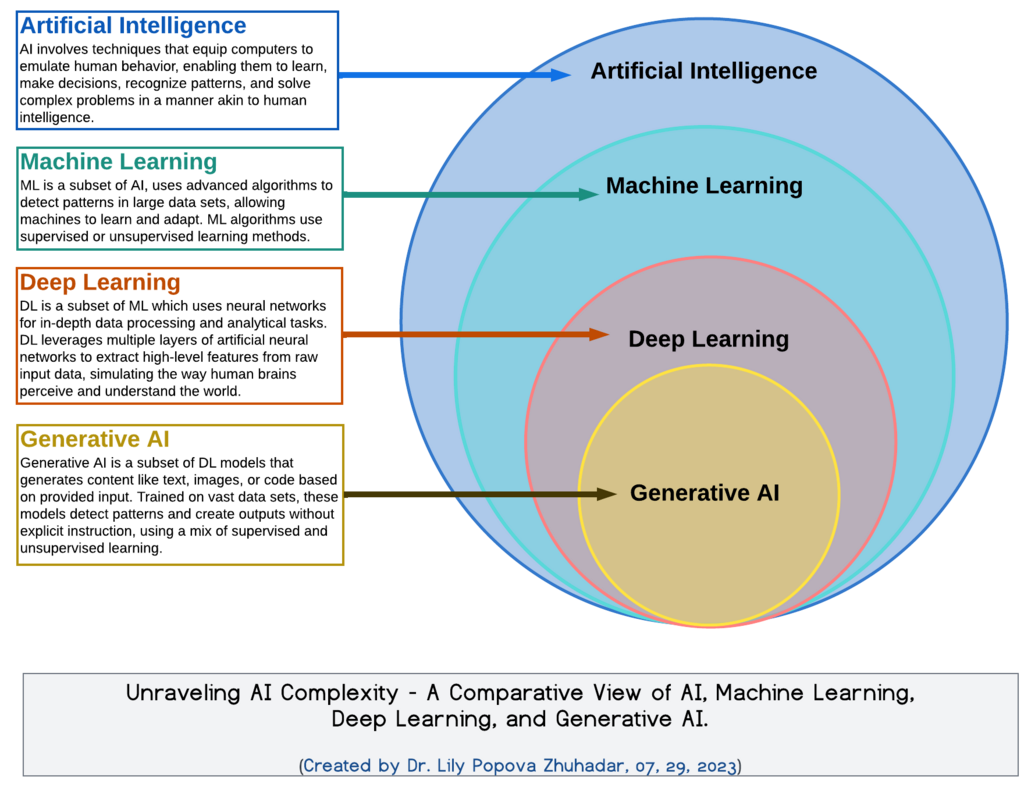
Think of AI as a big umbrella. Underneath it are more specific fields. Two of the most important ones you'll hear about are machine learning and deep learning. You don't need to be an expert on them yet, but it's helpful to know how they fit together.
Algorithm
noun
A process or set of rules to be followed in calculations or other problem-solving operations, especially by a computer.
Machine learning is a subset of AI where systems learn directly from data. Instead of being explicitly programmed with rules for every possible situation, a machine learning model is trained on a huge number of examples. It uses algorithms to find patterns in the data and then uses those patterns to make predictions about new, unseen data.
Neural networks are a key part of machine learning, inspired by the structure of the human brain. They are networks of interconnected nodes, or 'neurons,' that process information. Deep learning simply uses very large neural networks with many layers, allowing them to learn incredibly complex patterns from enormous datasets. This is the technology behind many recent AI breakthroughs, from self-driving cars to advanced image recognition.
A Quick History
The idea of intelligent machines has been around for centuries, but the modern field of AI officially began in the summer of 1956 at a conference at Dartmouth College. Researchers gathered to explore the idea that 'every aspect of learning or any other feature of intelligence can in principle be so precisely described that a machine can be made to simulate it.'
The years that followed were full of excitement and big promises. Early AI systems could solve algebra problems and prove theorems. But progress was slow. The limited computing power and data available at the time led to periods known as 'AI winters,' where funding and interest dried up because the technology couldn't live up to the hype.
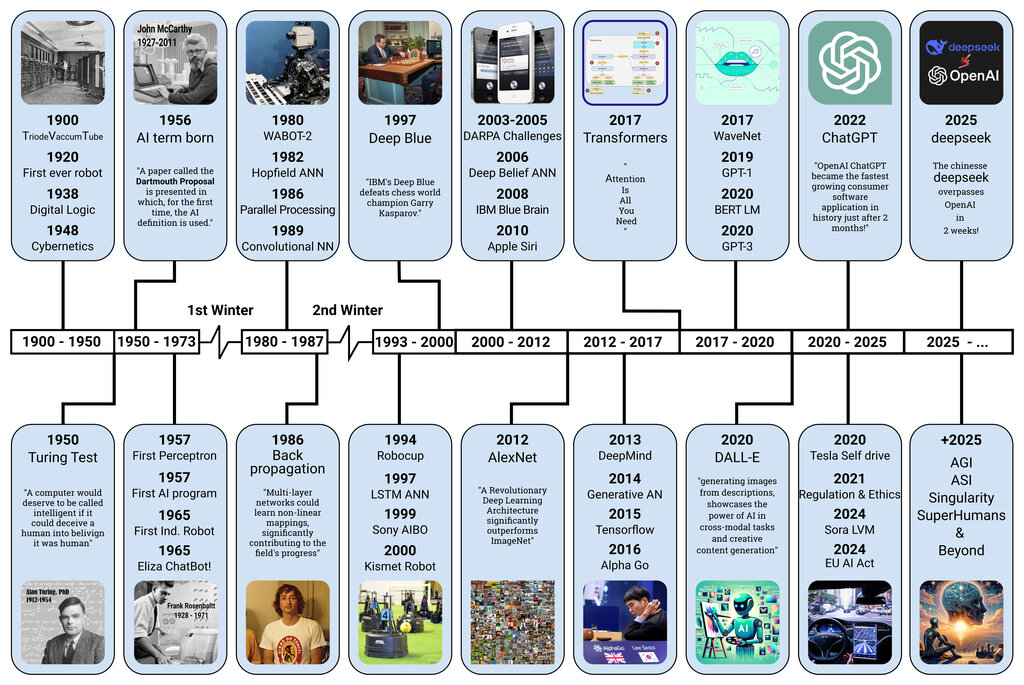
Things started to change in the late 1990s and 2000s. The internet created vast amounts of data, and computer processors became exponentially more powerful. These two ingredients, massive datasets and powerful hardware, were exactly what machine learning needed to flourish. Suddenly, AI wasn't just a theoretical concept; it was a practical tool that could solve real-world problems.
Why AI Matters Now
Today, AI is integrated into countless technologies we use every day. When you ask a voice assistant for the weather, get a movie recommendation on a streaming service, or use a navigation app to find the fastest route, you're interacting with AI.
Its importance lies in its ability to process and understand information on a scale far beyond human capability. AI can analyze complex medical scans to detect diseases earlier, help scientists model climate change, and automate repetitive tasks, freeing up people to focus on more creative and strategic work.
AI isn't just a new feature for your phone. It's a fundamental shift in technology, changing how we work, communicate, and solve problems.
Understanding the basics of AI is no longer just for engineers. It's becoming essential for everyone. Knowing what AI is, how it works, and where it came from helps you better understand the world around you and prepare for the changes it will bring to the future.
Which statement best describes the relationship between Artificial Intelligence (AI), Machine Learning (ML), and Deep Learning (DL)?
The modern field of AI is considered to have officially begun at a 1956 conference held at which institution?