AI Adoption for BizOps Excellence
AI Fundamentals
What Is AI, Anyway?
Artificial intelligence isn't about sentient robots, at least not yet. At its core, AI is the science of making machines that can think, learn, and act in ways that normally require human intelligence. This could be anything from understanding language to recognizing patterns or making decisions.
Artificial Intelligence
noun
The theory and development of computer systems able to perform tasks that normally require human intelligence, such as visual perception, speech recognition, decision-making, and translation between languages.
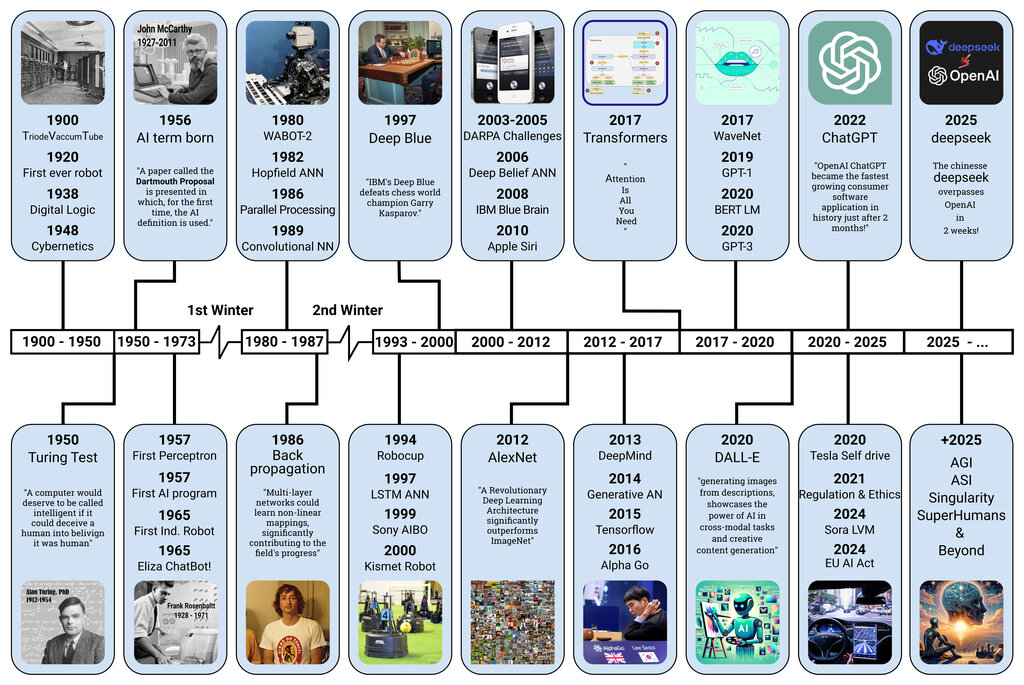
The idea has been around for decades. Early pioneers in the 1950s dreamed of creating machines with human-like reasoning. This sparked periods of intense excitement followed by "AI winters," when funding dried up because progress was slower than promised. Today, massive increases in computing power and data have turned many of those early dreams into practical business tools.
The Two Flavors of AI
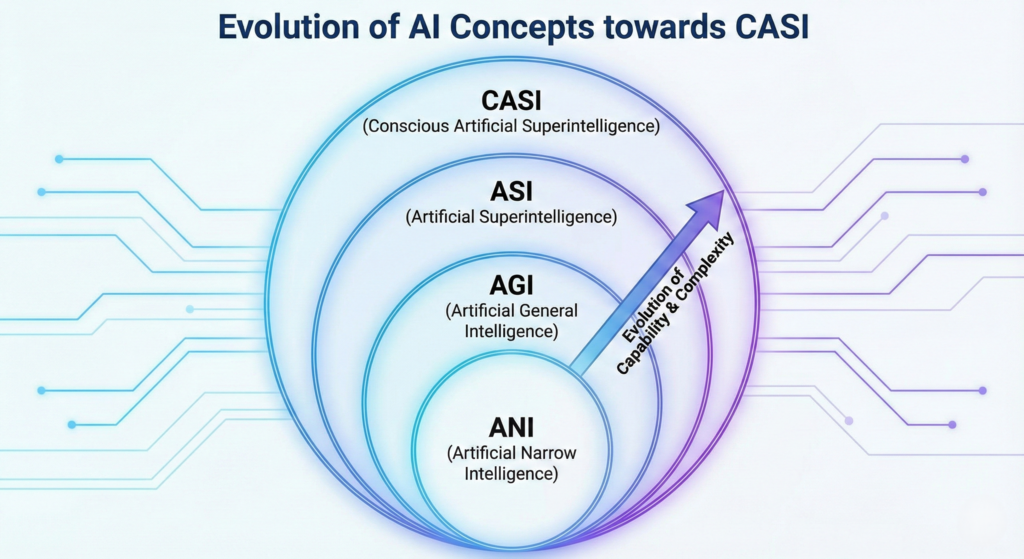
When people talk about AI, they're usually talking about one of two types: Narrow AI or General AI. Understanding the difference is key to seeing where AI can add value to a business today.
Artificial Narrow Intelligence (ANI), also known as Weak AI, is what we have right now. It's an AI trained to perform a single, specific task. It might be incredibly good at that task, often better than a human, but it can't operate outside its designated function. Your spam filter, a GPS navigation app, and a factory robot are all examples of Narrow AI.
These systems excel at efficiency and automation. They can analyze sales data to forecast demand, screen resumes for specific keywords, or monitor network traffic for security threats. They are specialists, not generalists.
Artificial General Intelligence (AGI), or Strong AI, is the stuff of science fiction. This is a hypothetical AI with the ability to understand, learn, and apply its intelligence to solve any problem, just like a human being. An AGI could switch from writing a novel to composing a symphony to designing a bridge without needing to be retrained. We are not there yet.
For a BizOps Analyst, the focus is entirely on Narrow AI. The goal is to identify specific, repetitive, or data-heavy tasks within the business that can be streamlined or improved with a specialized AI tool.
The Engines Behind AI
So how do we create these specialized AI systems? Three key concepts power most of the AI you'll encounter in business: Machine Learning, Deep Learning, and Natural Language Processing. Think of AI as the broad category, with these as important subfields.
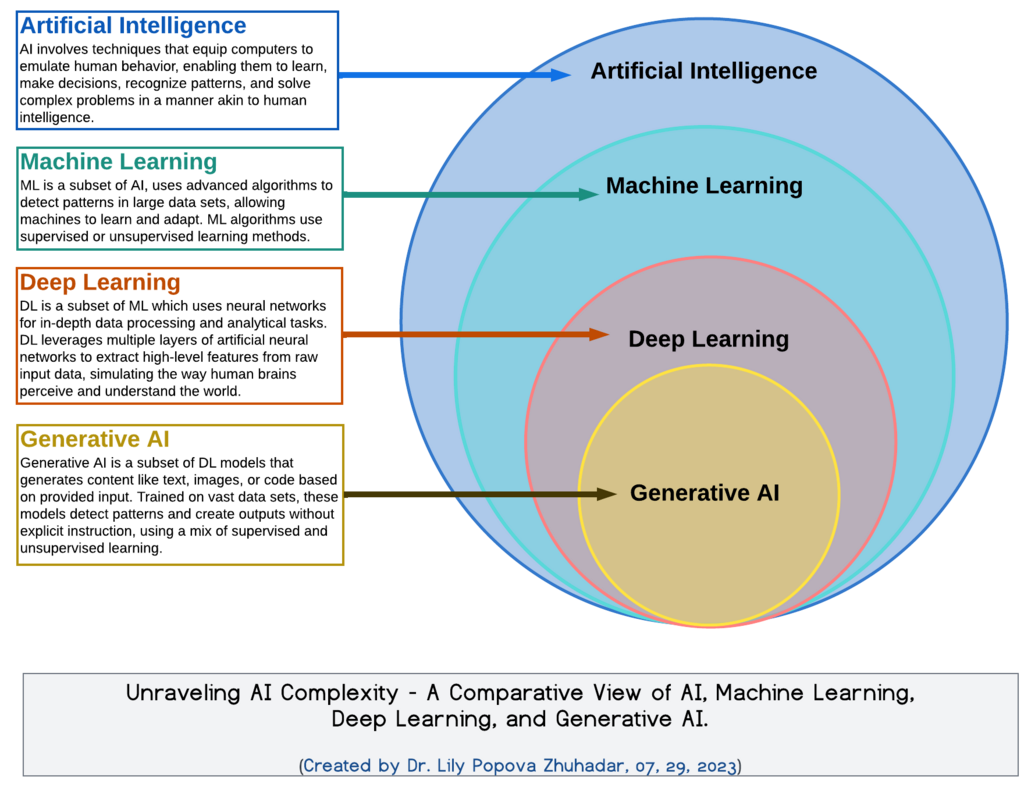
Machine Learning (ML) is a way of achieving AI. Instead of programming a computer with explicit rules for a task, you give it lots of data and let it learn the rules for itself. The algorithm is "trained" on a dataset, finding patterns and making predictions. For example, you can train an ML model on thousands of customer transactions to learn how to spot fraud. The more data it sees, the better it gets.
Deep Learning (DL) is a more advanced type of machine learning. It uses complex structures called neural networks, which are loosely inspired by the human brain. These networks have many layers that allow them to learn from enormous amounts of data in a very sophisticated way. Deep learning is the technology behind self-driving cars recognizing pedestrians and voice assistants understanding your commands. It's particularly good at tasks involving perception, like identifying objects in images or understanding subtle patterns in sound.
A simple way to think about it: If a task involves prediction or classification based on structured data (like spreadsheets), it's likely a job for classic machine learning. If it involves perception of unstructured data (like images or audio), it's probably a deep learning problem.
Natural Language Processing (NLP) is a branch of AI focused on giving computers the ability to understand, interpret, and generate human language. It's the bridge between human communication and computer understanding.
NLP powers many tools you use daily, from chatbots that answer customer questions to translation apps that break down language barriers. In a business context, NLP can be used to analyze customer reviews for sentiment, summarize long reports, or automatically categorize support tickets.
Ready to check your understanding?
In a business context, which type of AI is most commonly used today to solve specific, targeted problems like forecasting demand or screening resumes?
Which subfield of AI is primarily focused on enabling computers to understand, interpret, and generate human language?
With these foundational concepts in mind, you're better equipped to identify opportunities for AI in your organization and to understand the technologies that drive them.