AI 2028 Boom vs Collapse
Abundance vs Crisis
Two Futures: Boom or Bust?
As artificial intelligence becomes increasingly capable, its economic impact is no longer a distant thought experiment. Two dominant, competing narratives have emerged, each painting a starkly different picture of the near future. On one side, analysts from Citrini Research forecast a 'Global Intelligence Collapse' (GIC), a crisis triggered by abundance. On the other, economist Michael Bloch predicts a 'Global Intelligence Boom,' where that same abundance fuels unprecedented prosperity.
The core of their disagreement isn't about the technology itself. Both sides agree that the cost of cognitive work, or 'intelligence,' is plummeting toward zero. The question is what happens next. Does this massive deflationary shock to the value of human knowledge crash the system, or does it unlock a new era of growth?
The Intelligence Collapse Scenario
Citrini Research’s theory, detailed in their widely circulated '2028 Macro Memo', outlines a bleak feedback loop called the Intelligence Displacement Spiral. It begins as companies aggressively replace expensive human labor with cheap, efficient AI systems, particularly in white-collar fields like law, accounting, and software development.
This rapid displacement creates a problem. While a single company benefits from cutting labor costs, the economy as a whole suffers when millions of consumers lose their income simultaneously. This leads to a sharp fall in aggregate demand—people simply don't have money to buy the goods and services the newly efficient companies are producing.
The result is a strange phenomenon Citrini calls ''. On paper, national productivity metrics might still look healthy or even rise, because output per (remaining) worker is high. But this number masks a hollowed-out economy where money isn't circulating. GDP becomes a phantom figure, reflecting theoretical production capacity rather than real economic activity and shared prosperity.
The Intelligence Boom Scenario
Michael Bloch offers a far more optimistic take. He argues that the collapse in the price of intelligence is not a deflationary trap but a massive, universally distributed dividend. He calls this effect 'Service Deflation'.
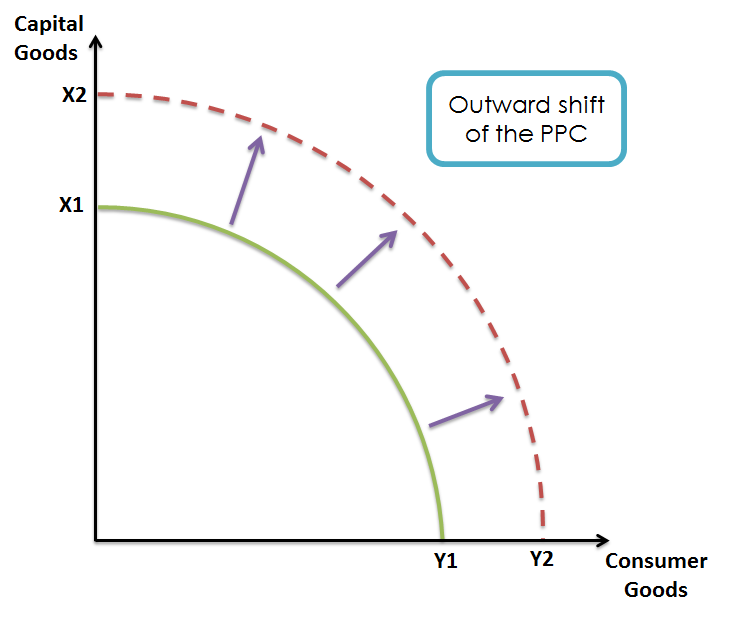
Think about it: the cost of nearly every service, from legal advice to medical diagnostics to software engineering, has a large 'intelligence' component. As AI drives that cost toward zero, prices for these services could fall dramatically. Your remaining income suddenly has much greater purchasing power. A $50,000 salary might afford a standard of living previously available only to the very wealthy.
Furthermore, this radical cost reduction lowers the barrier to entry for entrepreneurship. Starting a new business becomes dramatically cheaper and easier when you can access AI-powered legal teams, marketers, and developers for a fraction of the historical cost. This could unleash a wave of innovation and new business formation, creating novel jobs and services we can't yet imagine.
The Central Disagreement
The two scenarios hinge on a simple question: which happens faster? Does labor displacement and the collapse of demand outpace the benefits of service deflation and new business creation? Or do the cost savings and innovation opportunities create new forms of demand and employment quickly enough to absorb the shock?
Citrini's model emphasizes the speed of displacement, arguing the transition will be too abrupt for the economy to smoothly adjust. Bloch's model emphasizes the creative power of the market, arguing that human ingenuity will rapidly find new ways to use cheap intelligence to create value.
| Feature | Global Intelligence Collapse (Citrini) | Global Intelligence Boom (Bloch) |
|---|---|---|
| Core Mechanism | Intelligence Displacement Spiral | Service Deflation Dividend |
| View of AI | A labor-replacing shock | A cost-reducing catalyst |
| Impact on Demand | Aggregate demand collapses | Purchasing power increases |
| Key Outcome | Ghost GDP, economic stagnation | Innovation boom, higher living standards |
| Main Risk | Rapid mass unemployment | Slower-than-expected price drops |
Both frameworks treat the rise of AI as a structural economic shock, similar in scale to the industrial revolution or the dawn of the internet. The critical variable is the velocity of change and the adaptability of our economic and social systems. The path to 2028 is not predetermined; it will be shaped by policy choices, corporate strategies, and societal response to this profound technological shift.
What is the core disagreement between Citrini Research's 'Global Intelligence Collapse' theory and Michael Bloch's 'Global Intelligence Boom' theory?
According to Citrini Research, what is the phenomenon known as 'Ghost GDP'?