Agricultural Project Monitoring and Evaluation
Introduction to Agricultural Monitoring
Checking the Pulse of the Farm
Think of a farm like a patient. To know if it's healthy and thriving, you need to check its vital signs. Agricultural monitoring is exactly that: a regular check-up for farms and agricultural systems. It's the process of systematically observing and tracking activities to see how they're performing.
Why does this matter? Monitoring helps farmers make smarter, more informed decisions. Is a particular crop using too much water? Are livestock gaining weight as expected? Is the soil losing its nutrients? Answering these questions can mean the difference between a successful harvest and a failed one.
This isn't just about spotting problems. It's also about identifying what works well. By tracking performance over time, farmers can replicate successes, improve their methods, and use resources like water and fertilizer more efficiently. This leads to better productivity, increased profitability, and more sustainable farming practices that protect the environment for the future.
Effective monitoring turns guesswork into a clear, data-driven strategy for growing food.
Measuring What Matters
You can't manage what you don't measure. In agriculture, the key measurements are called Key Performance Indicators, or KPIs. These are specific, quantifiable metrics that show how effectively a farm is achieving its goals.
Instead of a vague goal like "improve the harvest," a KPI makes it concrete: "increase corn yield from 150 to 165 bushels per acre." KPIs provide clear targets and a way to track progress. The choice of KPIs depends on the type of farm and its objectives.
| KPI Category | Example Indicator | What It Measures |
|---|---|---|
| Production | Crop Yield (tons/hectare) | The amount of crop harvested from a specific area. |
| Productivity | Milk Production (liters/cow/day) | The efficiency of livestock in producing goods. |
| Resource Use | Water Use Efficiency | The amount of crop produced per unit of water. |
| Environmental | Soil Organic Matter (%) | The health and fertility of the soil. |
| Financial | Net Profit per Acre | The farm's profitability for a specific land area. |
Choosing the right KPIs is crucial. A farmer might focus on yield and profitability, while a conservation project might prioritize soil health and water efficiency. The goal is to focus on the few metrics that provide the most valuable insights.
How Data Is Collected
Once you know what to measure, the next step is how to measure it. Data collection is the foundation of monitoring, and it can range from simple, traditional methods to more advanced techniques. There's no single best way; the right method depends on the KPI being measured, the available resources, and the scale of the operation.
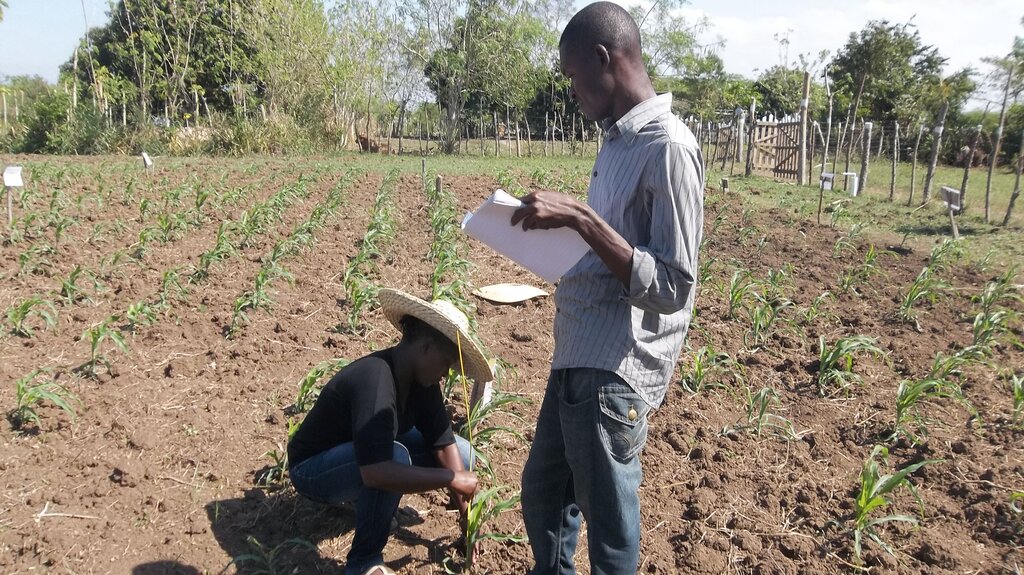
Common methods include:
-
Direct Observation and Field Records: This is the most fundamental approach. Farmers walk their fields to check for pests, measure plant growth with a ruler, or count fruit on a tree. They keep logs of when they planted, how much fertilizer they used, and what their final harvest weight was.
-
Surveys and Interviews: Agricultural extension agents or researchers often use structured surveys to gather information from a large number of farmers. This can help track trends across a whole region, like the adoption of a new farming technique.
-
Sampling: It's often impractical to measure every single plant or animal. Instead, farmers or researchers take samples. To measure soil health, they might collect soil from several different spots in a field and send it to a lab for analysis. To estimate yield, they might harvest a few small, representative plots before the main harvest.
This data forms a continuous loop. Information is collected, analyzed against KPIs, and then used to make decisions that, in turn, affect the next round of data collection.
Ready to check your understanding?
What is the primary purpose of agricultural monitoring?
Which of the following is the best example of a Key Performance Indicator (KPI) for a farm?
Monitoring is the essential practice of gathering information to guide action. By defining clear goals with KPIs and systematically collecting data, farmers can build more productive, profitable, and sustainable operations.