Agile Software Development Fundamentals
Introduction to Agile
What Is Agile?
Before the early 2000s, building software often felt like building a skyscraper. You’d spend months or even years creating a detailed blueprint for the entire project. Once the plan was locked in, the team would go away and build the whole thing from start to finish. The client wouldn't see the final product until the very end. If their needs had changed in the meantime, or if they didn't like the result, it was often too late to make significant changes. This rigid, step-by-step process is known as the Waterfall model.
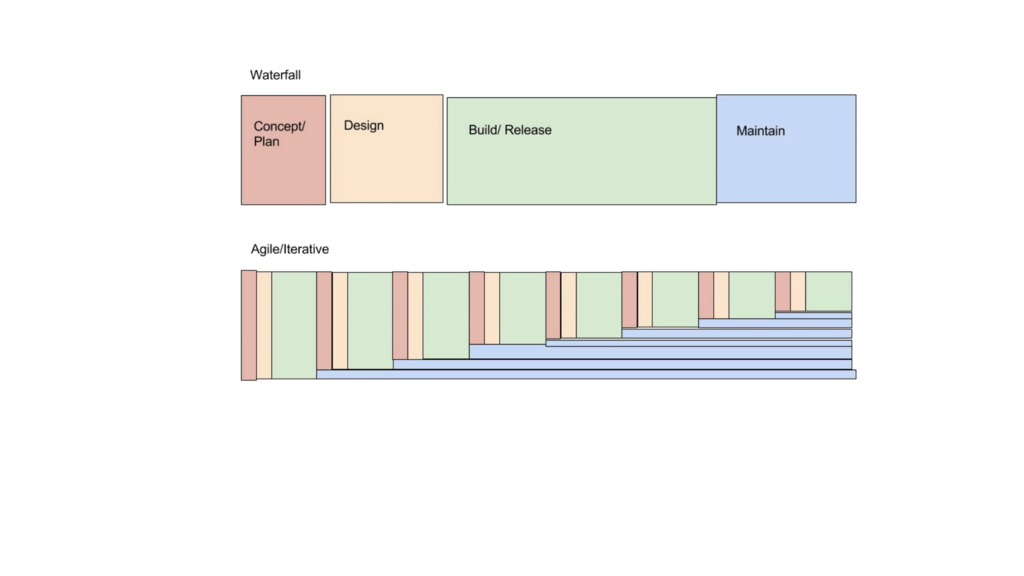
Agile is a different approach. Instead of a single, long-term plan, Agile focuses on delivering work in small, usable increments. It's a mindset that values flexibility, collaboration, and responding to change over sticking to a rigid plan. Think of it less like building a skyscraper and more like cooking a meal. You taste and adjust the seasoning as you go, rather than waiting until the dish is completely finished to find out if it's any good.
Agile is an iterative approach to software development and project management that emphasizes incremental delivery, collaboration, and continuous improvement.
The Agile Manifesto
The frustrations with the Waterfall model came to a head in 2001. A group of seventeen software developers met at a ski resort in Utah to discuss new ways of working. They wanted a more effective and human-centered way to build software. The result of their meeting was the "Manifesto for Agile Software Development," a document that outlines four core values and twelve guiding principles.
The Manifesto isn't a strict set of rules. It's a statement of priorities that guides the Agile philosophy.
The four values are expressed as a preference, highlighting what Agile prioritizes. While there is value in the items on the right, Agile teams value the items on the left more.
| We value... | Over... |
|---|---|
| Individuals and interactions | Processes and tools |
| Working software | Comprehensive documentation |
| Customer collaboration | Contract negotiation |
| Responding to change | Following a plan |
These values are supported by 12 principles that offer more concrete guidance. For example, a key principle is to deliver working software frequently, from a couple of weeks to a couple of months. Another is to welcome changing requirements, even late in development. This is a fundamental shift from traditional methods, where change is often seen as a problem to be avoided.
Why Choose Agile?
So why did this new mindset take hold? The benefits of an Agile approach address the biggest weaknesses of traditional models. By working in short cycles, teams can get feedback from users and stakeholders early and often. This dramatically reduces the risk of building the wrong thing.
Because Agile embraces change, teams can easily adapt to new information or shifting market demands. This flexibility leads to higher quality products that better meet customer needs. It also fosters a more collaborative and transparent environment, where teams are empowered to make decisions and continuously improve their process.
The core benefits of Agile are increased flexibility, faster delivery of value, better risk management, and higher customer satisfaction.
This iterative approach helps teams learn and adapt as they go, making the final product stronger and more relevant. While we've discussed the core philosophy, you'll soon learn about specific frameworks like Scrum and Kanban that put these ideas into practice.
Let's check your understanding of these foundational ideas.
Which statement best describes the primary difference between the Agile and Waterfall models of software development?
The "Manifesto for Agile Software Development" was created because its authors wanted a more effective and __________-centered way to build software.