Agile Manifesto and Scrum Explained
Agile Manifesto Values
The Agile Manifesto
In 2001, a group of software developers got together to rethink how projects were managed. The old way involved rigid, long-term plans that often led to products nobody wanted. They drafted the Manifesto for Agile Software Development, a short document built on four core values. It's not a strict rulebook, but a guide to a more flexible and human-centered way of working.
People Over Process
Individuals and interactions over processes and tools
This first value is about priorities. While processes and tools are helpful, they are not the goal. The real magic happens when talented people communicate and collaborate effectively. A great team can succeed even with basic tools, but the best tools in the world can't save a project with poor communication.
Think of it like a band. You can give them the most expensive instruments and the most detailed sheet music, but if they don't listen to each other and interact, the music will be lifeless. True creativity and problem-solving come from the direct, back-and-forth between team members.
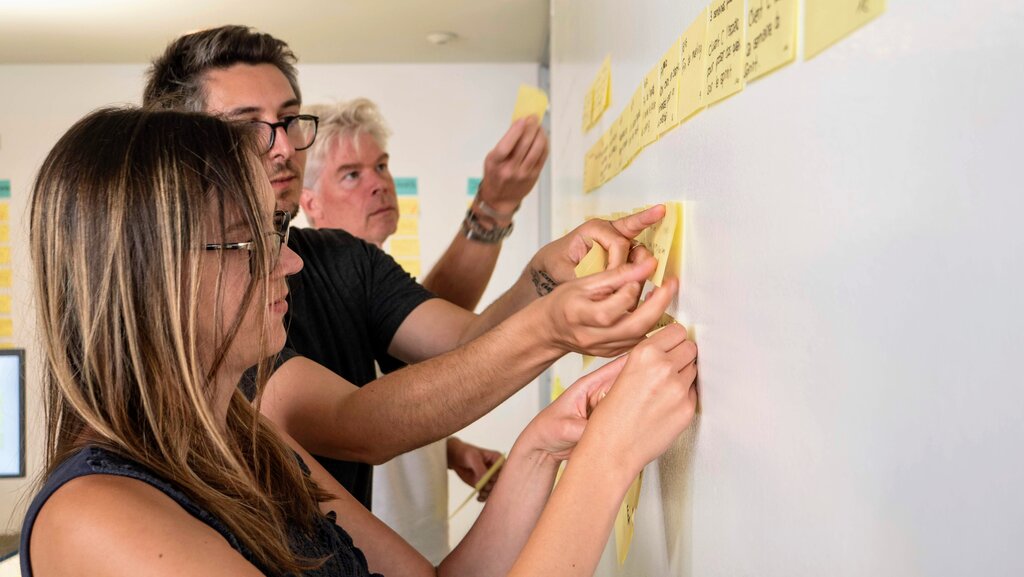
Instead of forcing every request through a complicated ticketing system, this value encourages a developer to simply walk over and talk to a designer. A five-minute conversation can resolve an issue that might take days to sort out through formal channels.
Showing is Better Than Telling
Working software over comprehensive documentation
This doesn't mean documentation is useless. It means that the primary measure of progress is a product that actually works. A hundred-page manual describing a feature is far less valuable than a simple, functioning version of that feature that people can click on and test.
Imagine a chef describing a new soup to you in exquisite detail versus letting you taste a spoonful. The taste tells you everything you need to know. Working software provides that same immediate, tangible feedback. It proves the concept works and allows for real user input, which is far more valuable than any document.
Partnership, Not Paperwork
Customer collaboration over contract negotiation
Traditional project management often treats the customer relationship as a one-time transaction, locked down by a detailed contract. Once the contract is signed, the team disappears for months and returns with a finished product, hoping it meets expectations.
Agile flips this idea on its head. It treats the customer as a partner in an ongoing collaboration. The goal isn't just to fulfill a contract; it's to solve the customer's problem. This requires constant communication, regular check-ins, and a shared understanding that evolves throughout the project. It's like building a custom house with the owner visiting the site every week, rather than just handing them the keys at the very end.
Agile methodology puts the user first, and when forming requirements documentation, the first priority should always be an explanation of why the features to be developed matter to the user or stakeholder.
Adapting to Reality
Responding to change over following a plan
A plan is a great starting point, but it's just a hypothesis. The moment a project begins, things change. Competitors launch new products, market needs shift, and new technologies emerge. Sticking rigidly to an outdated plan in the face of new information is a recipe for failure.
Agile teams embrace change. They see it as an opportunity to make the final product better. Think of a sailor navigating the ocean. They have a destination in mind, but they constantly adjust their sails to adapt to the changing winds and currents. A good team, like a good sailor, knows that the ability to respond to reality is more important than blindly following a map.
These four values work together to create a mindset focused on delivering value, collaborating with people, and adapting to the real world. They are the foundation of all Agile practices.
The Agile Manifesto values "Individuals and interactions over processes and tools." What does this principle primarily suggest?
According to Agile principles, what is the most important measure of a project's progress?