Agentic Systems with LangChain and LangGraph
Introduction to Agentic Systems
Beyond Simple Responses
Most of us think of AI as a tool that responds to our commands. We ask a question, and it gives an answer. We give it a prompt, and it generates an image. This is a reactive relationship. The AI waits for our input and then acts.
Agentic systems represent a major shift from this model. Instead of just reacting, these systems can take initiative. They operate autonomously to achieve goals, making decisions and taking actions without needing constant human guidance. They don't just answer one-off questions; they manage complex, multi-step tasks from start to finish.
Unlike traditional AI, agentic systems do not merely respond to input; they actively explore solutions, optimize outcomes, and interact dynamically with human and machine counterparts.
Think of the difference between a calculator and a financial planner. A calculator only responds to the numbers you enter. A financial planner understands your larger goal, like retiring at a certain age, and then creates and executes a multi-step plan to get you there. Agentic AI is like the financial planner. It's goal-oriented, adaptive, and capable of working on its own.
Key characteristics of agentic systems include:
- Autonomy: They operate independently with minimal human oversight.
- Goal-Oriented: They are designed to achieve specific, often complex, objectives.
- Adaptability: They can adjust their strategy based on new information or changes in their environment.
The Core Components
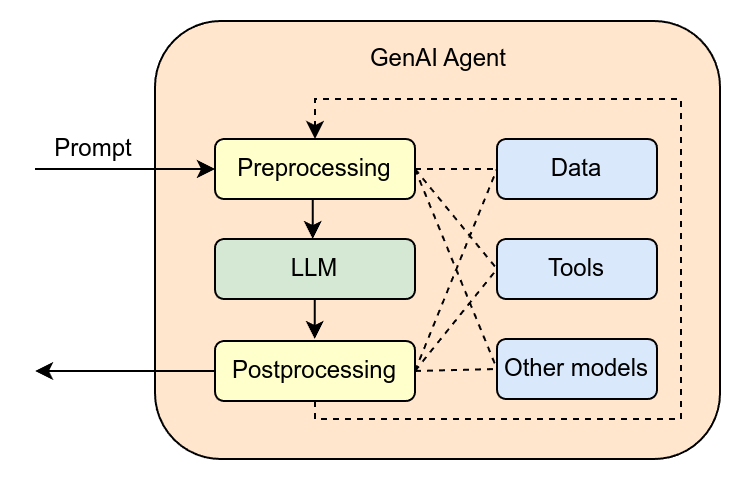
At their heart, all agentic systems function through a continuous loop of three key components: perception, decision-making, and action. This cycle allows them to interact with their environment in a meaningful way.
1. Perception This is how the agent gathers information. It's the system's awareness of its digital or physical environment. For an AI agent booking a flight, perception involves reading your request, checking airline websites for flight times, and seeing real-time pricing data.
2. Decision-Making This is the brain of the operation. After perceiving its environment, the agent analyzes the information, considers its goal, and plans a course of action. It might break a large goal into smaller steps. The travel agent decides which flight best fits the user's budget and schedule, and plans the sequence of clicks needed to book it.
3. Action This is where the agent affects its environment. Actions are the execution of the decided plan. This could be anything from sending an email, making an API call to a service, or controlling a physical robot. The travel agent takes action by filling out the booking form, entering payment information, and confirming the purchase.
Workflows in Action
The operational workflow of an agentic system ties these components together to achieve a goal. It's not a rigid, one-time script. It's a dynamic process that can change based on new information.
Imagine you ask an agent to research and summarize the latest findings on climate change. The workflow might look like this:
| Step | Agent's Process |
|---|---|
| 1. Deconstruct Goal | The agent breaks down the request: "research latest findings" and "summarize." |
| 2. Plan Actions | It decides to first search academic databases, then news sites, and finally synthesize the information. |
| 3. Execute & Perceive | It executes the first action (searches Google Scholar) and perceives the results (a list of research papers). |
| 4. Adapt | Based on the paper titles, it decides which ones are most relevant to download and read. It takes another action. |
| 5. Iterate | It continues this loop of acting (reading papers, searching news) and perceiving (gathering information) until it has enough data. |
| 6. Final Action | The agent synthesizes all the information and takes the final action: writing and presenting the summary to you. |
Throughout this process, the agent works on its own. If a search query fails, it might try a different one. If a source seems unreliable, it may discard it. This ability to plan, act, and adapt is what makes these systems so powerful.
Why Agentic Systems Matter
The shift toward agentic AI is more than just a technical curiosity. It opens the door to automating complex, dynamic tasks that were previously too difficult for machines. In business, agents can manage supply chains, responding to delays in real time. In science, they can design and run experiments, accelerating discovery.
For individuals, they hold the promise of truly capable personal assistants that can manage schedules, handle correspondence, and take care of complex errands. By moving from simply responding to proactively achieving goals, agentic systems are changing what's possible with artificial intelligence.
Now, let's test your understanding of these core concepts.
The provided text compares a reactive AI to a calculator and an agentic AI to a financial planner. What does this analogy primarily highlight about agentic AI?
An agentic system's continuous operational cycle consists of three key components: Perception, ______, and Action.
You've now learned the fundamentals of what agentic systems are and how they operate. These concepts are the foundation for understanding more advanced applications of AI.