Agentic Operational Excellence Mastery
Introduction to Agentic Systems
Meet the Agents
Imagine hiring a personal assistant. You wouldn't give them a step-by-step list for every single task. Instead, you'd give them a goal, like "Please book my travel to the conference in Austin next month." You trust them to figure out the details: finding flights, booking a hotel, and arranging a rental car. They'll handle unexpected issues, like a sold-out hotel, without needing your constant input.
In the world of artificial intelligence, this kind of independent, goal-driven operator is called an agent. An agentic system is essentially an AI designed to act like that resourceful assistant. It's a system that can perceive its environment, make its own decisions, and take actions to achieve specific goals, all with minimal human hand-holding.
Unlike a simple script that just follows orders, an agent operates with a degree of freedom. It's the difference between a tool and a teammate.
The Core Traits
What separates a true agent from a basic automation script? It comes down to three key characteristics.
| Characteristic | What It Means |
|---|---|
| Autonomy | Agents can operate independently. Once you give them a goal, they don't need continuous instructions to proceed. They can make their own choices to get the job done. |
| Adaptability | The world is messy and unpredictable. An agent can react to changes in its environment. If its first plan fails, it can adjust its strategy and try a different approach. |
| Goal-Oriented | An agent's actions are purposeful. It's not just performing random tasks; it's actively working to achieve a specific, defined objective. Every decision is a step toward that end goal. |
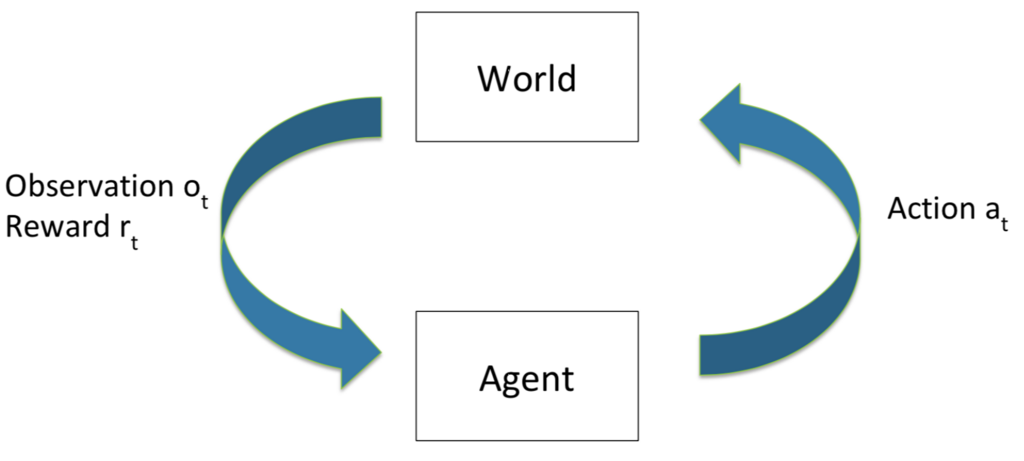
This constant loop of observing the world, making a decision, and then acting on it is fundamental to how an agent works. It senses its surroundings, processes that information in the context of its goal, and then takes an action that changes its environment, starting the cycle all over again.
Agents in the Wild
Agentic systems aren't just theoretical concepts; they're already at work in many fields. You've likely interacted with them without even realizing it.
Software Agents: These are the invisible helpers of the digital world. A spam filter in your email is a simple agent. Its goal is to keep your inbox clean. It observes incoming emails (the environment), decides if they are junk (decision), and moves them to the spam folder (action). A smart thermostat is another example. It learns your habits and adjusts the temperature to save energy and keep you comfortable, adapting to changes in weather and your schedule.
Robotics: In warehouses, autonomous robots navigate complex layouts to retrieve and move packages. Their goal is to fulfill orders efficiently. They perceive their environment using sensors to avoid obstacles and other robots, adapting their paths in real-time. Mars rovers are highly sophisticated agents, carrying out scientific missions millions of miles from Earth with a significant degree of autonomy.
Autonomous Vehicles: A self-driving car is perhaps the most complex example of an agentic system. Its primary goal is to get you from point A to point B safely. It constantly perceives its environment through cameras, radar, and lidar, making thousands of decisions every second—when to accelerate, brake, or change lanes—while adapting to traffic, pedestrians, and road conditions.
Ready to check your understanding?
What is the primary characteristic of an AI agent?
Which sequence best describes the fundamental operational loop of an AI agent?
In each of these cases, the system isn't just following a rigid set of commands. It's pursuing a goal, making independent decisions, and adapting to a dynamic world.