Agentic Language Systems Explained
Introduction to Agentic Language Systems
Beyond Answering Questions
Most of us are familiar with AI that responds to our commands. We ask a question, it gives an answer. We type a prompt, it generates text or an image. This is a reactive relationship. The AI waits for our instructions.
Agentic language systems, or agentic AI, represent a major shift. Instead of just reacting, these systems are designed to be proactive. You give them a goal, and they figure out the steps to achieve it. Think of it like the difference between asking a calculator to add two numbers versus asking a personal assistant to plan your weekend getaway.
The calculator does exactly what you tell it. The assistant understands the high-level goal, breaks it down into smaller tasks (find flights, book a hotel, check for local events), and then executes those tasks on its own.
agent
noun
In AI, an agent is a system that can perceive its environment, process information, and take autonomous actions to achieve specific goals.
At its core, an agentic system operates in a continuous loop: it perceives its environment, makes a plan, and then acts. It observes the results of its actions and adjusts its plan accordingly until the goal is met.
What Makes AI Agentic?
Several key traits distinguish agentic systems from traditional AI models. Understanding these differences helps clarify what makes this technology so powerful.
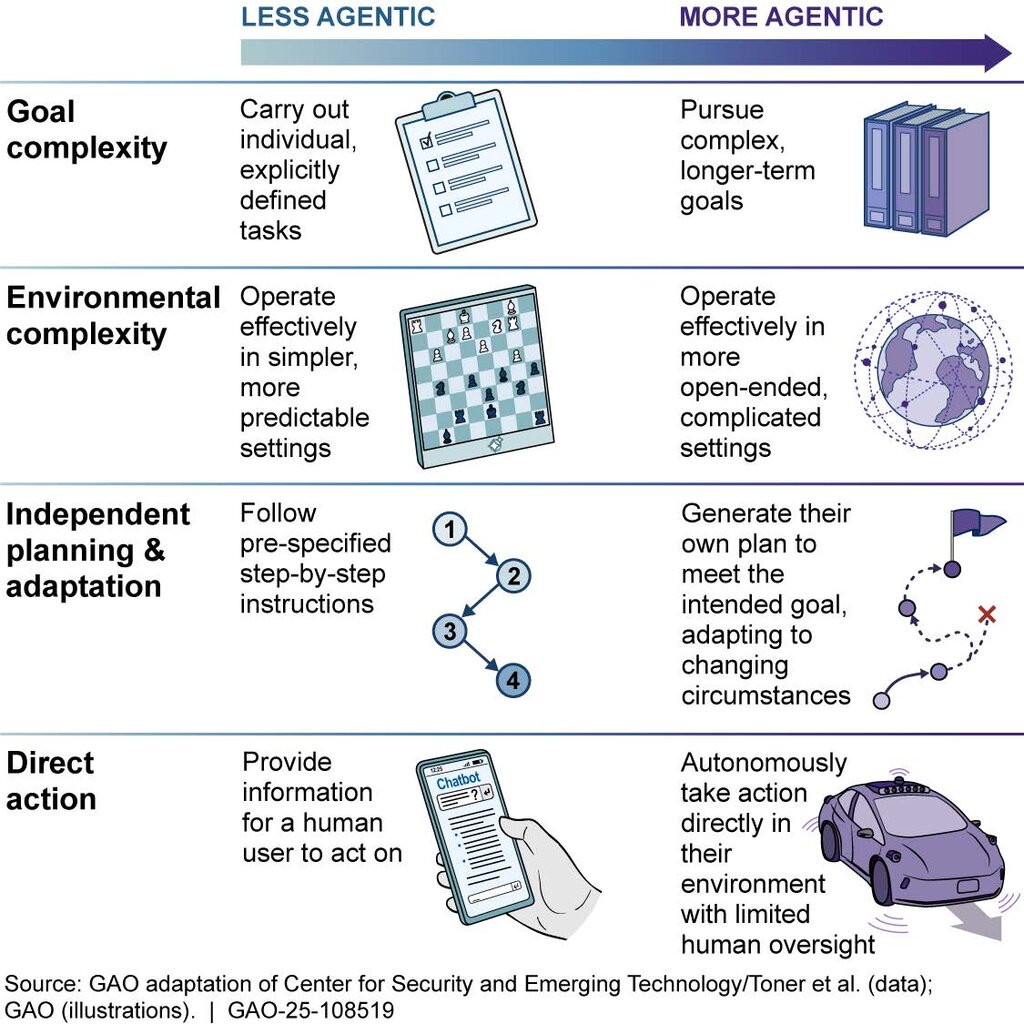
Unlike traditional AI tools that simply respond to prompts, agentic systems can plan multi-step workflows, make autonomous decisions, and execute complex tasks with minimal human oversight.
Let's break down the core characteristics:
| Characteristic | Traditional AI | Agentic AI |
|---|---|---|
| Autonomy | Requires constant human input for each step. | Can operate independently to complete a goal. |
| Initiative | Reactive; waits for specific commands. | Proactive; breaks down goals and plans next steps. |
| Task Scope | Handles single, discrete tasks. | Manages complex, multi-step projects. |
| Adaptability | Follows a fixed set of instructions. | Adjusts its strategy based on new information. |
For example, if you ask a traditional AI to write an email, it will write that one email. If you ask an agentic AI to manage your inbox for the day, it might draft replies, schedule meetings based on email content, and flag urgent messages, all without you having to ask for each specific action.
The Impact on Industries
The ability to handle complex, long-term tasks makes agentic AI useful in many fields. It's not just about more advanced chatbots; it's about automating entire workflows.
In customer service, an agent could handle an entire support ticket from start to finish. It could diagnose a problem, access a customer's account, process a refund, and send a confirmation email, all in one seamless process.
In software development, an agent could take a feature request, write the necessary code, run tests to check for bugs, and even deploy the new feature. This frees up human developers to focus on more creative and strategic problems.
For personal use, an agent could act as a true digital assistant. It could manage your finances by tracking spending and finding better deals on bills, or plan a detailed vacation by coordinating flights, accommodations, and activities that match your preferences. The focus shifts from giving commands to delegating outcomes.
Now, let's check your understanding of these core concepts.
What is the primary difference between a traditional, reactive AI and an agentic AI?
Which of the following tasks is the best example of delegating an outcome to an agentic AI?
By moving from reaction to action, agentic AI opens up new possibilities for what we can achieve with technology.