Agentic AI with Claude Code
Introduction to Agentic AI
Beyond the Prompt
Most of us think of AI as a conversational partner. We type a question, and a large language model (LLM) like ChatGPT gives us an answer. It's a powerful tool for getting information, writing emails, or even coding. But this interaction is fundamentally reactive. The AI waits for our command and then executes it.
Agentic AI is a major leap forward. Instead of just responding to a single prompt, an agent is an autonomous system that can pursue a goal. You give it an objective, and it figures out the steps to get there, all on its own. It can plan, reason, and use tools to complete complex, multi-step tasks with minimal human intervention.
Think of it like this: a traditional AI is a calculator. You give it numbers and an operation, and it gives you the result. An agentic AI is an accountant. You give it a financial goal, and it uses various tools and strategies to achieve it.
The Agent's Toolkit
What allows an AI agent to operate so independently? It comes down to a few core components that work together. These aren't just features added to a language model; they represent a whole new architecture for building intelligent systems.
Agent
noun
An autonomous computational entity that perceives its environment, makes decisions, and takes actions to achieve specific goals.
Planning: This is the agent's ability to create a strategy. When given a complex goal like "Plan a weekend trip to Paris for next month," the agent doesn't just give you a list of flights. It decomposes the goal into smaller, actionable steps: check my calendar for availability, find flights within budget, search for well-rated hotels near the city center, book transportation, and create an itinerary.
Memory: For an agent to learn and adapt, it needs memory. This isn't just remembering your last question. It involves both short-term memory for the current task (like the flight details it just found) and long-term memory to recall past interactions, user preferences, and successful strategies. This allows the agent to improve over time without starting from scratch every single time.
Tool Usage: Agents aren't confined to their own knowledge. They can interact with the outside world using tools. A tool can be anything from a search engine, a calculator, or a database, to a complex API for booking flights or ordering food. By using tools, an agent can gather new information, perform actions in other software, and overcome the limitations of its own training data.
Unlike traditional generative AI, which responds reactively to prompts, agentic AI proactively orchestrates processes, such as autonomously managing complex tasks or making real-time decisions.
Why This Matters
The shift from reactive models to proactive agents is more than just a technical upgrade. It changes what we can achieve with AI. Instead of being a passive assistant, AI can become an active collaborator.
Imagine a marketing agent tasked with increasing website traffic. It could analyze current data, research competitors, write and publish blog posts, manage an ad campaign, and then report back on the results, adjusting its strategy based on what's working. Or consider a scientific research agent that can formulate hypotheses, design experiments, analyze data from scientific instruments, and summarize its findings for human review.
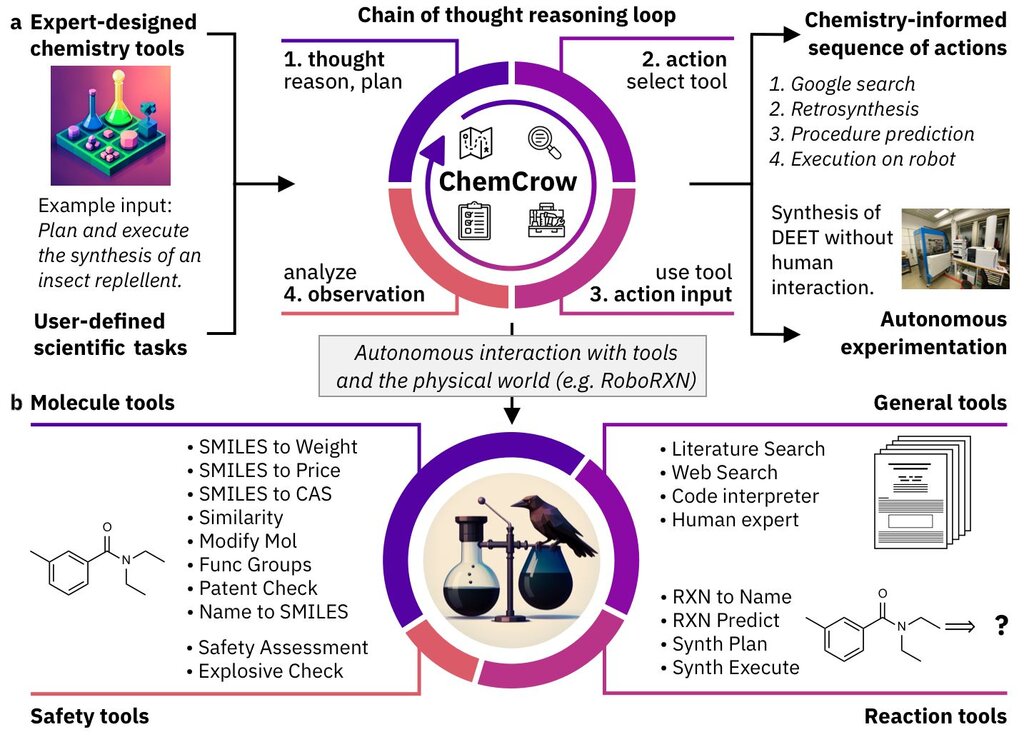
This level of autonomy allows us to tackle bigger, more complex problems. It's about moving from asking an AI to do a task to asking it to achieve an outcome. This foundational understanding of agents—their ability to plan, remember, and act—is the first step toward building and integrating these powerful new systems into our lives.
What is the primary characteristic that distinguishes Agentic AI from a standard large language model (LLM)?
An AI agent tasked with 'increasing website traffic' decides to analyze competitor data, then write and publish a series of blog posts, and finally launch a social media ad campaign. This entire process demonstrates which core component of agentic AI?