Agentic AI Setup
Introduction to Agentic AI
Beyond the Prompt
Most of the AI we interact with today is reactive. We give it a prompt, and it gives us an answer. We ask it to write an email, and it writes one. This is incredibly powerful, but it's like having a skilled assistant who only works when you're standing over their shoulder, giving explicit instructions for every single task.
Agentic AI is different. It's about creating AI systems that can take a goal and run with it. Instead of just responding to a prompt, an agentic AI can create a plan, execute steps, use different tools, and adapt its approach to achieve an objective—all with minimal human intervention. It’s the difference between asking an assistant to write a report and asking them to produce a report, where they know to gather the data, perform the analysis, draft the text, and create the charts on their own.
Unlike traditional AI, which reacts to data, Agentic systems are all about autonomous decision-making, adapting through experience, and taking meaningful action with minimal human involvement.
At its core, agentic AI is about giving systems agency—the capacity to act independently and make their own choices. These systems, often called agents, are designed to perceive their environment, reason about what to do next, and take actions to meet their goals.
The Journey to Autonomy
AI didn't just wake up one day with a to-do list. Its ability to act autonomously is the result of a long evolution in thinking and technology. The journey has had several key stages.
First, we had Rule-Based Systems. Think of a thermostat. It follows a simple rule: if the temperature is below X, turn on the heat. This is the most basic form of automation. It’s reliable but not very smart. It can't learn or adapt to new situations.
Next came Machine Learning (ML). Instead of being programmed with explicit rules, ML models learn patterns from data. This is the technology behind spam filters and recommendation engines. They can make predictions but still generally perform a single, specific task in response to new data.
More recently, Generative AI, powered by Large Language Models (LLMs), has changed the game. These models can understand and generate human-like text, images, and code. They are incredibly flexible but are still fundamentally reactive. They wait for a user's prompt before doing anything.
Agentic AI is the next step. It combines the power of LLMs for reasoning with the ability to take action. An agent can use an LLM as its “brain” to break down a high-level goal into smaller, manageable steps, and then execute those steps one by one.
Agents at Work
The idea of autonomous agents isn't just theoretical. They are already being used in a variety of fields to automate complex processes that go far beyond simple tasks. These systems can function as tireless digital employees, working around the clock to solve problems.
| Field | Application | Example Task |
|---|---|---|
| Customer Service | AI agents handle complex customer inquiries from start to finish. | A customer wants to return an item. The agent verifies the purchase, generates a shipping label, schedules a pickup, and processes the refund once the item is received. |
| Software Development | Agents can write, test, and debug code to speed up development cycles. | A developer gives the agent a goal like "Add a user login page." The agent writes the code for the interface, the backend logic, and the tests to ensure it works correctly. |
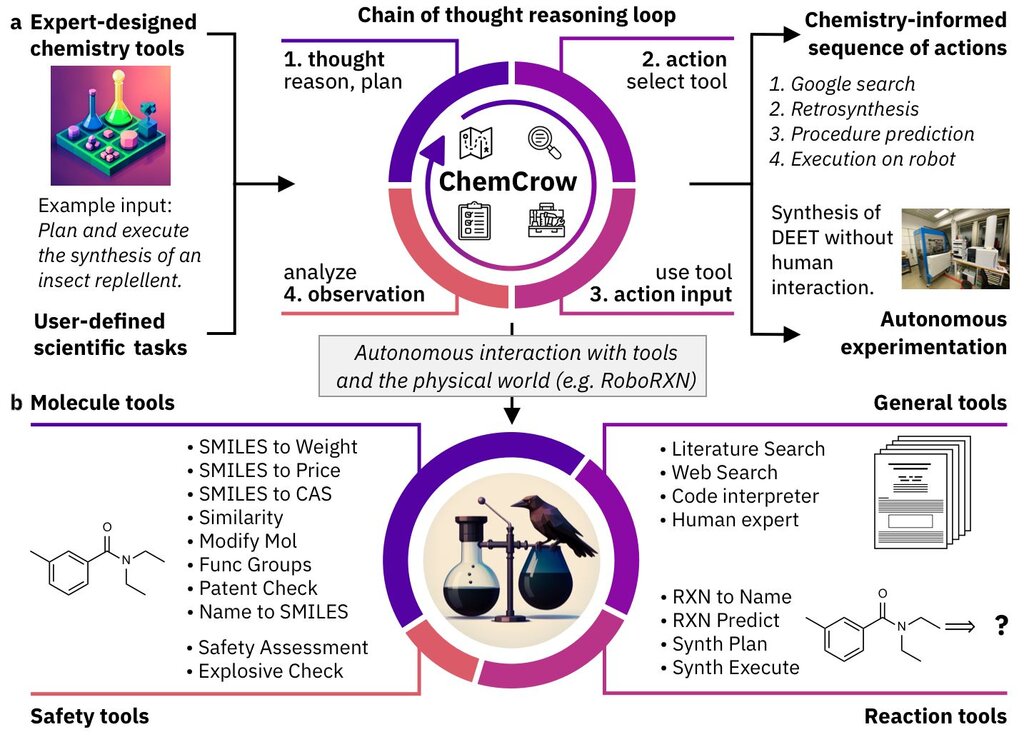
| Scientific Research | AI agents can design and run experiments, analyze data, and even form hypotheses. | An agent is tasked with finding a more efficient molecule for a new drug. It searches databases, simulates chemical interactions, and suggests promising candidates for lab testing. |
| Personal Assistance | Digital assistants that manage schedules, travel, and communications. | You tell your agent: "Plan a weekend trip to San Diego for next month." It finds flights and hotels that fit your budget, books them, adds the itinerary to your calendar, and checks the weather forecast. |
Benefits and Hurdles
The potential benefits of agentic AI are immense. By automating complex, multi-step tasks, these systems can dramatically increase efficiency and productivity. They can operate 24/7, personalize experiences for users on a massive scale, and solve problems that are too complex or time-consuming for humans to tackle alone.
However, this autonomy also brings significant challenges. The most obvious is control. How do we ensure that an autonomous agent doesn't take unintended or harmful actions? If an AI is making its own decisions, it becomes harder to predict its behavior.
There's also the question of accountability. When an AI agent makes a mistake—say, by booking the wrong flight or making a bad trade on the stock market—who is responsible? The user, the developer, or the company that owns the AI? These are difficult ethical and legal questions we are just beginning to confront.
Finally, as with any powerful automation technology, there are concerns about job displacement and the potential for misuse. Building trustworthy and reliable agentic systems requires careful design, rigorous testing, and clear ethical guidelines.
Before we wrap up, let's review the key terms we've covered.
Ready to check your understanding?
What is the key characteristic that distinguishes agentic AI from other forms of AI like generative AI?
Which of the following correctly lists the historical progression of AI systems, from the simplest to the most autonomous?
Agentic AI represents a major shift from tools that simply answer our questions to partners that can help us achieve our goals. It’s a move from passive generation to proactive action, opening up a new world of possibilities for how we work and live.