Agentic AI LLMs and Generative AI Explained
Introduction to AI
What Is AI?
Artificial intelligence is about making computers smart. The goal is to build machines that can perform tasks that typically require human intelligence, like learning, reasoning, problem-solving, and understanding language.
Artificial Intelligence
noun
A field of computer science dedicated to creating systems capable of performing tasks that normally require human intelligence.
Think of it this way: instead of writing a detailed, step-by-step program for every single task, we create systems that can learn on their own. This ability to learn from experience is what makes AI so powerful.
AI isn't just one single technology. It's a broad field with many different branches and subfields. Some of the most important areas within AI are machine learning, deep learning, and natural language processing. These are the building blocks that allow AI to do everything from recommending movies to translating languages.
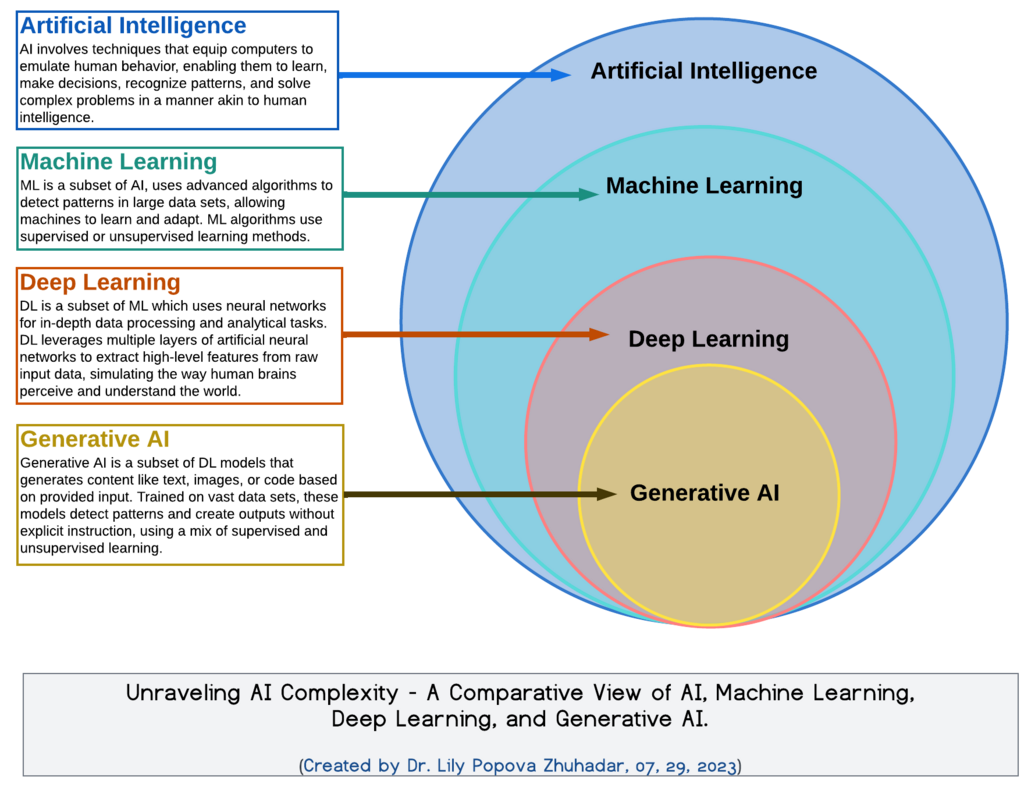
A Brief History
The dream of creating intelligent machines is ancient, but the scientific field of AI is relatively new. It officially began in the summer of 1956 at a workshop at Dartmouth College, where the term "artificial intelligence" was first used.
Early researchers were incredibly optimistic. They believed that a machine as intelligent as a human being was just a few decades away. But the challenge proved much harder than expected. Progress was slow, and funding dried up, leading to periods known as "AI winters."
Things started to change in the late 1990s and early 2000s. A combination of more powerful computers, vast amounts of data from the internet, and smarter algorithms led to a massive resurgence. This boom has continued to accelerate, leading to the powerful AI tools we see today.

How Machines Learn
One of the most important subfields of AI is machine learning. This is the core idea that allows computers to learn from data without being explicitly programmed for every task.
Imagine trying to teach a computer to recognize a cat. The old way would be to write millions of rules: "If it has pointy ears, and whiskers, and fur, and four legs... then it might be a cat." This is brittle and nearly impossible to get right.
The machine learning approach is different. You simply show the computer thousands of pictures labeled "cat." The machine learning model analyzes these examples and learns the patterns on its own. It figures out what features are important for identifying a cat. After enough training, it can accurately spot a cat in a new picture it has never seen before.
Machine learning is the science of getting computers to act without being explicitly programmed.
This process of learning from data is what powers many AI applications, from spam filters in your email to the recommendation engines on streaming services.
Inspired by the Brain
So how does a machine actually learn these patterns? One popular method is through neural networks, which are inspired by the structure of the human brain.
Our brains are made of billions of neurons connected in a vast network. When we learn something new, the connections between these neurons change. Neural networks in a computer try to mimic this process in a simplified way.
A neural network consists of layers of interconnected nodes, or "neurons." Data is fed into the first layer (the input layer). Each neuron processes this data and passes its output to the neurons in the next layer. This continues until the data reaches the final layer (the output layer), which produces the result, like the classification "cat" or "not cat."
The "learning" happens when the network adjusts the strength of the connections between neurons based on whether its final output was correct. Over many cycles of training, the network gets better and better at its task.
Understanding Language
Another major area of AI is Natural Language Processing, or NLP. This field focuses on enabling computers to understand, interpret, and generate human language. It's a tricky problem because human language is full of ambiguity, context, and slang.
NLP is behind many of the tools you use every day. When you use a voice assistant, translation app, or even when your word processor checks your grammar, you're using NLP. The goal is to bridge the gap between human communication and computer understanding.
Natural Language Processing
noun
A subfield of AI focused on the interaction between computers and humans through natural language.
Together, these core concepts—the broad goal of AI, the learning power of machine learning, the structure of neural networks, and the language capabilities of NLP—form the foundation of the modern AI landscape.
Ready to check your understanding? Let's see what you've learned.
What is the primary goal of Artificial Intelligence?
The term "artificial intelligence" was first coined at a workshop in 1956 at which institution?
This is just the beginning. These fundamental ideas are the starting point for understanding even more advanced and powerful AI systems.