Agentic AI Life Coaches and Companions
Introduction to Agentic AI
When AI Takes the Initiative
Most of the AI we interact with is reactive. We ask a question, it gives an answer. We give a command, it performs a task. But a new type of AI is emerging, one that doesn't just wait for instructions. This is agentic AI.
Agentic AI
noun
A type of artificial intelligence system that can act autonomously to achieve specific goals, making decisions and adapting to its environment with minimal human supervision.
Think of it like the difference between a calculator and a personal financial advisor. A calculator waits for you to input numbers and an operation. A financial advisor, on the other hand, understands your goal (like saving for retirement), analyzes the market, makes investment decisions, and adjusts the strategy as things change. Agentic AI is like that advisor: it's a system designed to be an agent that acts on your behalf.
The Core Characteristics
What gives an AI system this sense of agency? It comes down to a few key traits that work together, allowing the AI to operate independently in a changing world.
Autonomy: It can operate without direct, step-by-step human control. Goal-Driven: It works towards a specific objective, not just executing a single command. Adaptive: It perceives its environment, learns from feedback, and changes its actions to better achieve its goals.
These systems function in a continuous loop. They perceive the current situation, make a plan based on their goal, and then take action. The results of that action then feed back into their perception, starting the cycle over again.
This loop is what allows an agentic AI to do more than just answer a question. It enables the AI to pursue a complex, multi-step goal over time, adjusting its approach as needed.
Agentic vs. Traditional AI
The distinction between agentic and traditional AI becomes clearer when you compare them side-by-side. Traditional AI excels at specific, isolated tasks, while agentic AI is designed for broader, more dynamic challenges.
Unlike traditional AI systems that operate within rigid, rule-based frameworks requiring human intervention, agentic AI exhibits autonomy, goal-driven behavior, and adaptability in dynamic environments.
| Feature | Traditional AI (e.g., a chatbot) | Agentic AI (e.g., a smart thermostat) |
|---|---|---|
| Role | Reactive Responder | Proactive Problem-Solver |
| Initiative | Waits for a prompt or command | Takes initiative to achieve a goal |
| Scope | Executes a single, well-defined task | Manages a complex, multi-step process |
| Environment | Operates on given input | Senses and adapts to a live environment |
| Example Action | Answers "What's the weather?" | Adjusts heating based on weather, occupancy, and your schedule to save energy. |
Agentic AI isn't just a theoretical concept; it's already at work in various applications. Self-driving cars are a prime example. Their goal is to get from point A to point B safely. They must constantly perceive the road, plan maneuvers, and act by steering, accelerating, or braking, all while adapting to traffic, pedestrians, and changing road conditions.
On a smaller scale, AI agents can manage your calendar, automatically finding open slots for meetings based on everyone's availability and preferences. In logistics, they can autonomously route delivery trucks to optimize for fuel efficiency and delivery times, reacting in real-time to traffic jams.
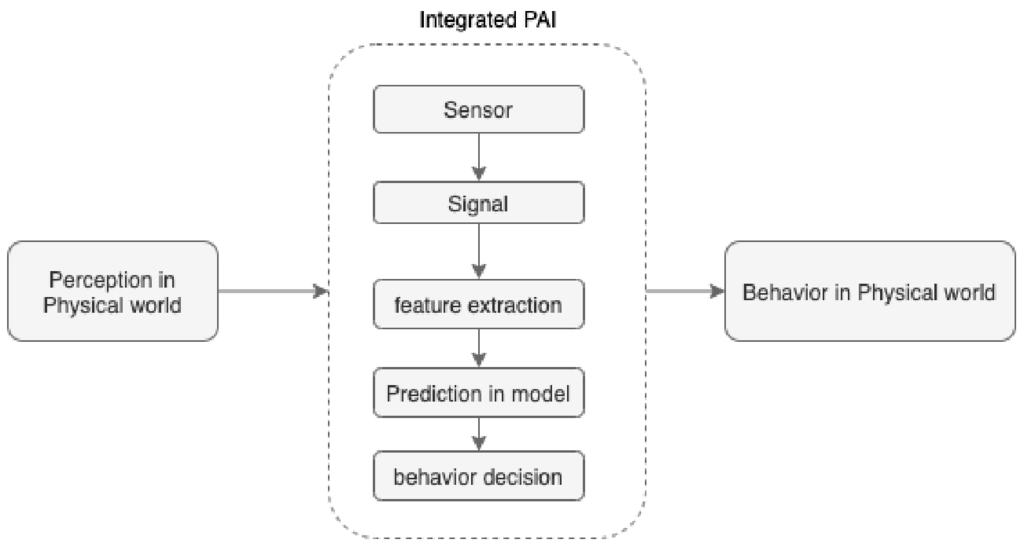
These examples show the shift from AI as a simple tool to AI as an autonomous partner.
What is the primary characteristic that distinguishes agentic AI from traditional AI?
The text describes agentic AI as being more like a personal financial advisor, while traditional AI is more like a ______.
This ability to set goals and work towards them independently is the foundation for creating more sophisticated AI systems, including those designed to help with personal growth and companionship.