Agentic AI Fundamentals
Introduction to Agentic AI
Beyond the Prompt
Most of us think of AI as a tool that responds to our commands. We ask a question, and it gives an answer. We give a prompt, and it generates an image. This is reactive AI. It waits for us to tell it what to do.
But a new kind of AI is emerging, one that doesn't just wait for instructions. It sets its own goals, makes plans, and takes action to achieve them. This is agentic AI.
Agentic AI refers to AI systems designed with autonomy, capable of reasoning, planning multi-step tasks, adapting to changing contexts, and acting toward defined goals without constant human prompting.
Think of it like the difference between a calculator and a personal financial advisor. A calculator only gives you an answer when you type in the numbers. A financial advisor understands your goal—like saving for retirement—and then takes a series of actions over time to help you get there. Agentic AI is like that advisor: a system that can work independently toward a complex objective.
From Answering to Acting
The journey to agentic AI marks a significant shift in artificial intelligence. Early AI systems were powerful but passive. A chess-playing computer, for example, could analyze the board and make a brilliant move, but it couldn't decide on its own to enter a tournament or study new strategies. It only reacted to the moves of its opponent within a strictly defined game.
Generative AI, like the large language models many of us use today, was the next step. It can generate creative text or code, but it still works within the confines of a single prompt. It creates what you ask for, but it doesn't have a broader mission.
Agentic AI is different because it's proactive. It can be given a high-level goal, and it will figure out the necessary steps to accomplish it, even if that involves using different tools, accessing information, and adjusting its plan along the way.
This evolution moves AI from being a simple tool to a sophisticated partner.
The Core Characteristics
What gives an AI system this ability to act on its own? It comes down to a few key characteristics that work together.
| Characteristic | Description |
|---|---|
| Autonomy | The ability to perform tasks and make decisions without continuous human guidance. |
| Perception | The capacity to gather information from its environment, like text, data, or sensor input. |
| Learning | The ability to improve its performance over time based on new information and past experiences. |
| Adaptability | The skill to change its plan or actions when faced with unexpected obstacles or new data. |
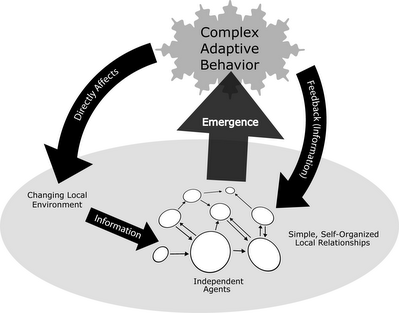
An agentic system uses perception to understand its current situation. It then uses its autonomy to create a plan to reach its goal. As it executes that plan, it learns from the results and adapts its approach as the environment changes. This continuous loop of perceiving, planning, acting, and learning is what makes it so powerful.
Agents in the Wild
Agentic AI isn't just a theoretical concept; it's already being applied in various fields. These applications show how moving from reactive to proactive AI can solve complex problems.
-
Supply Chain Management: An agentic AI can monitor global shipping routes, weather patterns, and supplier inventory in real time. If it detects a potential delay at a port, it can autonomously re-route shipments, find alternative suppliers, and update delivery schedules, all without waiting for a human manager to notice the problem.
-
Scientific Research: Imagine an AI agent tasked with discovering a new material with specific properties. It could design experiments, run simulations, analyze the results, and then use that knowledge to design the next set of experiments, accelerating the pace of discovery.
-
Personal Assistants: A truly agentic personal assistant could do more than just set reminders. You could tell it, "Plan a weekend trip to the mountains for next month on a budget of $500." The agent would then research destinations, compare flight and hotel prices, check the weather, book everything, and add it to your calendar.
These examples highlight the core value of agentic AI: handling complex, multi-step tasks that require planning and adaptation. It's about giving AI a goal and trusting it to figure out the 'how'.
What is the primary characteristic that distinguishes agentic AI from reactive AI?
The text uses an analogy to explain the shift in AI capabilities. In this analogy, a reactive AI is to a calculator as an agentic AI is to a...
As AI continues to evolve, the distinction between a tool that answers and an agent that acts will become even more important.