Agentic AI Explained
Introduction to Agentic AI
Beyond the Prompt
For a long time, artificial intelligence has been a responsive partner. You give it a command, it gives you a result. You ask a question, it provides an answer. This is reactive AI. It's incredibly powerful, but it waits for instructions. Now, a new kind of AI is taking center stage: agentic AI.
Agentic AI systems don't just respond. They act. They are designed to pursue goals with a degree of independence.
Think of the difference between a calculator and a personal financial advisor. A calculator waits for you to input numbers and an operation. A financial advisor understands your goal—like saving for retirement—and takes a series of actions to help you get there. Agentic AI is like that advisor. It can plan, make decisions, and use various tools to accomplish a complex objective, all with minimal human guidance.
agency
noun
The capacity of an entity to act independently and make its own choices in an environment.
From Reaction to Action
The journey to agentic AI marks a significant evolution. Early AI systems were based on strict rules. Think of a chess computer from the 1990s. It could analyze the board and make a move based on its programming, but it couldn't learn or adapt its strategy in a novel way.
Then came machine learning and large language models (LLMs). These systems can learn from vast amounts of data. They can write essays, generate images, and hold conversations. But they are still largely reactive. They generate an output based on a specific input, or prompt. They don't have long-term goals they're working toward on their own.
Agentic AI is the next step. It combines the power of modern models with the ability to plan and execute a series of actions. It moves AI from being a tool that you operate to a partner that you delegate tasks to.
Core Characteristics
What truly sets agentic AI apart? It boils down to a few key traits that enable these systems to operate with a high degree of independence and intelligence.
| Characteristic | Description |
|---|---|
| Autonomy | Operates with minimal human intervention to complete tasks. It can make decisions on its own. |
| Adaptability | Adjusts its plan when it encounters unexpected obstacles or new information. |
| Learning | Improves its performance over time by remembering the outcomes of its actions. |
| Orchestration | Can use multiple tools, APIs, and data sources to execute complex, multi-step plans. |
Imagine you ask an AI agent to plan a weekend trip to a nearby city. A simple chatbot might give you a list of hotels and attractions. An agentic system would go much further.
It would check your calendar for availability, research transportation options based on your budget, book a hotel that matches your preferences, reserve a table at a well-reviewed restaurant, and even create a flexible itinerary. If a train is delayed, it would adapt by looking for an alternative route. This ability to coordinate multiple steps and react to changing conditions is the essence of agentic AI.
Agentic AI in the Wild
While the technology is still evolving, agentic systems are already making an impact in various fields. They are moving from research labs into practical applications.
In customer service, advanced bots can now handle complex issues that require accessing multiple systems—like checking order status, processing a return, and updating a customer's account—all within a single conversation.
In supply chain management, AI agents can monitor inventory levels, predict demand, and automatically place orders with suppliers to prevent shortages. They can even reroute shipments in real-time to avoid delays caused by weather or traffic.
And in scientific research, agents are accelerating discovery. They can design experiments, analyze data, and even form new hypotheses. For example, an AI agent can be tasked with finding new molecules with specific properties for drug development, a process that once took researchers years.
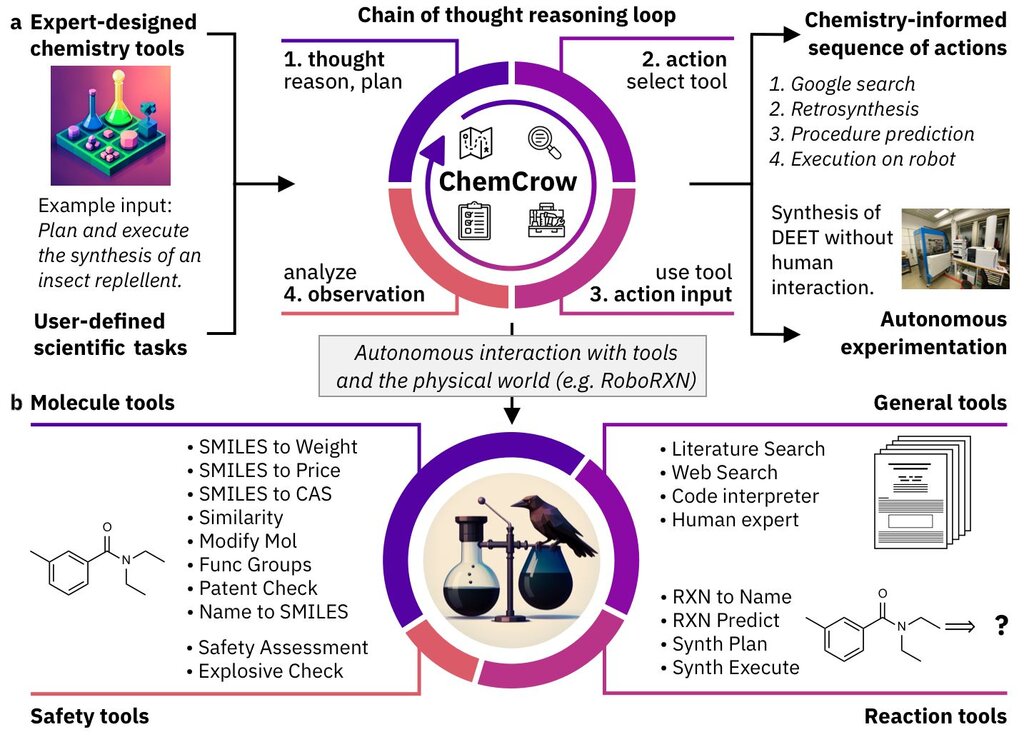
These examples show a shift from AI as a passive assistant to an active participant. By giving AI systems the agency to pursue goals, we unlock new possibilities for solving complex problems and automating sophisticated workflows.
Ready to check your understanding?
What is the primary characteristic that distinguishes agentic AI from reactive AI?
According to the provided text's analogy, a simple calculator is to reactive AI as a personal financial advisor is to ______.
This move toward more autonomous systems is a major step in the evolution of artificial intelligence. It's not just about making AI smarter, but about making it more capable of acting in the world.