Agentic AI Explained
Introduction to Agentic AI
What Is Agentic AI?
Most of the AI we interact with daily is reactive. We give a chatbot a prompt, and it gives us a response. We ask a smart speaker to play a song, and it plays the song. The AI waits for a command and then executes a specific task. Agentic AI is different. It represents a shift from a reactive tool to a proactive partner.
agentic AI
noun
A type of artificial intelligence that can autonomously pursue goals by planning, making decisions, and taking actions with minimal human supervision.
Instead of just answering a single question, an agentic system can take on a complex goal, break it down into smaller steps, and execute those steps on its own. It's designed to operate with a degree of freedom, figuring out how to achieve an objective, not just performing a predefined function.
Agentic AI represents a transformative leap from traditional, reactive AI systems to autonomous, goal-oriented agents capable of independent decision-making and action.
The Core Differences
The gap between traditional AI and agentic AI comes down to a few key capabilities. The most important one is autonomy.
Autonomy is the ability to act independently without constant human direction.
A traditional AI model, like a large language model, might be able to write an email, but it needs a person to tell it what to write and when to send it. An agentic AI, given the goal of scheduling a meeting, could figure out who to contact, draft the email, find an open slot on everyone's calendar, send the invitation, and follow up if necessary. It initiates actions to move toward its goal.
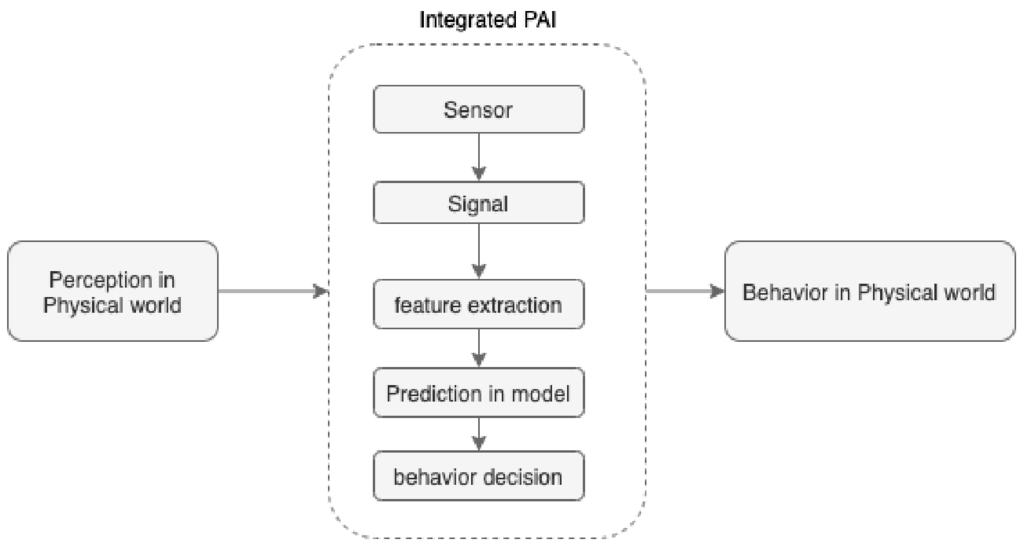
This leads to another key difference: multi-step planning. Agentic AI doesn't just perform a task; it orchestrates a workflow. It can reason about a sequence of actions needed to accomplish something. If you want to plan a vacation, you don't just book a flight. You research destinations, compare prices, check hotels, and create an itinerary. Agentic AI is designed to handle this kind of complex, multi-stage process.
Adaptability and Integration
The real world is messy and unpredictable. A plan that looks good on paper might fail in practice. This is where adaptability comes in. Agentic systems are designed to learn from their environment. When an action doesn't produce the expected result, the AI can analyze the outcome, adjust its strategy, and try a different approach. It has a form of memory that allows it to improve over time.
To take meaningful action, an AI needs to interact with the world around it. This is impossible without integration. Agentic AI is built to connect with and use other digital tools, such as APIs (Application Programming Interfaces), databases, and software. This allows it to do things like browse the web, access company files, or send messages through a communication app. It's not just thinking; it's doing.
By combining autonomy, planning, adaptability, and integration, agentic AI moves beyond the role of a simple assistant. It begins to function as an autonomous agent, capable of tackling complex objectives in dynamic environments.