Agentic AI Explained
Introduction to Agentic AI
What is Agentic AI?
Most AI we interact with today is reactive. You give a chatbot a prompt, and it gives you a response. It’s like a very advanced calculator: it waits for your input, performs a calculation, and shows you the result. It doesn't do anything until you ask.
Agentic AI is different. Think of it less like a calculator and more like an assistant. You give it a goal, not just a single command, and it figures out the steps to get there. It can plan, make decisions, and act on its own to achieve that objective, all without you needing to guide it at every turn.
Agentic AI
noun
Artificial intelligence systems that can act autonomously to pursue a goal, making decisions and executing tasks without constant human intervention.
This ability to act independently is what gives agentic AI its name. It has "agency." These systems are designed to be proactive, not just reactive. They observe their environment, adapt to new information, and stick with a task until it's done.
A Tale of Two AIs
The distinction between agentic and non-agentic AI comes down to autonomy and initiative. A non-agentic system is a tool that executes a specific, user-defined task. An agentic system is a partner that manages a complex, user-defined goal.
| Feature | Non-Agentic AI (e.g., a simple chatbot) | Agentic AI (e.g., a smart personal assistant) |
|---|---|---|
| Control | Requires direct, step-by-step commands. | Receives a high-level goal and works autonomously. |
| Decision-Making | Follows a predefined script or pattern. | Makes independent decisions to overcome obstacles. |
| Task Scope | Handles single, isolated tasks. | Manages complex, multi-step projects. |
| Adaptability | Limited ability to handle unexpected events. | Adapts its plan based on new information. |
For example, a non-agentic AI can translate a sentence for you when you paste it in. An agentic AI, given the goal of booking a trip to Paris, could research flights, compare hotel prices, check your calendar for availability, and then present you with the best options, all from a single request.
Why Does This Matter?
The shift toward agentic AI is significant because it unlocks a new level of efficiency and capability. Instead of humans managing software, software can start to manage processes. This has the potential to transform entire industries.
In logistics, an agentic AI could manage a supply chain, automatically rerouting shipments based on weather, traffic, and demand. In scientific research, it could design and run experiments to test a hypothesis. For personal use, it could manage your digital life, organizing emails, scheduling appointments, and filtering information based on your priorities.
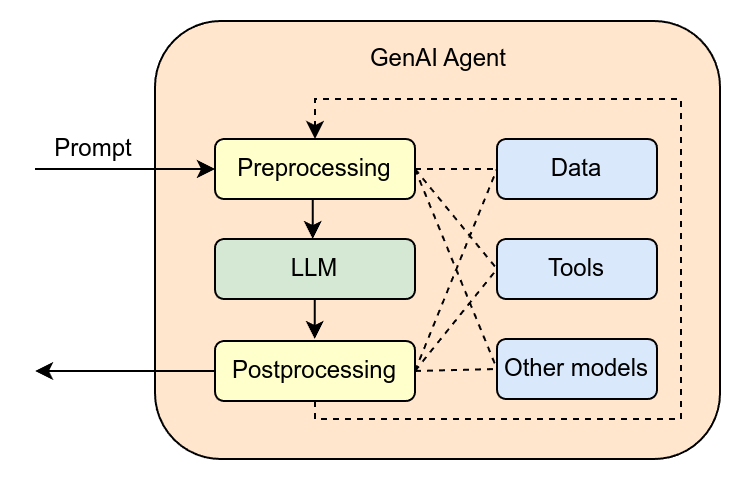
These systems move us from a world of simple automation, where machines follow rigid instructions, to one of true autonomy, where they can handle dynamic, complex goals with little to no human guidance.
Time to check your understanding of these core ideas.
What is the primary characteristic that distinguishes agentic AI from non-agentic AI?
An AI that translates a document sentence by sentence when you paste text into it is an example of what?
Agentic AI represents a fundamental change in how we interact with technology. It's the difference between using a tool and delegating a task. As these systems become more capable, they will increasingly act as autonomous partners in solving complex problems.