Agentic AI Explained
Introduction to Agentic AI
Beyond the Prompt
We're used to thinking of AI as a powerful tool that waits for our commands. We type a question into a chatbot, and it gives an answer. We ask it to write an email, and it generates text. This type of AI is incredibly useful, but it's fundamentally reactive. It performs a specific task and then stops, waiting for the next instruction.
A new paradigm is emerging: agentic AI. Instead of just responding, these systems act. They are designed to pursue goals with a degree of independence, much like a personal assistant who you can ask to “plan a trip to Paris” instead of having to say “first, search for flights, then look for hotels, then find restaurants…”
Agentic AI refers to systems that can act autonomously to achieve goals with minimal human supervision.
The key concept here is agency—the capacity of a system to act independently and make its own choices. An agentic AI doesn't just process information; it perceives its environment, makes decisions, and takes actions to bring about a desired outcome.
Agentic AI represents a fundamental paradigm shift in artificial intelligence, moving from passive, prompt-driven systems to autonomous, goal-oriented agents that can plan, learn, and execute complex tasks with minimal human intervention.
From Calculator to Collaborator
To understand what makes agentic AI different, think about the difference between a calculator and a financial advisor. A calculator is a traditional AI tool. It's powerful and precise, but it only does what you tell it to do. You input 2+2, and it outputs 4. It won't suggest you should be saving more for retirement.
An agentic AI is more like the advisor. You give it a high-level goal, like “optimize my investment portfolio for long-term growth.” The agent would then analyze the market, assess your risk tolerance, and execute trades on your behalf. It makes its own decisions to achieve the objective you set.
This table breaks down the core differences.
| Feature | Traditional AI | Agentic AI |
|---|---|---|
| Initiative | Reactive; waits for user prompts. | Proactive; takes initiative to achieve goals. |
| Scope | Executes single, discrete tasks. | Manages complex, multi-step workflows. |
| Autonomy | Requires step-by-step human guidance. | Operates independently with minimal supervision. |
| Interaction | A tool you operate. | A collaborator that works for you. |
The Core Characteristics
Three core characteristics define agentic AI systems and allow them to operate independently: autonomy, goal-oriented behavior, and continuous learning.
Autonomy: This is the ability to perform tasks without constant human control. An autonomous AI can make decisions on its own. For example, an agent tasked with monitoring a factory's supply chain could automatically reorder parts when inventory runs low, without needing an employee to approve the purchase order.
Goal-Oriented Behavior: Agentic systems are driven by objectives, not just instructions. You don't tell them how to do something; you tell them what you want to achieve. The AI is responsible for planning and executing the sequence of actions needed to reach that goal. This could involve breaking a large goal into smaller sub-tasks and figuring out the best way to tackle them.
Continuous Learning: The most powerful agentic systems learn and adapt from their experiences. They analyze the outcomes of their actions, identify successes and failures, and adjust their future strategies accordingly. This creates a feedback loop where the agent becomes more effective and efficient over time.
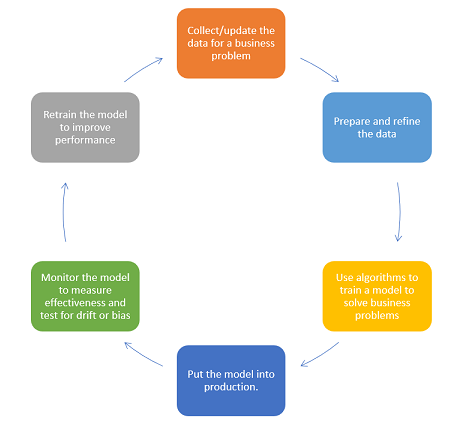
These three traits—autonomy, goal-orientation, and learning—are what separate an active agent from a passive tool. They allow AI to move from simply answering our questions to actively helping us solve our problems.
Let's review what we've covered.
What is the primary difference between a traditional AI and an agentic AI?
In the analogy comparing AI types, a traditional AI is to a calculator as an agentic AI is to a _________.
This shift from reactive tools to proactive collaborators marks a significant step in the evolution of artificial intelligence.