Agentic AI Explained
Introduction to Agentic AI
Beyond Answering Questions
Most of us think of AI as something that responds to our requests. We ask a question, and a chatbot gives an answer. We type a description, and an image generator creates a picture. This is a reactive relationship. The AI waits for our instructions and then follows them.
Agentic AI is different. It's a shift from a simple tool that follows commands to an autonomous system that works towards a goal. Think of it like the difference between a calculator and a financial planner. You tell a calculator exactly what to compute, like $250 * 12$. A financial planner, however, takes a broader goal, like "help me save for retirement," and then creates and executes a multi-step plan to get there.
Agentic AI doesn't just respond. It acts.
This ability to act independently is what we call "agency." It's the core idea that separates this new wave of AI from what came before. An AI with agency can set its own sub-goals, make decisions, and take actions in a digital environment without needing a human to guide every single step.
From Reactive to Proactive
Traditional AI models are powerful but passive. A large language model can write an email for you, but only after you provide the recipient, the key points, and the desired tone. It reacts to your detailed prompt.
An agentic AI, given the same high-level goal of "schedule a meeting with the marketing team next week," would be proactive. It could check your calendar, find available slots, access the marketing team's schedule, propose a few options via email, and even book the conference room once everyone confirms. It takes the initiative.
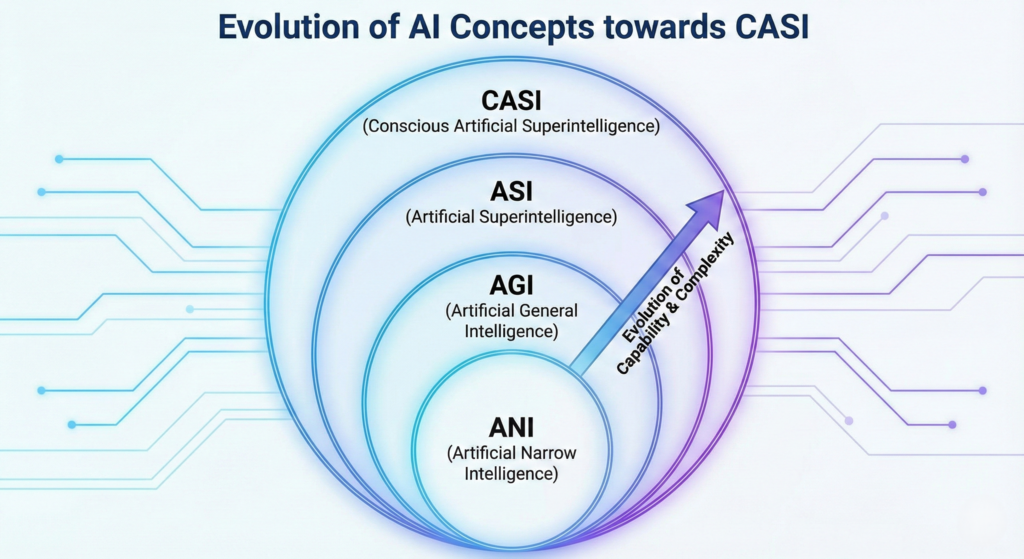
This evolution from reactive to proactive systems is a natural progression in AI development. Early AI systems were based on strict rules. Then came machine learning, which could learn patterns from data. Generative AI took this a step further, learning to create new content. Agentic AI is the next logical step: giving these powerful models the ability to act on their own to achieve a goal.
The Principle of Autonomy
At the heart of agentic AI is autonomy. This doesn't mean the AI is "conscious" or has its own desires. It simply means it can operate independently within a set of boundaries to complete a task. It can break a large goal into smaller steps, decide which tools to use (like a search engine or a calendar API), and learn from the results of its actions to adjust its plan.
Unlike traditional generative AI, which responds reactively to prompts, agentic AI proactively orchestrates processes, such as autonomously managing complex tasks or making real-time decisions.
This capacity for self-directed action is what makes agentic AI so promising. It's not just about getting answers faster. It's about offloading entire workflows and complex processes to a capable digital assistant, freeing up humans to focus on higher-level strategy and creativity.
What is the primary characteristic that distinguishes agentic AI from more traditional AI systems?
The text uses an analogy to explain agentic AI. Which of the following best represents the agentic AI in that analogy?
Agentic AI represents a significant move toward more capable and independent artificial intelligence. By understanding its core principles of autonomy and proactive behavior, we can better grasp its potential.