Agentic AI Explained
Introduction to Agentic AI
Beyond the Prompt
For years, our interaction with AI has been a simple back-and-forth. We give a command, and the AI responds. We ask it to write an email, translate a phrase, or generate an image. It’s powerful, but it’s fundamentally reactive. It waits for us to tell it what to do next.
Agentic AI changes this dynamic. Instead of a tool that just responds, imagine an assistant that takes initiative. You don't give it a series of small, step-by-step instructions. You give it a high-level goal, and it figures out the steps on its own. It can plan, adapt to new information, and act independently to achieve the objective.
Agentic AI represents a fundamental paradigm shift in artificial intelligence, moving from passive, prompt-driven systems to autonomous, goal-oriented agents that can plan, learn, and execute complex tasks with minimal human intervention.
Think of the difference between using a travel website and hiring a human travel agent. The website is a tool. You have to search for flights, find hotels, and book a rental car, step by step. A travel agent, however, is given a goal: "Plan a relaxing beach vacation for two in Mexico for under $2,000." The agent then handles all the intermediate tasks—researching destinations, comparing flight prices, booking accommodations, and even suggesting activities. Agentic AI aims to be that travel agent, not just the website.
Key Differences
The core distinction between traditional AI and agentic AI comes down to agency—the capacity to act independently and make choices. Traditional AI, like the large language models many of us use, excels at specific, well-defined tasks. It's a brilliant co-pilot, but it always needs you in the pilot's seat.
Agentic AI is designed to be the pilot. It operates on a longer timescale, managing multi-step workflows and making decisions along the way without needing constant check-ins. This shift from reactive to proactive is what makes it so powerful.
| Feature | Traditional AI | Agentic AI |
|---|---|---|
| Interaction | Reactive, prompt-driven | Proactive, goal-driven |
| Autonomy | Low (requires human input for each step) | High (operates independently) |
| Task Scope | Single-step, well-defined tasks | Multi-step, complex workflows |
| Adaptability | Limited (operates on given info) | High (adapts to new information) |
Core Qualities
Three qualities define agentic AI and give it its unique capabilities:
-
Autonomy: It can make decisions and take actions on its own to move toward its goal. It doesn't need to be told exactly what to do at every turn.
-
Adaptability: The real world is messy and unpredictable. An agentic system can adjust its plan when it hits a snag or when new information becomes available. If a flight is canceled, it looks for another one.
-
Proactivity: It takes initiative. An agentic AI doesn't just sit and wait for the next command. It actively works toward its objective, identifying necessary sub-tasks and executing them in a logical order.
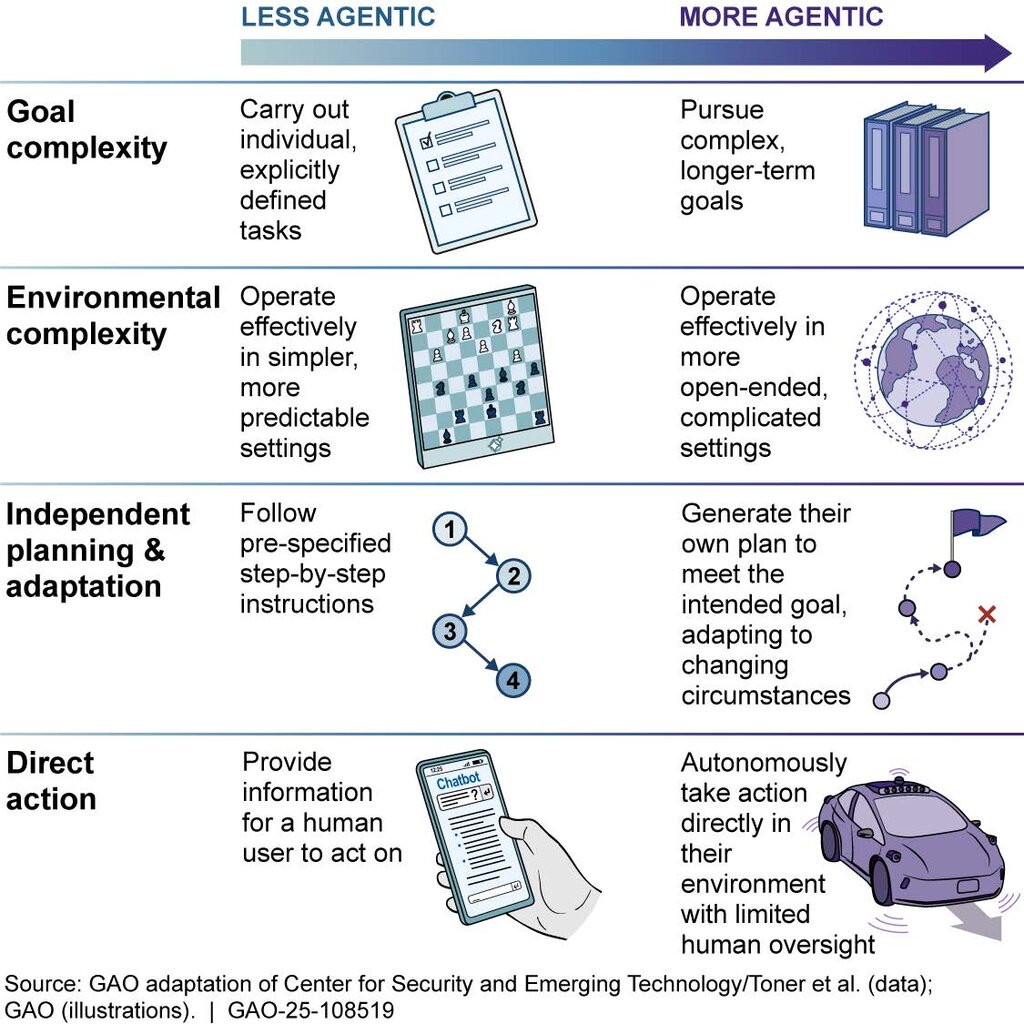
Together, these characteristics allow agentic AI to tackle complex challenges that are impossible for a simple, reactive system. This isn't just a minor upgrade; it's a fundamental change in how we can use AI to solve problems. By giving machines the ability to pursue goals with a degree of independence, we unlock the potential to automate and optimize workflows in nearly every industry, from scientific research to personal assistance.
What is the core distinction between traditional AI and agentic AI?
An AI system is tasked with ordering groceries. It encounters an out-of-stock item, finds a suitable replacement from a different brand, and completes the purchase without asking for help. Which key quality of agentic AI does this demonstrate?
This shift from reactive tools to proactive partners marks a significant milestone in the development of artificial intelligence.