Agentic AI Explained
Introduction to Agentic AI
Beyond Simple Instructions
For a long time, artificial intelligence has been very good at following orders. A traditional AI system is like a specialized calculator. You give it a specific problem, like identifying a cat in a photo or translating a sentence, and it gives you a direct answer. It's powerful, but it doesn’t take initiative. It waits for your command.
Agentic AI is different. It's designed to act on its own to achieve a goal. Instead of just answering a question, it can ask its own questions, break a large goal into smaller tasks, and execute them step by step. Think of it as upgrading from a calculator to a project manager. You don't tell the project manager every single action to take; you give them an objective, and they figure out how to get there.
Agentic AI is a monumental leap in how AI operates, shifting from simply offering insights to actively taking the reins and executing tasks autonomously within existing workflows.
The key concept here is agency—the capacity of an actor to act independently and make their own free choices. When an AI has agency, it moves from being a passive tool to an active participant. This ability to operate without constant human supervision is called autonomy.
Autonomy
noun
The ability to operate and make decisions without direct human control.
From Following Rules to Making Plans
The journey from traditional AI to agentic AI is an evolution in capability. Early AI systems were often based on rigid, rule-based logic. A chess program, for example, evaluates moves based on a predefined set of rules and values. It’s brilliant within its narrow domain but can’t decide to order a pizza if it detects its opponent is hungry.
Modern generative AI, like the large language models behind chatbots, is more flexible. It can generate text, code, or images based on a prompt. But it's still fundamentally reactive. It answers your prompt and then stops, waiting for the next one.
Agentic AI builds on this, adding a layer of autonomous reasoning and execution. It can be given a complex goal like, "Plan a three-day marketing campaign for our new product launch," and it will devise a strategy, outline the steps, and even start executing them by using other software or tools.
| Feature | Traditional AI | Agentic AI |
|---|---|---|
| Mode of Operation | Reactive (Responds to input) | Proactive (Initiates action) |
| Task Handling | Executes single, defined tasks | Manages multi-step, complex goals |
| Decision Making | Follows programmed rules | Makes independent choices to reach a goal |
| Human Input | Requires constant, specific commands | Needs a high-level objective |
| Analogy | A specialized tool | A project manager |
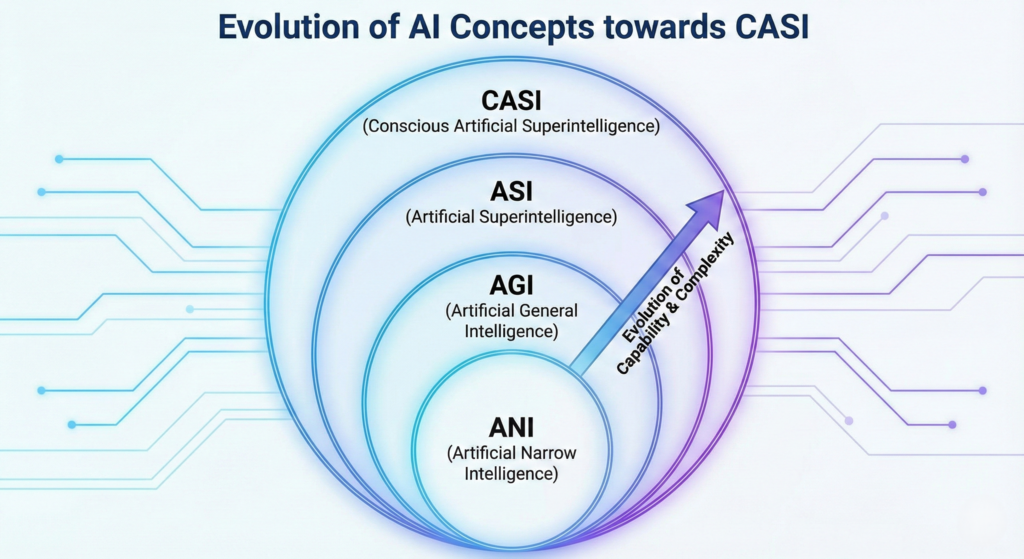
This shift represents a significant step forward in the quest for more general and capable artificial intelligence.
The Foundations of Autonomy
How can an AI operate on its own? This autonomy isn't magic; it's built on a few core principles that work together in a continuous cycle. An agent needs to be able to perceive its environment, think about what to do next, act on its decisions, and learn from the results.
This cycle is what allows an agentic AI to do more than just process a single command. It can observe a changing situation, update its plan on the fly, and improve its performance over time without a human intervening at every step. This ability to self-correct and pursue goals with persistence is the defining characteristic of agentic AI.
Ready to check your understanding?
What is the primary characteristic that distinguishes agentic AI from traditional AI?
The provided text compares traditional AI to a specialized calculator. What is the analogous role for agentic AI?
By moving from reaction to action, agentic systems open up new possibilities for how we can use AI to solve problems that require not just knowledge, but strategy and execution.