Agentic AI Explained
Introduction to Agentic AI
Beyond Answering Questions
For the past few years, artificial intelligence has mostly felt like a very smart, very fast conversation partner. You ask a question, and it gives you an answer. You give it a prompt, and it generates text or an image. This is a powerful tool, but it's fundamentally reactive. It waits for your instructions.
A new type of AI is emerging, one that doesn't just wait for commands. It acts. This is agentic AI, and it represents a major shift from responsive tools to autonomous problem-solvers.
Agentic AI is a type of artificial intelligence that can work on its own instead of waiting for step-by-step instructions.
Think of the difference between using a calculator and hiring an assistant. To use a calculator, you have to type in every single number and operation. To work with an assistant, you just state your goal: "Please find the best flight to Chicago for next Tuesday afternoon and book it for me." The assistant then figures out all the necessary steps—checking different airlines, comparing prices, selecting the best option, and making the purchase.
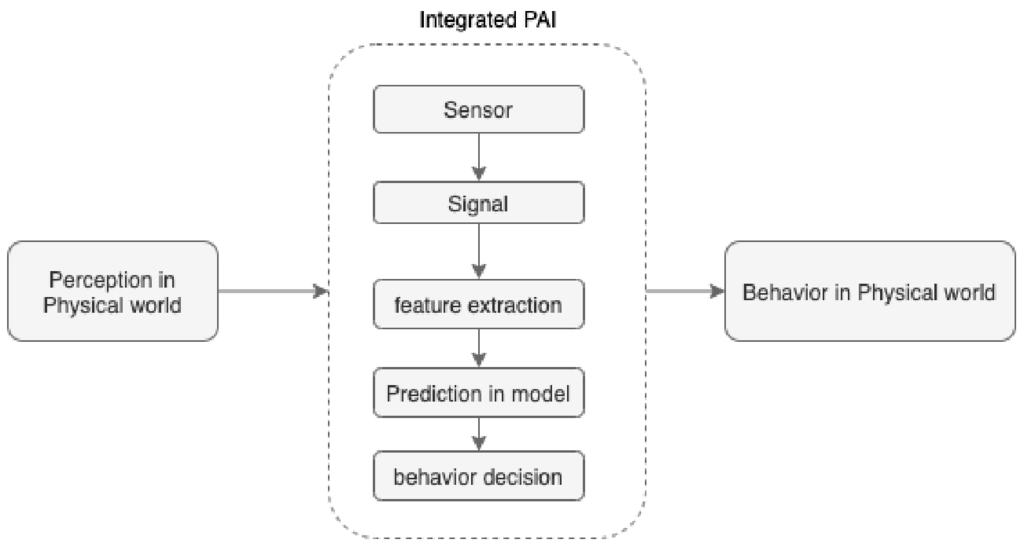
Agentic AI systems work more like that assistant. You give them a high-level objective, and they autonomously perceive their environment, make decisions, and execute a series of actions to achieve that goal.
Why This Matters
This leap from simply responding to proactively doing is a game-changer. It means AI can tackle complex, multi-step tasks that require planning and adaptation. Instead of just writing an email for you, an agentic AI could manage your entire inbox, categorizing messages, scheduling meetings, and drafting responses based on your priorities.
The potential here is enormous. Agentic AI could revolutionize industries by automating complex workflows, running scientific experiments, or managing supply chains with minimal human oversight. It’s not just about making existing tasks faster; it's about enabling machines to handle entirely new classes of problems.
The core idea is moving from AI as a tool you operate to AI as a partner you delegate to.
As we move forward, we'll break down exactly how these systems work. We'll explore the key components that give them their autonomy, from planning and memory to their ability to use other software tools. We'll also look at the real-world applications where agentic AI is already making an impact.