Agentic AI Explained
Introduction to Agentic AI
Beyond Following Orders
Most AI we interact with today is reactive. You give it a command or a prompt, and it gives you a response. Think of asking a chatbot a question or telling an image generator to create a picture. It’s a one-and-done interaction. But what if an AI could take a complex goal and run with it, figuring out the steps and carrying them out on its own? That’s the core idea behind agentic AI.
Agentic AI refers to AI systems that exhibit a high degree of agency – they proactively set goals, make decisions, and take actions with minimal human intervention.
An agentic AI doesn't wait for step-by-step instructions. Instead, you give it a final objective, like “Plan a three-day marketing campaign for our new product launch.” The AI then acts as an autonomous agent. It might research the target audience, draft ad copy, schedule social media posts, and analyze the results, all without you guiding each individual action. It has the agency to pursue a goal independently.
agency
noun
The capacity of an actor to act independently and to make their own free choices.
From Reactive to Proactive
To understand what makes agentic AI different, it helps to compare it to the AI systems that came before. Traditional AI, including the generative models that create text and images, operates on a simple loop: user input leads to a single, direct output. An agentic system transforms this into a continuous cycle of planning, acting, and learning.
| Feature | Traditional AI (e.g., ChatGPT) | Agentic AI |
|---|---|---|
| Operation | Reactive (Responds to prompts) | Proactive (Pursues goals) |
| Scope | Single task execution | Multi-step, complex tasks |
| Autonomy | Low (Requires constant input) | High (Operates independently) |
| Interaction | One-off requests | Continuous, cyclical process |
| Example | Writes an email when asked | Manages an entire email campaign |
This shift didn't happen overnight. It’s the result of decades of progress. Early AI research focused on symbolic reasoning—creating systems that could solve puzzles and play games like chess based on hard-coded rules. The machine learning revolution introduced systems that could learn from data, leading to advancements in areas like image recognition and natural language processing. Generative AI was the next leap, allowing models to create new content.
Agentic AI builds on all these foundations. It uses the language and reasoning capabilities of modern models to understand goals, form plans, and adapt its strategy based on the outcomes of its actions.
Why Agentic AI Matters
The development of agentic AI is significant because it shifts the role of technology from a simple tool to a collaborative partner. Instead of just executing commands, these systems can manage complex, long-running processes, freeing up people to focus on strategy and creativity.
This opens the door to automating entire workflows. An agent could manage your calendar by not just adding events, but by proactively scheduling meetings, booking travel, and resolving conflicts based on your priorities. In science, an agent could design and run experiments, analyze data, and even suggest new hypotheses.
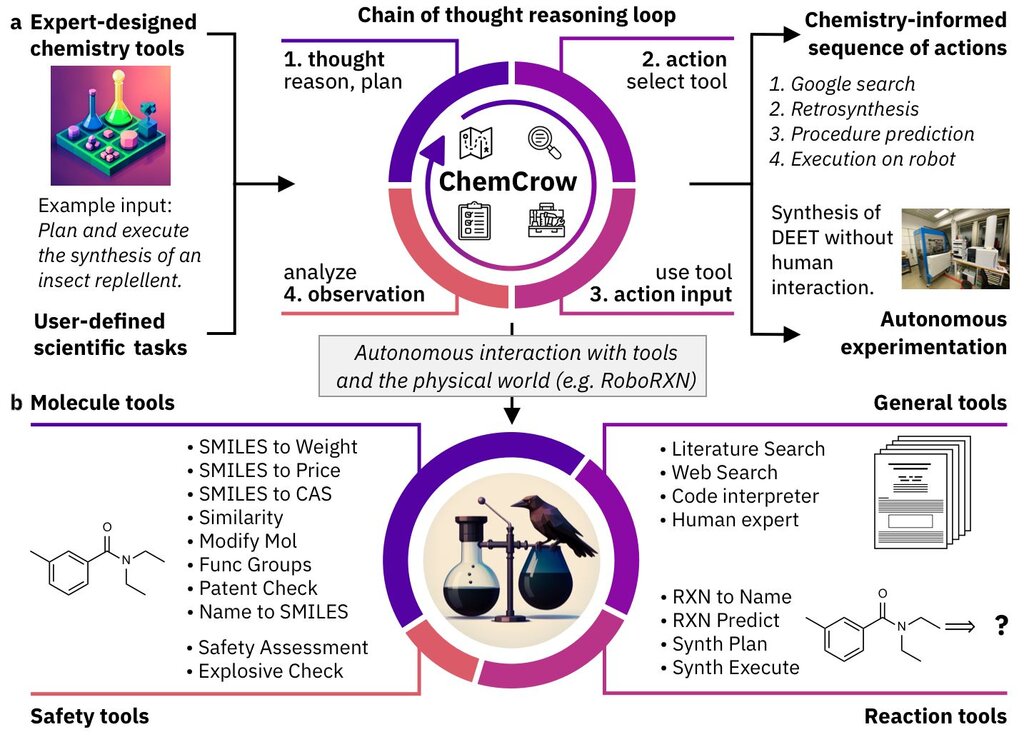
By taking on the role of a doer, agentic AI allows us to operate at a higher level of abstraction. We can focus on defining what needs to be done, leaving the how to an autonomous system capable of navigating the details. This marks a fundamental change in how we interact with and leverage artificial intelligence.
Ready to check your understanding of these core concepts?
What is the primary characteristic that distinguishes agentic AI from traditional reactive AI?
An agentic AI system transforms the traditional 'input -> output' loop into a continuous cycle of _______.