Agentic AI Explained
Introduction to Agentic AI
The Next Step for AI
Most of us think of AI as a tool that responds to our requests. We ask a question, and it gives an answer. We give it a prompt, and it generates text or an image. This is a reactive relationship—the AI waits for our input before it does anything.
Agentic AI is different. It’s a type of artificial intelligence designed to take initiative. Instead of just responding, an agentic system can independently pursue goals. It perceives its environment, makes decisions, and takes action on its own, with minimal human guidance.
Agentic AI refers to AI systems and models that process information and act autonomously to reach set goals.
Think of it as the difference between a simple calculator and a personal financial advisor. The calculator waits for you to punch in numbers. The advisor, on the other hand, could monitor your accounts, notice you have extra cash, and suggest an investment based on your financial goals—all without being asked. That proactive, goal-driven behavior is the essence of agentic AI.
Core Characteristics
Three key principles separate agentic AI from more passive systems: autonomy, adaptability, and goal-oriented behavior.
Autonomy
noun
The ability to perform tasks in complex environments without constant guidance or intervention.
An autonomous AI doesn't need to be told every single step to take. You give it an objective, and it figures out how to get there. For example, you might ask an agentic AI to "book a trip to Paris for the first week of June." The AI would then handle all the sub-tasks: searching for flights, comparing hotel prices, and making the reservations, without needing you to approve each step.
Adaptability is just as crucial. The world is unpredictable. An agentic system must be able to adjust its plans when things change. If the ideal flight to Paris sells out, an adaptive AI won't just stop. It will look for alternative dates, different airports, or other airlines to find the next best option.
Finally, all of this is driven by goal-oriented behavior. Every action an agentic AI takes is a step toward achieving a specific outcome. It isn't performing random tasks; it's executing a plan designed to fulfill its core objective.
Perceive, Reason, Act
To work autonomously, an agentic AI operates in a continuous cycle. It gathers information, thinks about what to do, and then acts on its decision. This loop can be broken down into three phases.
-
Perception: First, the AI gathers data about its environment. For a smart thermostat, this means reading the current room temperature and detecting if anyone is home. For a software agent managing an online store, it could involve monitoring website traffic, inventory levels, and customer reviews.
-
Reasoning: Next, it processes this information to make a decision. The thermostat compares the current temperature to your preferred setting and decides whether to turn on the heat or AC. The e-commerce agent might reason that a sudden spike in traffic for a specific product means it should order more stock.
-
Action: Finally, the AI executes its decision. The thermostat activates the HVAC system. The e-commerce agent sends a purchase order to a supplier. After acting, the cycle repeats, allowing the agent to continuously perceive and respond to its environment.
Agentic AI in the Wild
While the technology is still evolving, agentic AI is already being applied in several fields. These systems are moving from the lab into the real world, automating complex processes and solving difficult problems.
In supply chain management, an agentic AI can monitor global shipping routes, predict delays from weather or port congestion, and automatically reroute shipments to ensure they arrive on time.
In scientific research, agentic systems can accelerate discovery. An AI can be tasked with finding a new material with specific properties. It could then design thousands of virtual molecules, run simulations to test their stability and characteristics, and present the most promising candidates to human researchers. This automates the tedious and time-consuming parts of the research process, freeing up scientists to focus on bigger questions.
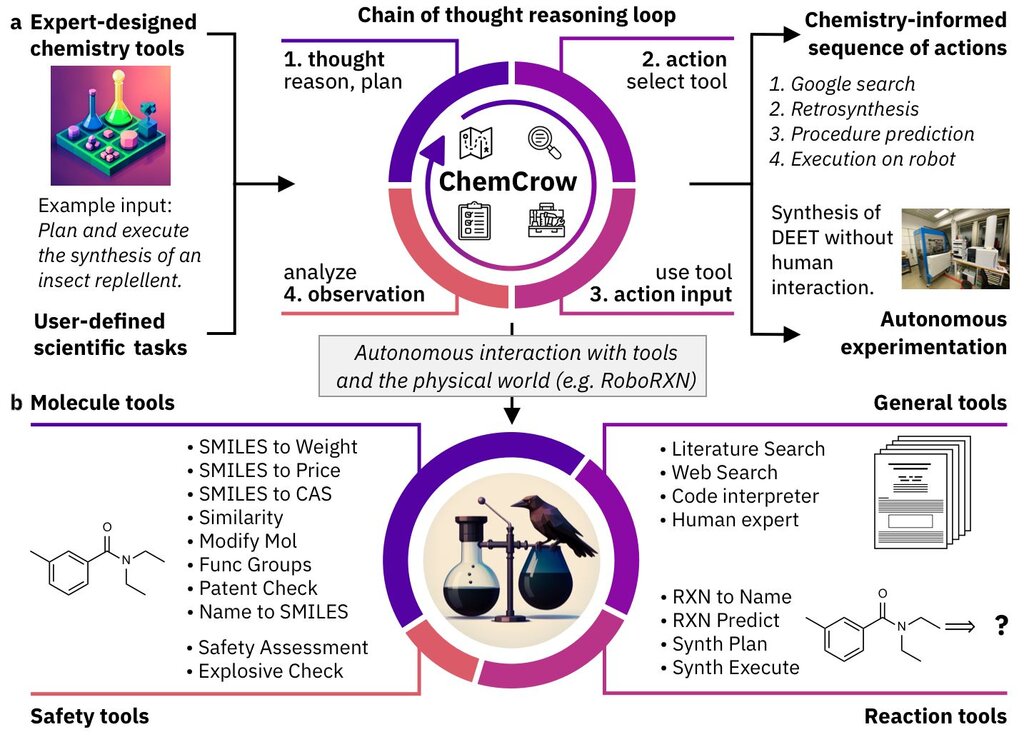
Even personal assistants are becoming more agentic. An AI that can plan a surprise party—coordinating with guests, booking a venue, and ordering a cake based on a simple request—is acting as an autonomous agent. As these systems become more capable, they will be able to handle increasingly complex and multi-step goals, acting as true partners in our daily and professional lives.
What is the primary characteristic that distinguishes agentic AI from reactive AI?
An agentic AI managing an online store notices a sudden spike in traffic for a particular product and concludes it should order more stock. This conclusion occurs during which phase of its operational cycle?
This shift from reactive tools to proactive partners is what makes agentic AI such a powerful development.