Agentic AI Explained
Introduction to Agentic AI
Beyond Prompts and Responses
We're used to interacting with AI by giving it a prompt and getting a response. We ask a question, and a chatbot answers. We describe an image, and a generator creates it. This is a powerful, but fundamentally reactive, relationship. The AI waits for our instructions.
Agentic AI represents the next step. Instead of just responding, these systems can act. They are designed to pursue complex goals on their own, with very little hand-holding. You don't give them a series of precise commands; you give them an objective, and they figure out the steps to get there.
Agentic AI is a paradigm where systems autonomously initiate, coordinate, and adapt multi-step tasks without continuous human oversight.
This marks a significant shift from traditional AI. Early AI systems were rule-based, following strict, pre-programmed instructions. Then came machine learning, which allowed systems to learn patterns from data. More recently, generative AI learned to create new content. Agentic AI builds on all of these, adding a layer of autonomous action. It's the difference between a tool that can write an email for you and a true assistant that can manage your entire inbox.
The Core Components
What gives an AI system this ability to act independently? It comes down to a few key characteristics that work together.
Autonomy: Agentic systems can operate and make decisions without constant human input. They are given a goal and are trusted to work towards it on their own.
Goal-Driven Reasoning: This is the planning component. An agentic AI can take a high-level, complex goal—like "plan a marketing campaign for a new product"—and break it down into a sequence of smaller, manageable tasks. It then decides which tools to use and what actions to take to complete each task.
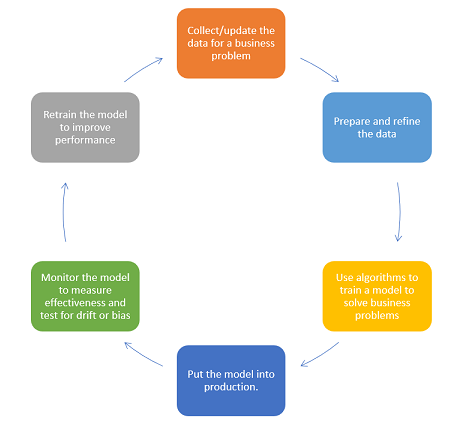
Continuous Perception-Action Cycle: Unlike a simple program that runs from start to finish, an agentic AI is in a constant loop. It perceives its environment (gathers data, checks its progress), takes an action, observes the outcome of that action, and then uses that new information to decide what to do next. This feedback loop allows it to adapt to changing circumstances and learn from its mistakes.
A New Kind of Assistant
The potential for this technology is vast. Because agentic AI can handle complex, multi-step processes, it could transform how work gets done in nearly every industry.
Imagine an agent managing a supply chain, automatically rerouting shipments based on weather patterns and adjusting inventory in real time. Or think of a scientific research assistant that can design experiments, analyze the data, and form new hypotheses to test. In our daily lives, a personal agent could not only book a reservation but also coordinate schedules with friends, arrange transportation, and handle payment, all from a single request.
These systems move AI from being a passive tool we command to an active partner that helps us accomplish our goals.
We're still in the early days of this technology, but the shift from reactive to proactive AI is a fundamental change. It promises a future where we interact with technology not just through commands, but through collaboration.
What is the primary characteristic that distinguishes agentic AI from earlier forms, such as generative AI?
An agentic AI is given the objective: 'Plan a marketing campaign for a new product.' Its ability to break this down into smaller steps like 'identify target audience,' 'draft ad copy,' and 'schedule social media posts' is an example of what?