Agentes de Inteligencia Artificial
Fundamentos de la IA
What Is Artificial Intelligence?
Artificial intelligence is the science of making machines that can think and act like humans. It's a broad field with a simple goal: to create systems that can perform tasks that normally require human intelligence. This includes things like learning from experience, understanding language, recognizing objects in a scene, and making decisions to solve problems.
At its core, AI is about building smart machines capable of performing tasks that typically require human intellect.
Think of it like teaching a computer to be clever. Instead of giving it a rigid set of instructions for every single possibility, we create models that allow it to reason, adapt, and learn on its own. The idea isn't new, but recent advances in computing power and data availability have made it one of the most exciting fields in technology.
A Brief History
The concept of artificial beings with intelligence has been a part of storytelling for centuries, but the scientific pursuit of AI began in the 1950s. Early pioneers believed that a machine as intelligent as a human being was just a few decades away. This initial optimism gave way to a period known as the "AI winter," when funding and interest dried up due to the immense technical challenges.
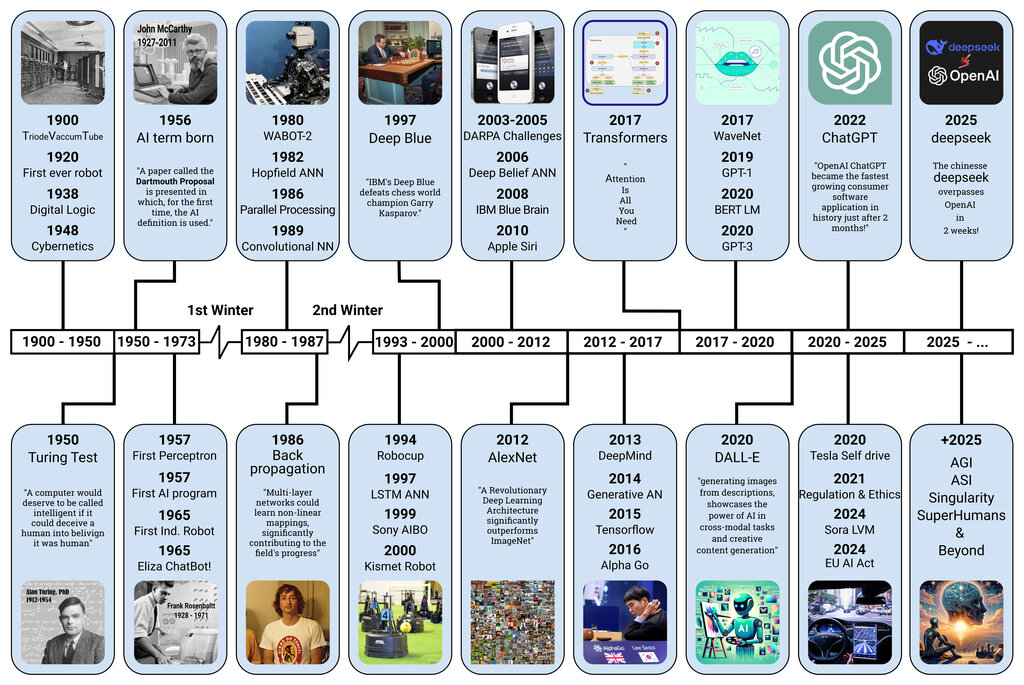
However, the field saw a resurgence in the 1990s and has been accelerating ever since. Breakthroughs like IBM's Deep Blue defeating a world chess champion in 1997 showed the world what specialized AI could do. The rise of the internet generated massive amounts of data, which became the fuel for modern AI techniques.
AI in Your Daily Life
You might not always notice it, but AI is already a part of your everyday life. When you ask a voice assistant for the weather, get a movie recommendation on a streaming service, or see your email automatically sort spam, you're interacting with an AI system.
Beyond personal convenience, AI is transforming entire industries. It's used in healthcare to help diagnose diseases from medical images, in finance to detect fraudulent transactions, and in agriculture to monitor crop health. It powers self-driving cars, helps scientists model climate change, and even assists in creating art and music.

The Main Approaches
So, how do we build these smart systems? There isn't just one way. AI is an umbrella term that covers several different methods and technologies. Two of the most important and widespread approaches are Machine Learning and Natural Language Processing.
Machine Learning is the most common form of AI. Instead of being explicitly programmed, a system learns patterns directly from data.
Imagine trying to teach a computer to recognize a cat. The old way would be to write millions of rules: "If it has pointy ears, and whiskers, and fur..." This is incredibly difficult and brittle. The machine learning approach is different. You simply show the computer thousands of pictures labeled "cat" and thousands labeled "not a cat." The system then learns the patterns on its own, creating its own internal rules for what makes a cat a cat. This is the engine behind many AI applications, from facial recognition to stock market prediction.
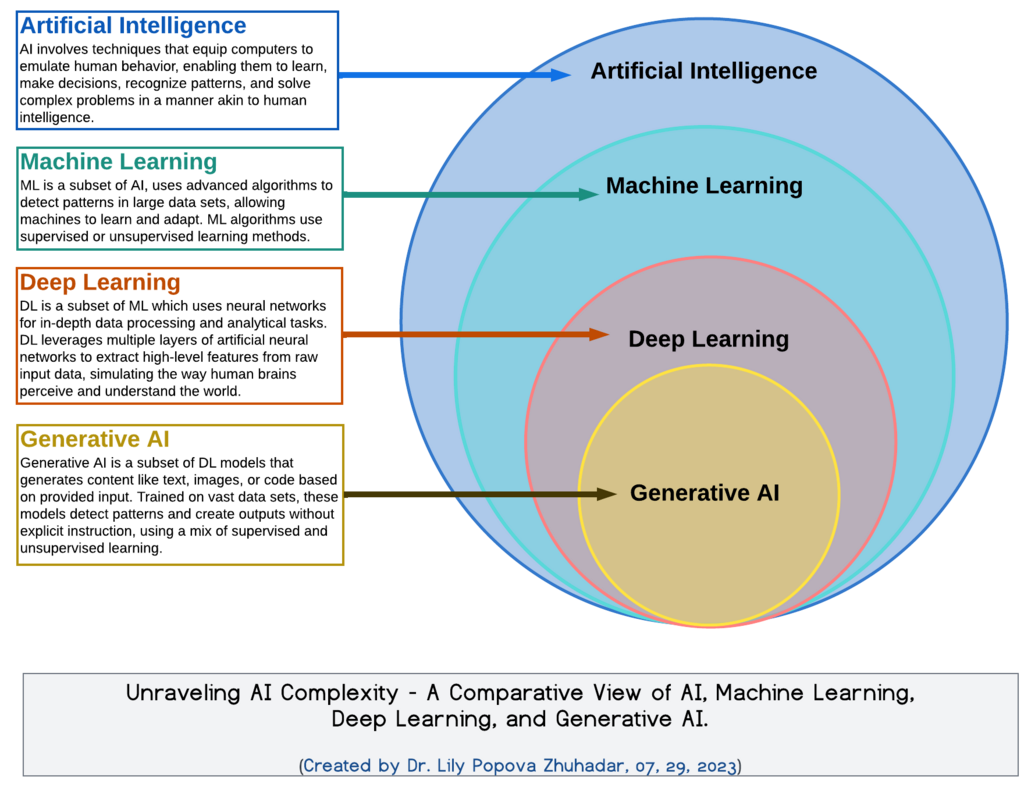
Another key area is Natural Language Processing, or NLP. This is a branch of AI focused on giving computers the ability to understand, interpret, and generate human language. It's the technology that powers chatbots, language translation apps, and sentiment analysis tools that can determine the emotional tone of a piece of writing.
NLP is challenging because human language is full of ambiguity, slang, and context. A phrase like "that's cool" can mean something is good or that its temperature is low. NLP systems use machine learning and other techniques to decipher this complexity, bridging the gap between human communication and computer understanding.
What is the primary goal of artificial intelligence?
The period in AI history when funding and interest declined due to immense technical challenges is known as the ____.
These fundamental concepts—the goal of creating intelligent machines, the key historical developments, and the core approaches like Machine Learning and NLP—form the foundation of the world of AI.