Agent Orchestration with Langchain
Introduction to Agent Orchestration
What is Agent Orchestration?
Think of a symphony orchestra. You have violinists, cellists, percussionists, and a brass section. Each musician is a specialist. But without a conductor to coordinate their actions, you don't get a symphony—you get noise. The conductor tells each section when to play, how loudly, and at what tempo to create a cohesive piece of music.
AI agent orchestration works the same way. Instead of building one massive, general-purpose AI to handle a complex problem, you can create a team of smaller, specialized AI agents. One might be an expert at searching the web, another at analyzing data, and a third at writing emails. Orchestration is the process of coordinating these specialized agents, making them work together to achieve a larger goal.
Orchestration turns a collection of individual AI tools into a cooperative, problem-solving team.
This approach has major benefits. It’s more efficient because each agent focuses on what it does best. It's also more modular and easier to manage. If the web-searching agent needs an upgrade, you can update it without touching the other agents. This is much simpler than trying to fix or improve a single, monolithic AI that does everything at once.
Orchestration in the Real World
This concept isn't just theoretical. It's used to automate complex workflows in many industries. Imagine planning a business trip. An orchestrated system of agents could handle the entire process for you.
In this example, an orchestrator agent receives your request. It then tasks a flight agent to find flights, a hotel agent to find lodging, and a calendar agent to ensure there are no scheduling conflicts. Once the specialized agents report back with their findings, the orchestrator compiles the information into a complete itinerary for your approval. No single agent needed to know how to do everything; they just had to collaborate effectively.
Another application is in customer support. When a customer asks a question, an orchestrator can first pass the query to a "triage" agent that determines the issue's category. It might then route a technical question to an agent with access to product manuals, while a billing question goes to an agent connected to the payment system. This ensures the customer gets a fast, accurate answer from the right specialist.
Tools for the Job: LangChain
Building these coordinated systems from scratch would be complex. That's where frameworks like LangChain come in. LangChain is an open-source tool designed specifically to help developers build applications with large language models (LLMs). It simplifies the process of creating and orchestrating AI agents.
LangChain provides a set of modular building blocks. Think of them like LEGO bricks for AI. There are components for connecting to different language models, tools for giving agents access to external data (like a Google search or a database), and ways to give agents memory. The most important concept for orchestration is the "chain."
By chaining multiple models and processes, LangChain enables you to build complex workflows, maintain context across interactions, and efficiently manage various components of an AI system.
Chains allow you to link different components together in a sequence. For instance, a simple chain might take user input, format it using a template, and then send it to an LLM. More complex chains can involve multiple agents and tools, creating the kind of orchestrated workflows we've discussed. LangChain handles the plumbing, letting developers focus on the logic of how the agents should collaborate.
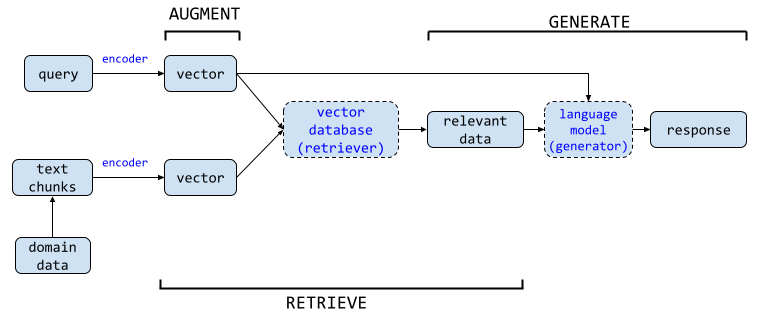
By providing a standardized framework, LangChain makes it much easier to design, build, and scale multi-agent systems that can tackle sophisticated, multi-step tasks.
In a multi-agent AI system, what is the primary role of the orchestrator?
According to the text, what is a major benefit of using an orchestrated system of AI agents compared to a single, large AI model?
Agent orchestration is a powerful way to solve complex problems by enabling specialized AIs to work together as a team. Frameworks like LangChain provide the essential tools to build and manage these collaborative systems.