Agent and Multi-Agent Systems
Introduction to Agent-Based Systems
What Makes an Agent?
In artificial intelligence, an agent is anything that can perceive its environment through sensors and act upon that environment through actuators. Think of a self-driving car. It has cameras and lidar (sensors) to see the world, and it can steer, accelerate, and brake (actuators) to navigate it.
But what makes an agent different from a regular computer program? It comes down to a few key characteristics. An agent isn't just a passive tool waiting for commands. It has its own goals and the freedom to make decisions to achieve them.
True agents possess four key properties: autonomy, reactivity, proactiveness, and social ability.
Let's break these down:
- Autonomy: Agents operate without direct human intervention. They have control over their own actions and internal state. A spam filter that automatically learns and updates its rules is acting autonomously.
- Reactivity: Agents perceive and respond to changes in their environment in a timely fashion. A robot vacuum cleaner reacts to an obstacle by changing its path.
- Proactiveness: Agents don't just react; they take the initiative. They exhibit goal-directed behavior by pursuing their own objectives. A smart thermostat proactively learns your schedule to save energy without you telling it to.
- Social Ability: Agents can interact with other agents (and humans) to achieve their goals. This could be as simple as two scheduling agents negotiating a meeting time.
Agents vs. Objects
If you've ever done any programming, you might be thinking this sounds a lot like object-oriented programming. Objects also have states and behaviors. The key difference is control.
An object is passive. It sits there until another part of the program calls one of its methods. It has no control over when its methods are executed. An agent, on the other hand, is active. It decides for itself when to act based on its goals and its perception of the environment. It has its own thread of control.
| Feature | Object-Oriented Programming | Agent-Based Systems |
|---|---|---|
| Control | Passive; invoked by others | Active; decides when to act |
| Autonomy | Low; follows prescribed methods | High; has its own goals |
| Interaction | Method calls | Communication & negotiation |
| Goal | Encapsulate data and behavior | Solve problems autonomously |
A Brief History
The idea of agents grew out of the field of Distributed Artificial Intelligence (DAI) in the late 1970s and 1980s. Researchers realized that instead of building one giant, monolithic AI to solve a complex problem, it might be easier to build several smaller, specialized programs that could work together.
This was a shift from centralized to decentralized intelligence. Early work focused on how these separate entities, which came to be known as agents, could coordinate and cooperate. The development of networks like the ARPANET, a forerunner to the modern internet, provided the perfect environment for these distributed ideas to flourish.
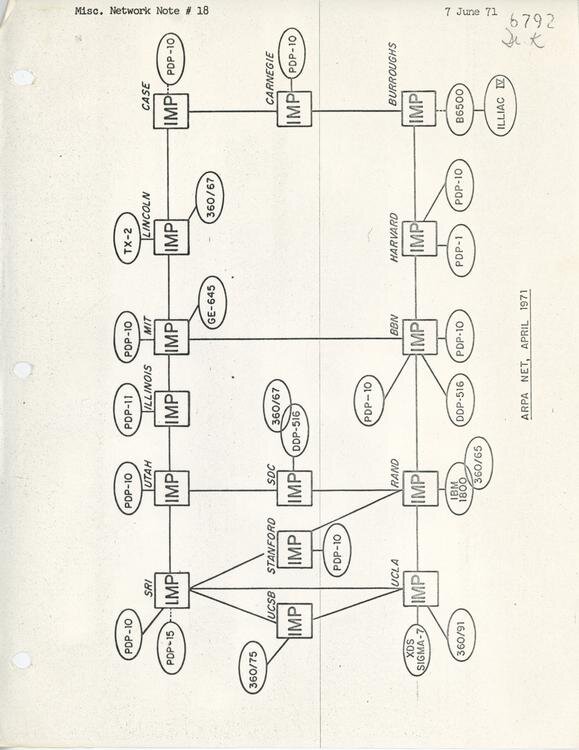
By the 1990s, the concept of the intelligent agent was formalized, leading to the development of multi-agent systems (MAS) where large numbers of agents interact. Today, agent-based thinking is fundamental to everything from robotics and supply chain management to video games and financial modeling.
Types of Agent Architectures
Not all agents are created equal. Their internal structure, or architecture, determines how they think and act. We can group them into three main categories.
1. Reactive Agents These are the simplest agents. They operate on a simple perception-action loop. They perceive the world and react to it based on a set of pre-programmed rules. They don't have a deep understanding of the world or the ability to plan for the future.
A thermostat is a perfect example. If the sensor perceives the temperature is below the set point, it acts by turning on the heat. It doesn't plan or remember past events; it just reacts to the current state.
2. Deliberative Agents These are more sophisticated. Deliberative agents maintain an internal model of the world and can plan their actions to achieve their goals. They don't just react; they reason about the consequences of their actions.
Think of a GPS navigation app. It has a map (an internal model), a goal (your destination), and it calculates a sequence of actions (a route) to get you there. If it perceives a traffic jam, it can re-plan to find a better route. This is symbolic reasoning in action.
3. Hybrid Agents As you might guess, hybrid agents combine the best of both worlds. They have a reactive layer for quick responses to immediate events and a deliberative layer for long-term planning.
A Mars rover is a great example. It needs to react instantly to avoid falling off a cliff (a reactive behavior). But it also needs to plan a long-term path to a specific geological formation to study (a deliberative behavior). By layering these capabilities, the agent can be both efficient and intelligent.
Understanding these basic agent types and their characteristics is the first step toward designing complex systems where multiple agents collaborate to solve problems that would be impossible for any single agent to tackle alone.
What is the fundamental role of an agent in artificial intelligence?
A smart thermostat learns your daily schedule and adjusts the temperature to save energy, even without you explicitly programming these changes. Which key characteristic of an agent does this demonstrate?