Africa's Extraordinary Natural Wonders
Pink Lakes
The Science of Pink Water
Not all lakes are blue or green. Across Africa, several bodies of water boast a striking pink or reddish hue, looking more like giant pools of strawberry milk than typical lakes. This isn't due to pollution or strange minerals in the soil. The color comes from life itself.
The secret ingredient is a combination of extremely high salt content and specific types of microorganisms. These lakes are often hypersaline, meaning their salt concentration is much higher than that of the ocean. In these harsh conditions, most organisms can't survive. But a few specialists thrive.
One of the main culprits behind the pink color is a type of micro-algae called Dunaliella salina. To protect itself from the intense sunlight and high salinity, this alga produces large amounts of beta-carotene, the same orange-red pigment found in carrots. When billions of these microscopic algae populate a lake, their collective pigment tints the water pink.
In essence, a pink lake is a massive, living ecosystem where tiny, colorful organisms dominate.
Lake Retba, Senegal
Located in Senegal, Lake Retba, or Lac Rose, is one of the most famous pink lakes. Its salinity is incredibly high, rivaling that of the Dead Sea. During the dry season, from November to June, the lake's pink color is at its most vibrant. The high salt concentration and ample sunlight create the perfect environment for Dunaliella salina to flourish, turning the water a vivid shade of pink.
For generations, local communities have harvested salt from the lake bed. Workers wade into the chest-deep water, using shovels to break up the salt crust. To protect their skin from the caustic brine, they rub it with shea butter. The harvested salt is then piled on the shore to dry, creating huge white mounds that contrast sharply with the pink water. This salt harvesting is the primary economic activity in the region.
Lake Natron, Tanzania
In Tanzania, near the border with Kenya, lies Lake Natron. Its beauty is deceptive; this is one of the most inhospitable bodies of water on Earth. Unlike Lake Retba, which is extremely salty, Lake Natron is extremely alkaline. Its waters are rich in sodium carbonate and other minerals that flow in from surrounding volcanoes.
The lake's pH can reach over 10, similar to household ammonia. Water temperatures can soar to 60°C (140°F). While this caustic environment is deadly for most animals, it's a paradise for salt-loving microorganisms called haloarchaea. These microbes contain carotenoid pigments that give the lake its characteristic red and orange hues, especially in the shallow, salt-encrusted areas.
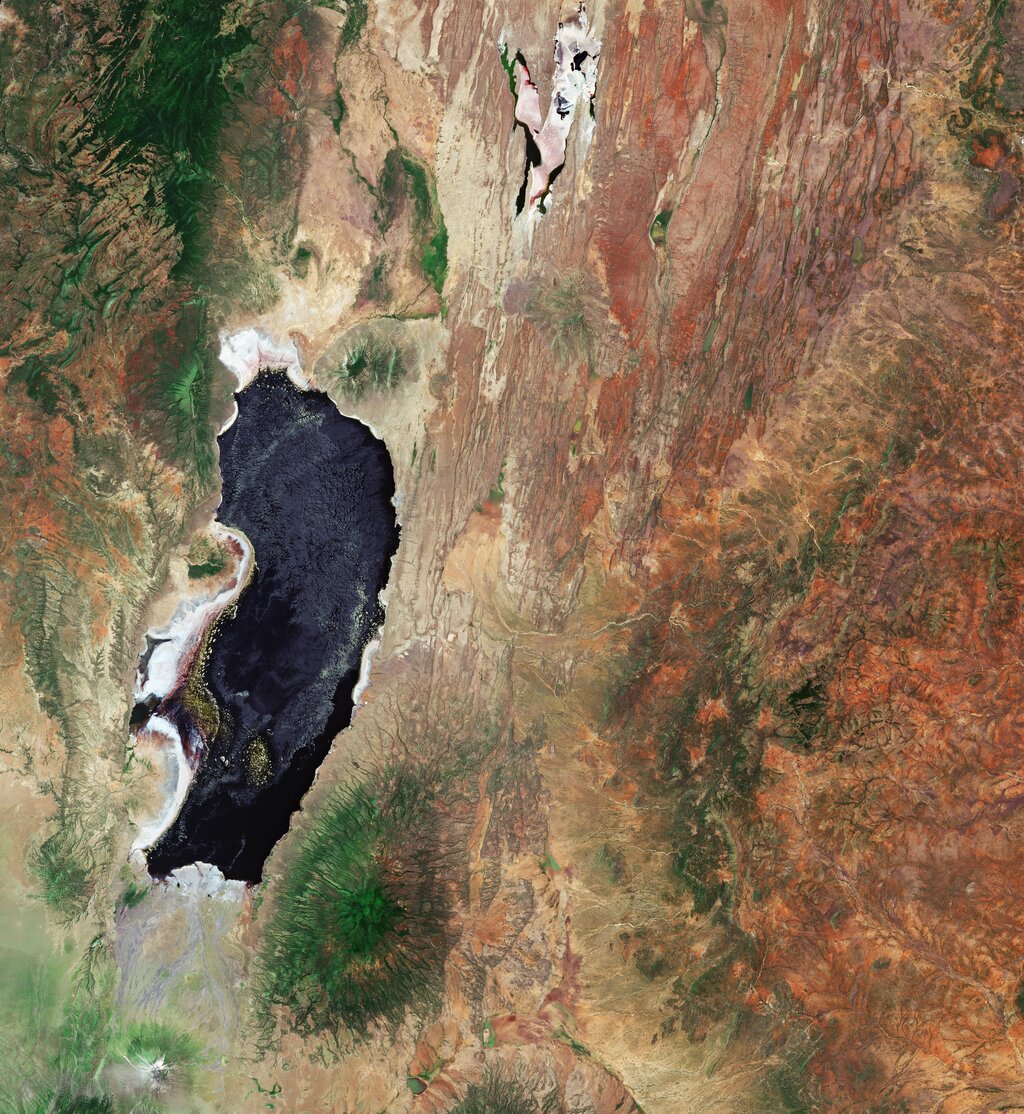
This harsh environment has a surprising ecological benefit. The lake's caustic nature keeps predators away, making it the world's most important breeding site for the Lesser Flamingo. Millions of these birds flock to Lake Natron to build mud nests and raise their young. They feed on the cyanobacteria that thrive in the water, which also contain pigments that give the flamingos their iconic pink color.
Unfortunately, animals that die in Lake Natron's waters are sometimes calcified, preserved in an almost statue-like state by the lake's unique chemical composition.
The striking colors and unique ecosystems of Africa's pink lakes make them valuable sites for both tourism and scientific research. They serve as a powerful reminder of how life can adapt to and flourish in even the most extreme environments on our planet.
What is the primary reason for the characteristic pink color of lakes like Lake Retba?
How does the chemical environment of Lake Natron in Tanzania primarily differ from that of Lake Retba in Senegal?