Africa Cradle of Knowledge
Introduction to Human Evolution
The Dawn of Humanity
The story of every person on Earth begins in the same place: Africa. Long before the first cities were built or the first words were written, our earliest ancestors walked the African continent. This wasn't a brief chapter in the human story; it was the entire book for millions of years. Understanding this deep history is key to understanding ourselves.
Human evolution is a sprawling family tree, not a straight line. Over about six million years, various hominin species—the group that includes modern humans and our extinct relatives—emerged, lived, and died out. We, Homo sapiens, are the last surviving branch of this once diverse tree.
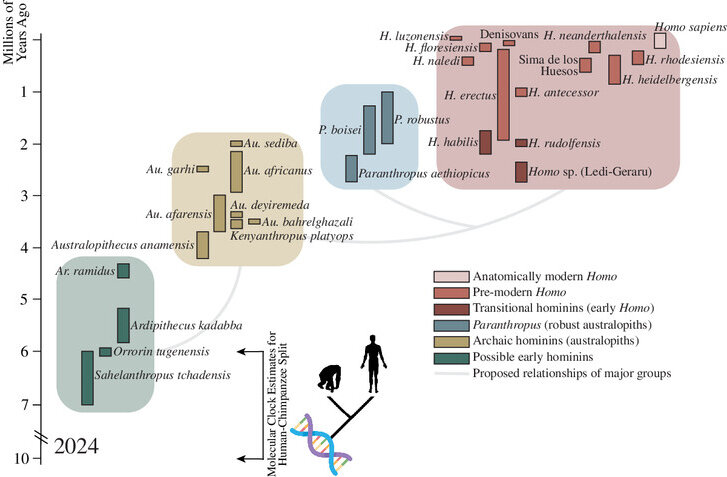
Our own species appeared relatively recently. The earliest fossils of Homo sapiens date back to around 300,000 years ago. For perspective, the Earth is about 4.5 billion years old. If that entire history were a single calendar year, our species would only show up in the last hour of December 31st.
Fossils Tell the Story
How do we know any of this? The primary evidence comes from fossils. These preserved remains of ancient life, dug from the earth, are the physical proof of our ancestors. Africa, particularly the Great Rift Valley in the east and various cave systems in the south, has been a treasure trove of hominin fossils.
Every fossil discovery adds a new piece to the puzzle of our past, helping scientists refine the timeline of human evolution.
One of the most famous early hominin fossils is "Lucy," a 3.2-million-year-old skeleton of the species Australopithecus afarensis, discovered in Ethiopia. Lucy's skeleton was crucial because it proved that our ancestors walked upright long before they developed large brains.
More recent discoveries have shed light on the origins of our own species. Fossils found at a site called Jebel Irhoud in Morocco pushed back the origin of Homo sapiens by over 100,000 years. These skulls blend modern features, like the shape of the face, with more archaic ones, like an elongated braincase.
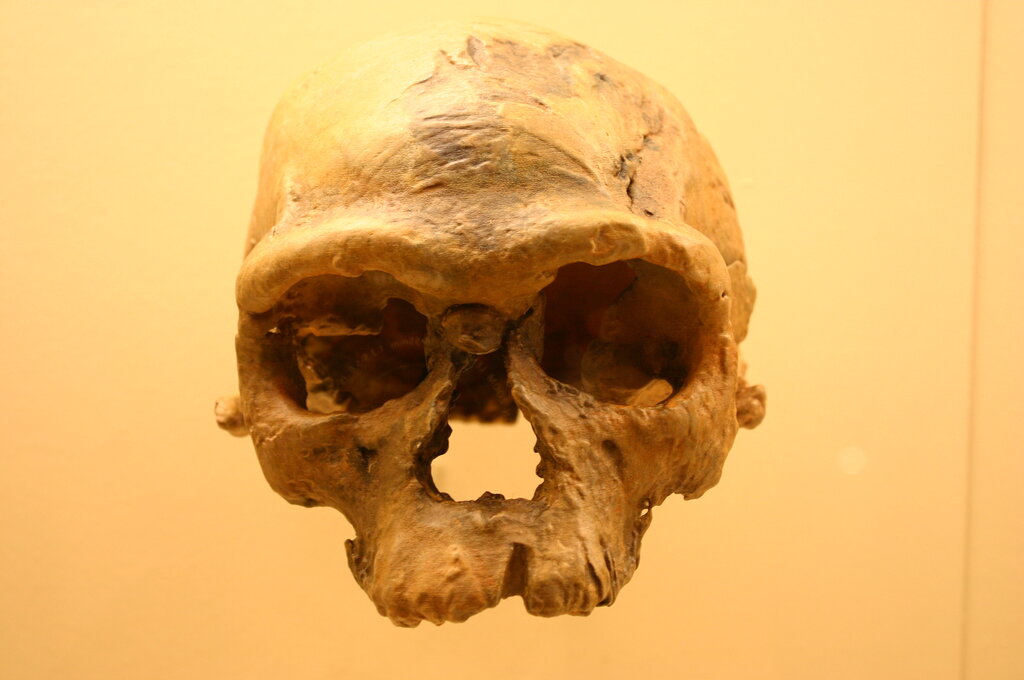
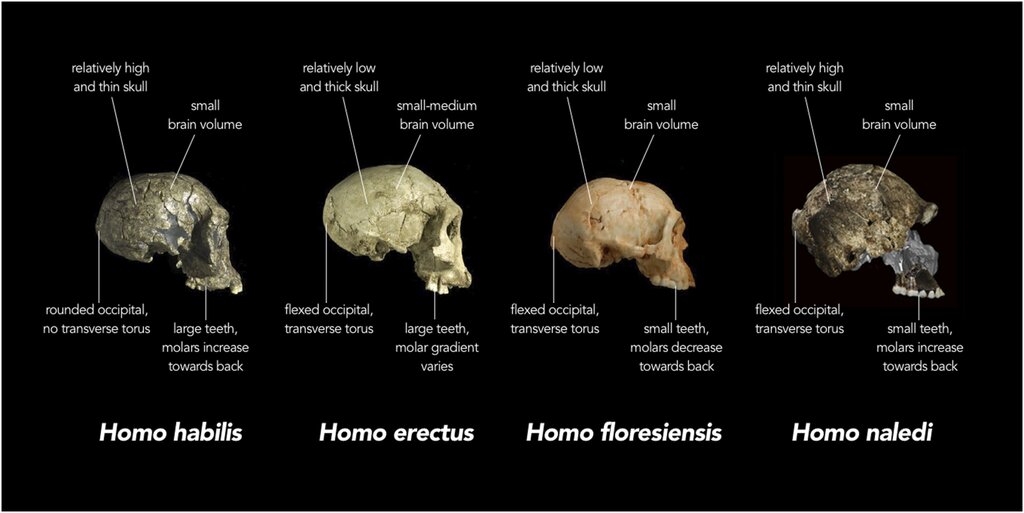
Comparing these fossils allows scientists to trace key evolutionary changes over time. They reveal a gradual increase in brain size, a flattening of the face, and a reduction in tooth size. Each species represents a different experiment in how to be a hominin.
The Cradle of Humankind
The sheer quantity and age of hominin fossils found in Africa are what mark it as the cradle of humankind. For millions of years, hominin evolution was an exclusively African story. It was here that our ancestors first mastered walking on two legs, making tools from stone, and eventually, harnessing fire.
Why Africa? The continent's unique environmental history played a huge role. Shifting climates and landscapes, from dense forests to open savannas, created diverse challenges and opportunities. These dynamic conditions likely drove the evolutionary pressures that favored adaptability, problem-solving, and social cooperation—the very traits that define humanity.
It was only after a long period of evolution within Africa that our species, Homo sapiens, began to expand into other parts of the world. This "Out of Africa" migration is a pivotal event in our history, leading to the populating of the entire planet.
This ancient African origin is the shared heritage of all people alive today. From the savannas and forests of our deep past emerged a species capable of creating art, science, and civilization. The foundations of everything that followed were laid right there, millions of years ago.
According to the fossil record, where did the story of human evolution exclusively take place for millions of years?
What significant insight did the 3.2-million-year-old fossil "Lucy" (Australopithecus afarensis) provide about the course of human evolution?
This incredible journey from early hominins to modern humans set the stage for the development of complex societies and knowledge systems across the African continent and, eventually, the world.