Aesthetics and Utility in Tagore's Worker's Paradise
Utilitarianism versus Aestheticism
A Paradise of Purpose
In Rabindranath Tagore's story, the Worker's Paradise is a world built on a single, unwavering principle: utility. Every person and every object must have a clear, functional purpose. The men and women there spend their days in ceaseless, productive labour. They don't have time for painting, singing, or anything that doesn't contribute to the collective output. In their own words, "We haven't a moment to spare."
This society is the ultimate expression of utilitarianism, where the value of an action is judged solely by its usefulness. There is no concept of leisure or beauty for its own sake. A purely industrious life is seen as the ideal, and anything that deviates from this is considered a waste. The world is efficient, orderly, and entirely devoid of art.
Utilitarianism
noun
A philosophical theory that states the best action is the one that maximizes utility, usually defined as that which maximizes well-being and minimizes suffering for the greatest number of people. In the story, this is simplified to mean 'practical usefulness'.
The Useless Man Arrives
Into this world of relentless purpose comes a man who is utterly out of place. He has never worked a day in his life. On Earth, he spent his time on "mad whims" — sculpting, painting, and creating things with no practical application. He is a disruptive force, an anomaly in a system that has no category for him.
This 'Wrong Man' is an emblem of aestheticism, a philosophy championing the idea of . His creations are not meant to be useful; they are meant to be beautiful. He represents the intrinsic value of art, completely separate from any function it might serve. He doesn't make things to be used, but to be experienced.
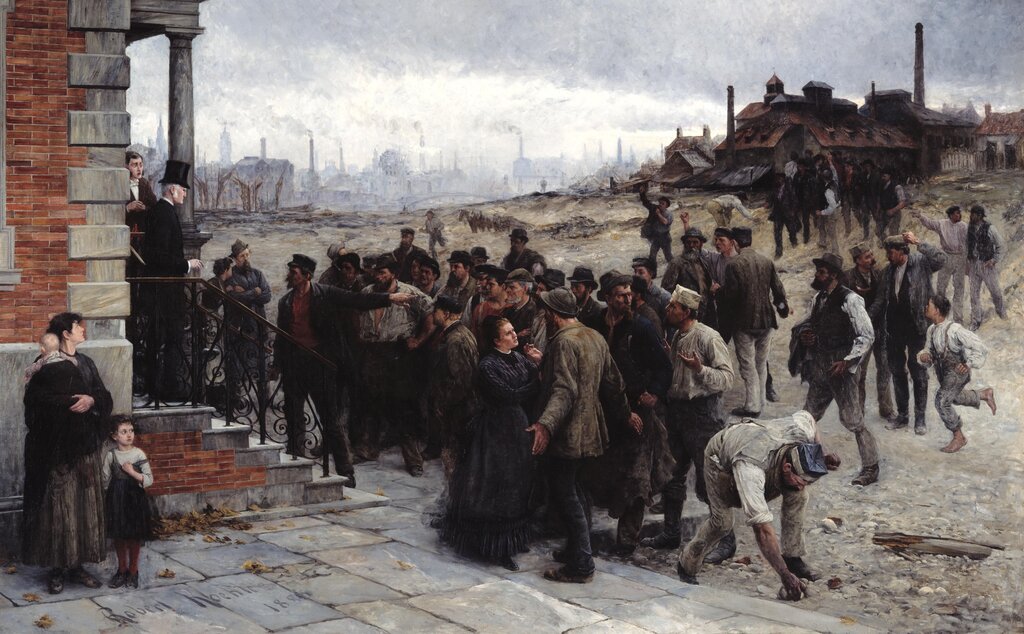
The central conflict of the story isn't between characters, but between two opposing worldviews. On one side, there is 'Utility'. Everything must have a purpose that can be measured and quantified. On the other side is what the workers would call 'Futility'. The Wrong Man's sculptures and paintings serve no function. They cannot be eaten, used to build, or traded. They are, by the standards of the paradise, utterly useless.
This is Tagore's core critique. He sets up a stark dichotomy to question whether a life dedicated only to work is a life fully lived. The story isn't just a simple narrative; it's a philosophical exploration of the tension between a life of pure function and one that makes room for beauty and creative expression.
The clash is clear: is an object's value determined by what it can do, or by what it can make you feel?
The Value of 'Wasted' Time
The story challenges the very notion of 'wasted time'. The Wrong Man introduces a new way of seeing to the people of the paradise, particularly to a girl who works by a silent torrent. He makes a ribbon for her hair from the colours of the pitcher she carries, an act of pure aesthetic creation. This small, 'useless' object begins to change her perception. For the first time, she sees the potential for beauty in an object of pure utility.
This is where ’s concept of "" comes into play. He argued that the time not spent on necessities isn't wasted; it's the very space where creativity, culture, and humanity flourish. The Wrong Man's idleness is not laziness, but a different kind of productivity — one that creates feeling and meaning instead of material goods. His art infects the rigid world of the paradise with colour, curiosity, and emotion, suggesting that what seems futile might be essential.
Time for a quick check on these philosophical ideas.
What is the single, guiding principle of the society in the Worker's Paradise?
The 'Wrong Man' represents the philosophy of 'art for art's sake,' also known as what?
The story doesn't offer a simple answer, but it forces us to consider what we value. By presenting a world of perfect utility, Tagore highlights what is lost when there is no room for art.