Aerobic Respiration Explained
Introduction to Cellular Respiration
The Energy of Life
Every living thing, from a tiny bacterium to a giant blue whale, needs energy to survive. This energy powers everything from muscle movement to thinking. But how do our cells get this energy from the food we eat? The answer is a process called cellular respiration.
Cellular respiration is how cells convert the chemical energy stored in food, like glucose, into a form of energy they can actually use.
Think of it like a power plant. A power plant burns fuel, such as coal or natural gas, to generate electricity that homes and businesses can use. Similarly, your cells "burn" glucose to create a special energy-carrying molecule. This process is happening in your body's cells right now.
The Chemical Recipe
The most common and efficient form of cellular respiration is aerobic respiration, which uses oxygen. The entire process can be summarized with a single chemical equation. It shows what goes in (the reactants) and what comes out (the products).
This equation might look complex, but it mirrors our own bodies. We eat food to get glucose and breathe air for oxygen. As our cells work, they produce carbon dioxide and water as byproducts. The main goal, however, is to produce ATP.
ATP: The Cell's Currency
The energy released from breaking down glucose isn't used directly. Instead, it's captured in a molecule called Adenosine Triphosphate, or ATP. Think of ATP as the energy currency of the cell. Just like you use money to buy things, a cell "spends" ATP to power its activities.
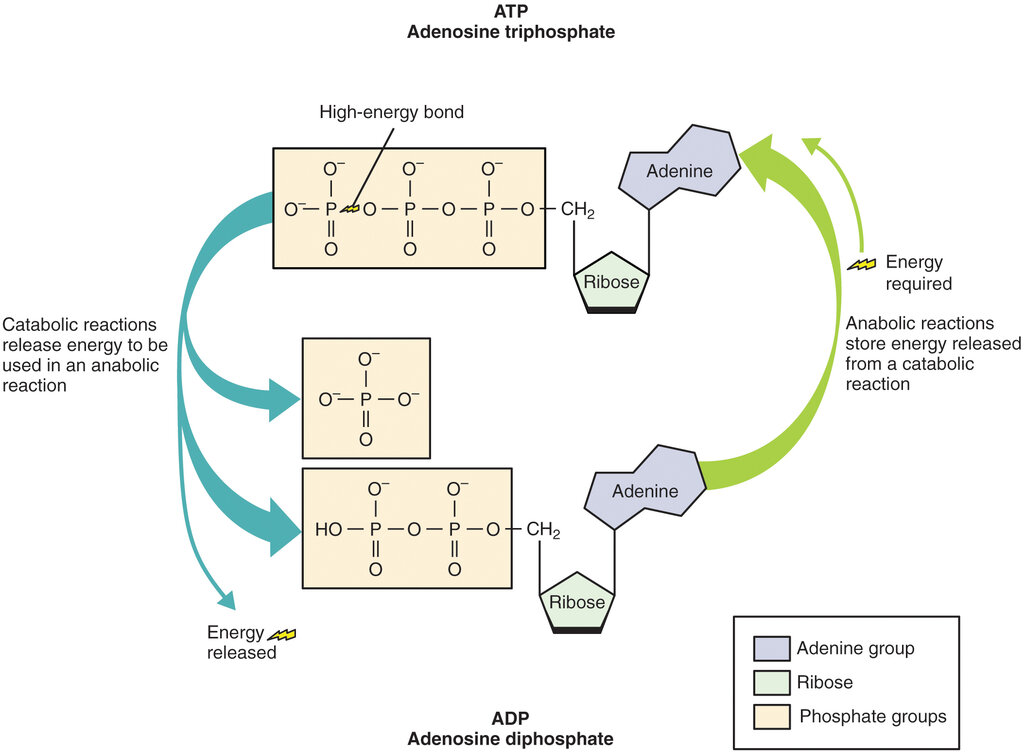
When a cell needs energy, it breaks a phosphate bond in an ATP molecule, releasing a burst of power. This turns ATP into ADP (Adenosine Diphosphate). Cellular respiration's job is to recharge ADP back into ATP, creating a constantly renewing supply of energy.
The Three Main Stages
Aerobic respiration doesn't happen all at once. It's a carefully controlled series of reactions broken down into three main stages. Each stage occurs in a specific part of the cell.
- Glycolysis: This is the first step, happening in the cell's cytoplasm. It literally means "splitting sugars," and it breaks the 6-carbon glucose molecule into two smaller 3-carbon molecules.
- The Krebs Cycle (also known as the Citric Acid Cycle): This stage takes place inside the mitochondria, the cell's powerhouses. It takes the products of glycolysis and breaks them down further, releasing more energy.
- The Electron Transport Chain: Also in the mitochondria, this is the final stage and the main event for ATP production. It uses the oxygen we breathe to generate the vast majority of the cell's ATP.
These three stages work together like an assembly line to efficiently extract energy from a single molecule of glucose. We'll explore each of these stages in more detail later on.
What is the primary purpose of cellular respiration?
Which of the following best represents the reactants and products of aerobic cellular respiration?
Understanding this overview is the first step to seeing how life is powered at the microscopic level.