Advertising Idea Generation
Understanding Target Audiences
Who Are You Talking To?
You can't create an effective ad without knowing who you're talking to. Trying to appeal to everyone at once usually means you appeal to no one in particular. The first step in any strong advertising campaign is to define your target audience: the specific group of people most likely to be interested in your product or service.
Understanding and defining your target audience is paramount to crafting effective strategies that resonate and drive engagement.
Think of it like telling a joke. You wouldn't tell the same joke to your best friend, your boss, and your grandmother. You'd instinctively tailor the content and delivery for each person. Advertising works the same way. To be persuasive, your message has to connect with the right people in the right way.
Demographics and Psychographics
To understand your audience, you need to look at two types of data: demographics and psychographics. They sound complex, but the idea is simple.
Demographics tell you who your audience is. Psychographics tell you why they might care.
Demographics are the basic, statistical facts about a group of people. This is the objective data that paints a broad picture of your audience.
Key demographic traits include:
- Age
- Gender
- Location
- Income level
- Education
- Occupation
- Marital status
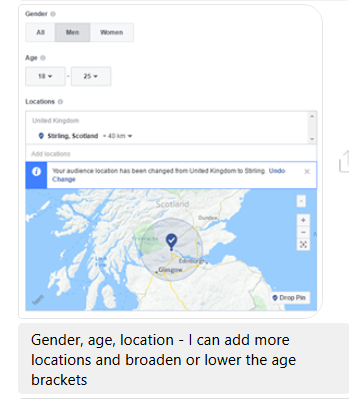
Demographics give you a solid starting point. But they don't tell the whole story. Two people can have the exact same demographic profile but completely different buying habits. That's where psychographics come in.
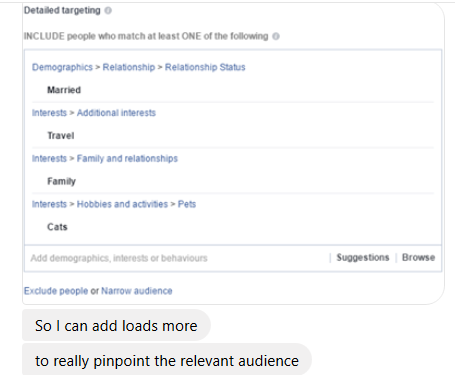
Psychographics dig deeper into a person's lifestyle, values, and personality. This is the subjective data that explains their motivations.
Psychographic traits include:
- Interests and hobbies (e.g., hiking, video games, cooking)
- Values and beliefs (e.g., environmentalism, family focus)
- Attitudes and opinions
- Lifestyle choices (e.g., urban dweller, suburban parent)
One Size Doesn't Fit All
Even with demographic and psychographic data, your target audience isn't a single, uniform group. It's made up of different people with slightly different needs. This is why we use audience segmentation—the process of dividing a broad target audience into smaller, more defined groups, or segments.
For example, a car company might target "environmentally conscious drivers." That's a good start. But they could segment that audience further:
- The Urban Commuter: Needs a small, efficient electric vehicle for city driving.
- The Suburban Family: Wants a larger hybrid SUV with space and safety features.
- The Tech Early Adopter: Cares most about the latest battery technology and smart features, regardless of car size.
Each segment has different priorities. By creating separate, tailored messages for each one, the company's advertising will be far more effective than a single, generic ad about being "eco-friendly."
By understanding these smaller groups, you can speak directly to what matters most to them.
Finding the Pain Point
The most powerful advertising doesn't just describe a product; it solves a problem. To do that, you need to identify your audience's needs and pain points.
Pain Point
noun
A specific problem, frustration, or challenge that a potential customer is experiencing.
A need is what a customer wants to achieve. A pain point is the obstacle standing in their way. For example, a student needs to write essays for their classes. Their pain point might be that they struggle with grammar and spelling, making them feel insecure about their work.
Great advertising speaks directly to the pain point and presents the product as the solution.
Instead of just advertising a grammar-checking software by listing its features, a smart campaign would focus on the feeling of confidence and relief a student gets from submitting a flawless essay. It addresses the emotional frustration, not just the practical need.
| Need | Potential Pain Point | Solution Focus |
|---|---|---|
| Stay hydrated during exercise | Water bottles leak and are hard to clean | A leak-proof, easy-to-clean bottle |
| Eat healthier meals | No time to cook from scratch every night | A meal delivery service with quick recipes |
| Manage personal finances | Feeling overwhelmed by tracking expenses | A simple budgeting app with automatic categorization |
By analyzing your audience's demographics, psychographics, and pain points, you're not just guessing who to talk to. You're building a clear picture of a real person. This understanding is the foundation for creating advertising that doesn't just get noticed, but truly resonates.
Ready to check your understanding?
Why is defining a target audience a crucial first step in an advertising campaign?
An advertiser is creating a campaign for people who are aged 25-34, live in urban areas, and have an income over $70,000. What type of data are they primarily using?
Once you know your audience inside and out, you can begin to craft a message that speaks directly to them.