Advancing Your Yoga Practice
Advanced Alignment Biomechanics
Beyond the Shape
You already know the basic shape of Tadasana, the Mountain Pose. Now, let's look deeper. True alignment isn't about mimicking a shape; it's about understanding the forces at play within your own body. Think of your skeleton as a tower of blocks. If the blocks are stacked efficiently, the structure is stable with minimal effort. If they're misaligned, muscles must work overtime just to keep you from toppling over.
This principle is often visualized as a '' — an imaginary straight line running from your earlobe, through the shoulder, hip, knee, and just in front of the ankle. When your major joints align along this line, gravity works with you, not against you. This minimizes wear and tear on your joints and builds a foundation of stillness, which is the heart of Hatha yoga. It's not about being rigid, but about finding an active, intelligent stability.
Muscles at Work
Every yoga pose involves muscles lengthening and shortening. Understanding how they work can transform your practice. We often think of muscle work as simple contraction, but it's more nuanced. There's a dynamic interplay between opposing muscle groups, which creates controlled, stable movement. This is where the concepts of come in.
In a pose like Virabhadrasana II (Warrior II), your quadriceps are in a concentric contraction to keep your front knee bent. At the same time, the adductor muscles of your inner thigh might be in an eccentric contraction to prevent your knee from collapsing inward. This creates a stable, aligned base. It's a constant, active conversation between different parts of your body.
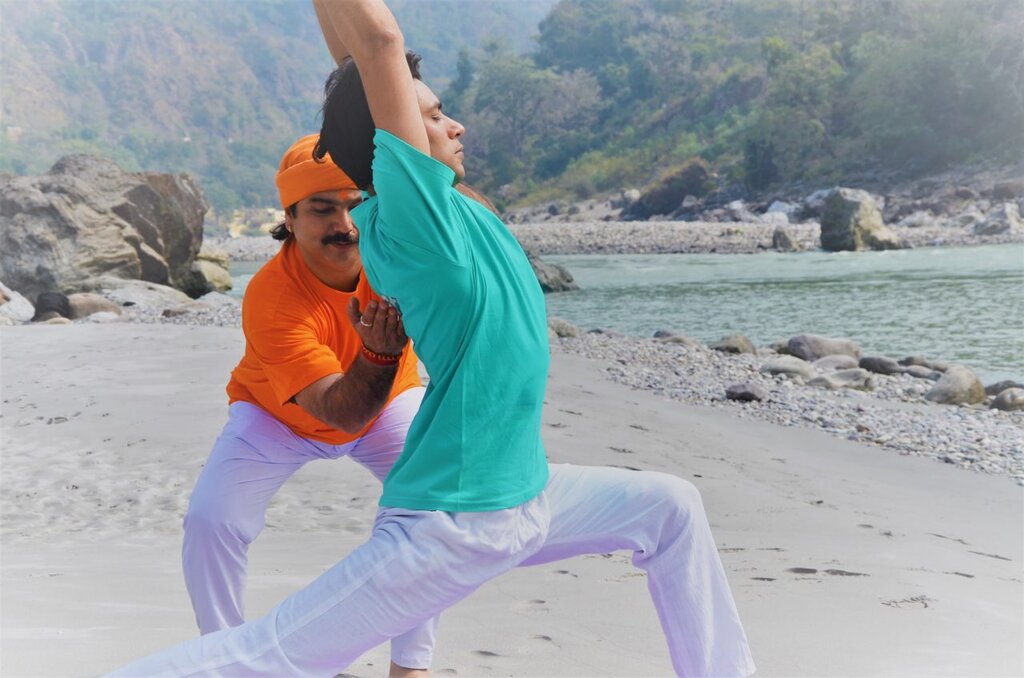
This control extends to the joints. In the shoulder, think about rotating your upper arm bone in its socket. In Downward-Facing Dog, externally rotating the shoulders can create more space across your upper back. In the hips, an internal spiral of the thighs in a standing pose helps to stabilize the pelvis and engage the deep core. This isn't about forcing a shape, but about initiating movement from the joint to align the entire limb.
Proper alignment isn't static. It's a dynamic process of micro-adjustments that brings your body into a state of active equilibrium.
The Deep Core
Stability doesn't just come from your limbs; it originates from your centre. In yoga, this deep core is activated through the or 'body locks'. These are subtle yet powerful engagements of the pelvic floor (Mula Bandha) and the lower abdominals (Uddiyana Bandha).
Engaging the bandhas is like creating a supportive corset around your lower spine. It stabilizes your pelvis, which is the foundation for your entire upper body. In a balancing pose like Tree Pose, engaging Mula Bandha provides a lift and prevents your standing hip from sinking. This internal support system allows for greater freedom and lightness in the rest of the body.
The ideas of consciously stacked joints to protect all the good stuff in and around them, alignment from the crown of your neck down to the bottoms of your feet, and activation of the Bandhas — feet flexed, belly up and in, pelvic floor lifting — are the roots of your entire practice.
Tension vs. Compression
As you move deeper into a pose, you'll eventually meet a boundary. It's crucial to understand what's stopping you. Is it the sensation of a muscle stretching, or is it a hard, unmoving stop?
This is the difference between tension and compression.
- Tension is the feeling of soft tissues, like muscles and fascia, reaching their limit of flexibility. With mindful breathing and practice, this is a boundary you can work with and slowly change over time.
- Compression is when two bones make contact. This is a hard limit dictated by your unique skeletal structure. No amount of stretching will change the shape of your bones. For example, in a deep squat, the top of your femur might press into your hip socket, preventing you from going lower.
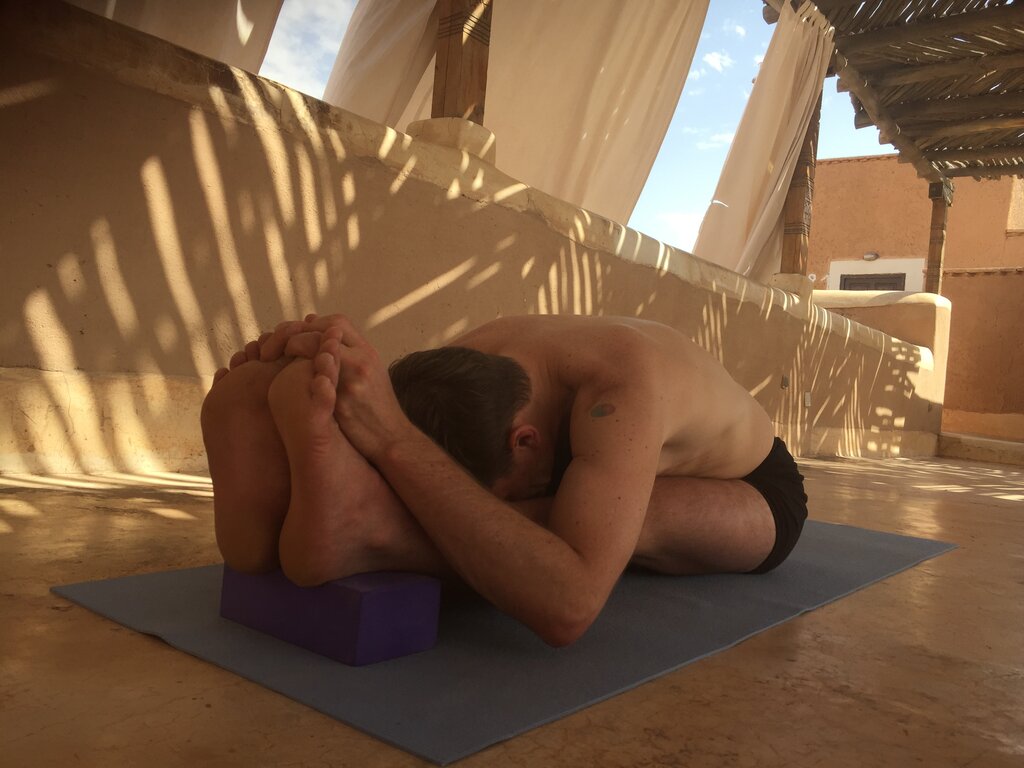
Recognising this difference is key to preventing injury. Pushing past tension can lead to a strain, but trying to push through compression can damage a joint. A pose should never be painful. Your practice is about honouring your body's structure, not forcing it into an aesthetic ideal that doesn't fit your skeleton. This self-awareness is the true advancement in alignment.
Time to review what you've learned.
Ready to test your knowledge?
What is the primary purpose of aligning the body along the imaginary 'plumb line' in a standing pose like Tadasana?
When you feel a hard, unmoving stop in a deep squat, likely because the top of your femur is pressing into your hip socket, you are experiencing:
By applying these principles, you move from simply doing poses to truly embodying them.