Advancing Your Musical Foundation
Functional Diatonic Harmony
Chords Have Jobs
You already know that keys are built from scales, and chords are built from the notes in those scales. But a chord progression isn't just a random string of chords. Each chord has a specific job or function within the key. It's part of a system that creates tension and release, making music feel like a journey.
To talk about these jobs, we use Roman numeral analysis instead of chord names like C major or G major. This lets us see the relationship between chords, no matter what key we're in. The Roman numeral tells us which scale degree the chord is built on. Uppercase numerals mean a major chord, lowercase mean minor, and a small circle (°) means diminished.
| Scale Degree | 1 | 2 | 3 | 4 | 5 | 6 | 7 |
|---|---|---|---|---|---|---|---|
| C Major Scale | C | D | E | F | G | A | B |
| Diatonic Triad | C | Dm | Em | F | G | Am | B° |
| Roman Numeral | I | ii | iii | IV | V | vi | vii° |
Using this system, a C-F-G-C progression in C major becomes I-IV-V-I. If we play that same pattern in G major (G-C-D-G), it's still a I-IV-V-I progression. The relationships, and therefore the feeling, are the same.
The Three Core Functions
While there are seven diatonic chords, they can be grouped into just three main jobs that drive most of Western music.
Tonic (Home Base): The I chord is the point of rest and resolution. It’s the tonal center of the piece, the chord that feels like home. Most songs begin and end on the tonic.
Dominant (Tension): The V chord creates the most instability. It contains the leading tone (the 7th scale degree), which has a powerful pull back to the root of the I chord. The dominant's job is to build tension that demands to be resolved.
Subdominant (The Setup): The IV chord is a pre-dominant function. It creates moderate tension and is the most common way to move away from the tonic and set up the dominant chord. Think of it as the journey before the climax.
The other chords act as variations of these core functions. The vi and iii chords often have a tonic function, while the ii chord serves a subdominant role. The vii° is a type of dominant.
Musical Punctuation
The movement from one chord function to another creates a cadence, which acts like punctuation in a musical phrase. The two most important are the authentic and plagal cadences.
Cadence
noun
A melodic or harmonic configuration that creates a sense of resolution or pause. Cadences are the musical equivalent of punctuation, marking the end of phrases, sections, or entire pieces.
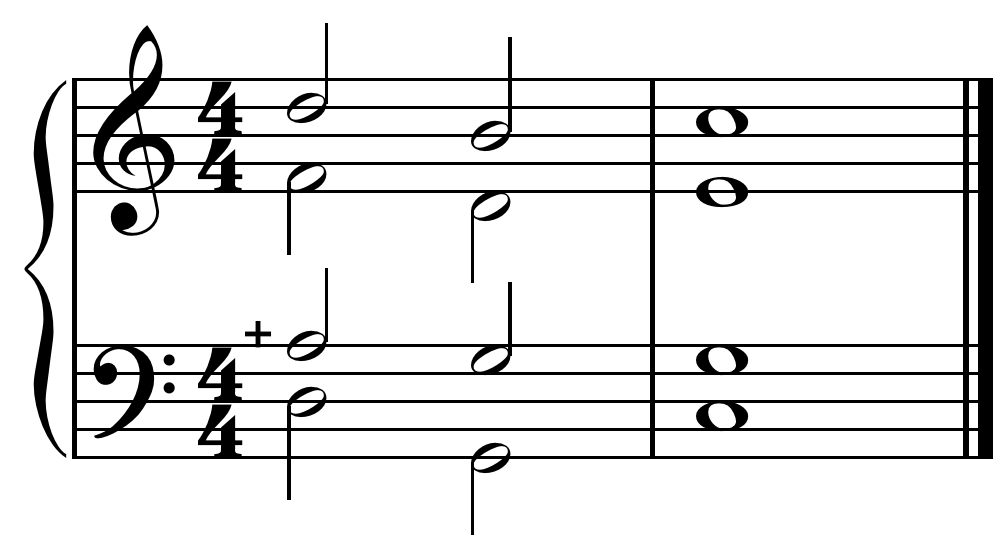
The Authentic Cadence is the move from the dominant (V) to the tonic (I). This is the strongest, most final-sounding resolution in tonal music. That powerful pull of the V chord resolving home to the I is what gives so many songs their feeling of satisfying closure. It’s the musical equivalent of a period at the end of a sentence.
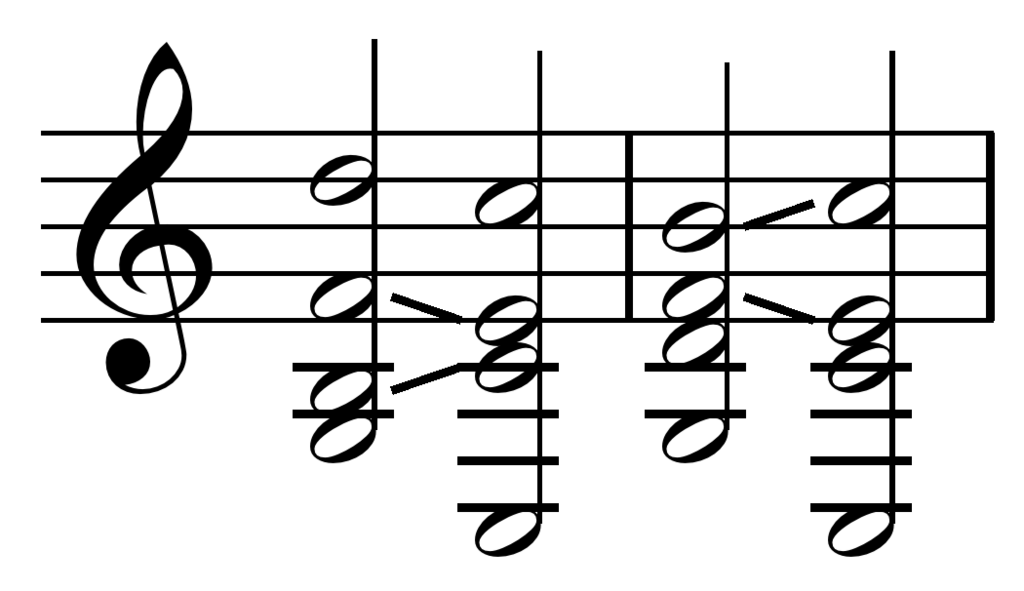
The Plagal Cadence is the move from the subdominant (IV) to the tonic (I). It feels much softer and less final than the authentic cadence. Because of its frequent use in hymns, it's often called the "Amen" cadence. It feels more like a gentle sigh of agreement than a definitive statement.
Mapping the Journey
So how do you build longer progressions? The Circle of Fifths is more than just a way to remember key signatures; it’s a map of harmonic relationships. Moving counter-clockwise around the circle creates a strong pull.
Notice the pattern: C is the IV of G, which is the IV of D, and so on. In the other direction, G is the V of C, which is the V of F. This V-I relationship is what drives the circle. A common and powerful chord progression simply follows the circle backwards, for example: vi-ii-V-I (in C: Am-Dm-G-C).
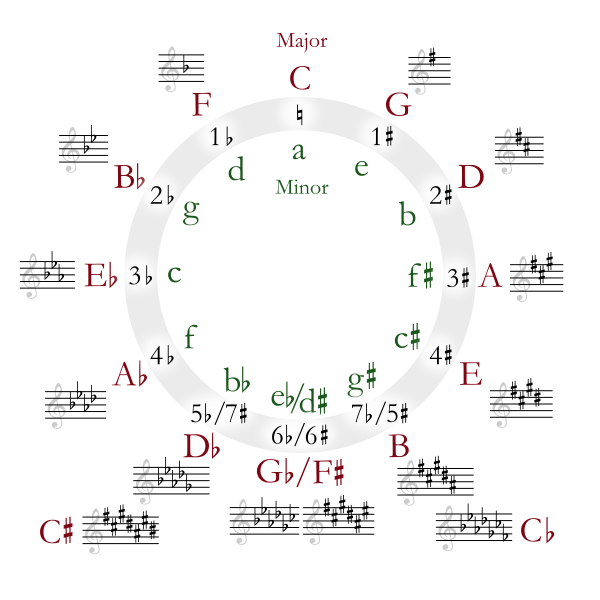
This movement creates a chain reaction of dominant-tonic resolutions, even if they aren't all V-I. The move from Am to Dm feels like a V-i in the key of D minor, which then leads to G, the V of our home key, C. It creates a smooth, logical-sounding journey back to the tonic.
We can add more color and tension by using seventh chords. Instead of simple triads, we can build four-note chords on each scale degree. This gives us major 7ths, minor 7ths, and a powerful dominant 7th on the V chord. The V7-I cadence is even stronger than V-I because it contains a tritone that pulls even more urgently toward resolution.
What is the primary purpose of using Roman numeral analysis in music theory?
A song in the key of E major uses the chord progression E - A - B - E. How would this be written using Roman numerals?
Understanding these functions allows you to analyze why your favorite songs work and gives you the tools to create your own compelling chord progressions. It's the difference between randomly picking chords and telling a harmonic story.