Advancing Your Italian Fluency
Mastering Present Interactions
The Power Verbs
You've already mastered regular verbs. Now, let's focus on the verbs that add nuance and intention to your sentences. In Italian, modal verbs like potere (can), volere (want), and dovere (must) do just that. They work alongside other verbs to express ability, desire, or obligation.
Think of them as helper verbs. They are almost always followed by another verb in its infinitive form (the basic, unconjugated version). Because they're used constantly in daily conversation, memorizing their irregular forms is essential for sounding natural.
| Pronoun | Potere (can/be able) | Volere (want) | Dovere (must/have to) |
|---|---|---|---|
| io | posso | voglio | devo |
| tu | puoi | vuoi | devi |
| lui/lei | può | vuole | deve |
| noi | possiamo | vogliamo | dobbiamo |
| voi | potete | volete | dovete |
| loro | possono | vogliono | devono |
See how they combine with another verb?
- Voglio comprare un biglietto. (I want to buy a ticket.)
- Puoi aiutarmi? (Can you help me?)
- Dobbiamo partire ora. (We have to leave now.)
The pattern is simple: conjugated modal verb + infinitive verb. This structure is your key to building more complex, expressive sentences.
Getting Around
Two of the most common irregular verbs for navigating Italy are andare (to go) and venire (to come). While they seem similar, they have a crucial difference based on perspective. Use andare for movement away from where you are. Use venire for movement toward you or the person you're speaking to.
- Vado al bar. (I'm going to the bar — I'm not there now.)
- Vieni al bar con me? (Are you coming to the bar with me? — toward me.)
| Pronoun | Andare (to go) | Venire (to come) |
|---|---|---|
| io | vado | vengo |
| tu | vai | vieni |
| lui/lei | va | viene |
| noi | andiamo | veniamo |
| voi | andate | venite |
| loro | vanno | vengono |
Now, let's combine these with modal verbs and prepositions to handle real travel scenarios. Prepositions like a, in, and da are essential for indicating direction and origin.
- Devo andare a Roma. (I have to go to Rome.) Use a for cities and small islands.
- Voglio andare in farmacia. (I want to go to the pharmacy.) Use in for countries, regions, continents, and general places like banca, piscina, or ufficio.
- Loro vengono da Milano. (They come from Milan.) Use da to show where someone is coming from.
When going to a specific, named place, you'll often combine the preposition with an article, like allo stadio (to the stadium, from a + lo) or alla stazione (to the station, from a + la).
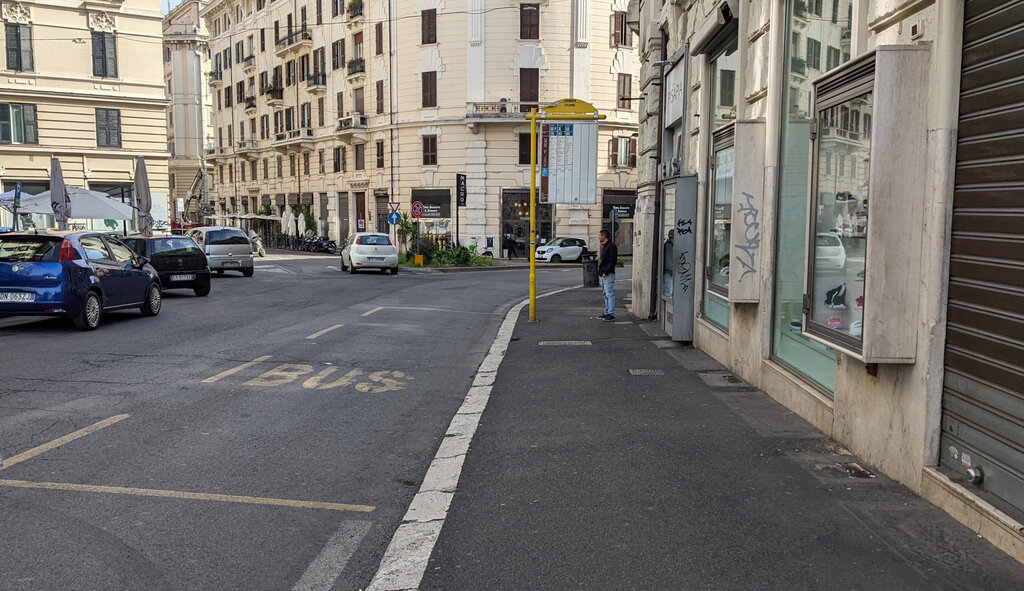
Here’s how you might use this vocabulary to navigate:
- Scusi, può dirmi dove si trova la fermata dell'autobus? (Excuse me, can you tell me where the bus stop is?)
- A che ora parte il treno per Firenze? (What time does the train for Florence leave?)
- Vogliamo comprare due biglietti per la metropolitana. (We want to buy two tickets for the metro.)
More Than Just 'To Do'
The verb fare is one of the most versatile in Italian. While it literally means "to do" or "to make," it appears in dozens of idiomatic expressions that are fundamental to everyday speech. Learning these phrases will help you move beyond literal, word-for-word translations and sound much more like a native speaker.
First, let's review its highly irregular conjugation.
| Pronoun | Fare (to do/make) |
|---|---|
| io | faccio |
| tu | fai |
| lui/lei | fa |
| noi | facciamo |
| voi | fate |
| loro | fanno |
Now, let's see fare in action with some common expressions. Notice how their English translations often use completely different verbs.
- Fare la spesa: To do the grocery shopping
- Fare una passeggiata: To take a walk
- Fare colazione: To have breakfast
- Fare una domanda: To ask a question
- Fare una foto: To take a picture
- Fare la doccia: To take a shower
You can easily combine these phrases with the modal verbs we learned earlier.
- Domani mattina, vogliamo fare colazione al bar. (Tomorrow morning, we want to have breakfast at the cafe.)
- Posso fare una domanda? (Can I ask a question?)
- Devi fare la spesa prima di tornare a casa. (You have to do the grocery shopping before returning home.)
By mastering these irregular verbs and common expressions, you unlock the ability to manage daily logistics and interactions with much greater fluency and confidence.
Ready to test your knowledge?
What form does the main verb take when it follows a modal verb like potere, volere, or dovere?
Which sentence correctly says "Can you help me?"