Advancing Your Drawing Technique
Advanced Light Theory
Beyond the Sphere
You’ve shaded a sphere. You know the basics: light side, dark side, and a shadow on the ground. But reality is rarely so simple. To draw complex, convincing forms, you need to move beyond memorizing shading steps and start thinking like a physicist. Light isn't just an artistic effect; it's a force that follows predictable rules.
The classic five-value system—highlight, center light, core shadow, reflected light, and cast shadow—isn't just a recipe for shading a ball. It's a description of how light interacts with any surface. The highlight is the direct reflection of the light source. The core shadow is the area furthest from the light, just before the form turns away completely. And the cast shadow is simply the object blocking the light's path.
The real magic happens when you understand the physical principles governing this system. The intensity of light isn't constant; it diminishes over distance. The quality of a shadow's edge changes depending on the light source. These are not artistic choices—they are facts of physics that, when applied, create startling realism.
Light Follows a Law
Imagine a can of spray paint. If you spray a wall from one foot away, you get a small, dense circle of paint. If you step back to two feet away, the paint covers four times the area, but the coating is much thinner. Light from a single point, like a bare bulb or the sun, behaves in the exact same way. This is the at work.
For an artist, this has two major implications. First, the falloff of light is not linear; it's exponential. The change in value is most dramatic on the parts of an object closest to the light source. Second, a light source that is very close will create much higher contrast than one that is far away. A face lit by a candle will have brilliant highlights and deep shadows, while a face lit by a distant streetlamp will have softer, more muted tones.
This law also dictates the quality of a shadow's edge. A small, distant light source (like the sun) acts as a point source, casting sharp, well-defined shadows. A large, close light source (like a softbox lamp or an overcast sky) casts soft, fuzzy-edged shadows. This is because light rays are coming from many different points, wrapping around the object and creating a gradual transition from light to dark, known as the penumbra.
Hard light = Hard-edged cast shadows. Soft, diffused light = Soft-edged cast shadows.
Where Surfaces Meet
Shadows don't just happen on the ground. They occur anywhere light is blocked. In complex objects, this creates a phenomenon that artists need to master: . This is a technical term for the soft, subtle shadows that appear in creases, corners, and tight spaces where ambient light struggles to reach.
Think about the corner of a room, the crease of an elbow, or the space between two fingers pressed together. These areas are naturally darker, even in a well-lit environment. That's ambient occlusion. It's the accumulated shadow from an object blocking light from itself. In drawing, rendering these subtle shadows adds immense weight and realism. It's what makes objects feel grounded and three-dimensional, rather than floating in space.
The opposite of occlusion is reflected light. Surfaces don't just absorb light; they bounce it. A red ball placed next to a white wall will cast a faint pinkish glow onto the wall. The wall, in turn, will bounce neutral-colored light back into the ball's shadow, making it slightly lighter and less saturated.
Observing and capturing this interplay of bounced light is critical for realism. It connects objects to their environment. A cast shadow is never a flat, dead shape. It's filled with the color and light of the surface it falls upon. The shadow side of an object is never pure black; it's illuminated by the subtle reflections from its surroundings.
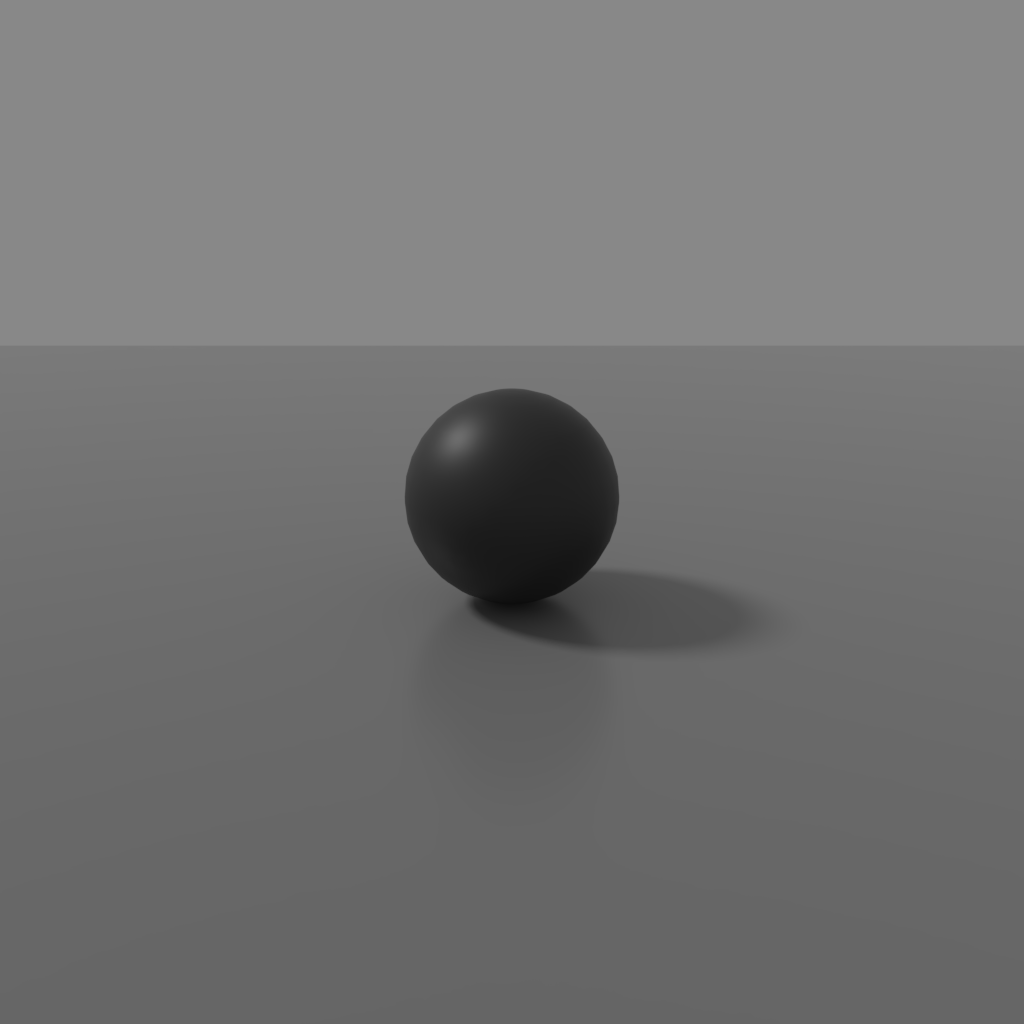
By understanding these principles—the inverse square law, the nature of your light source, and the interaction of surfaces—you can deconstruct any lighting scenario. You can move from copying values to constructing form with light, creating drawings that feel not just rendered, but real.
Time to test your understanding of how light works.
According to the Inverse Square Law, as an object moves farther from a point light source, the falloff of light is...
What type of light source would create a sharp, well-defined cast shadow?
With these concepts in mind, you're equipped to analyze and render light with greater accuracy and intention.